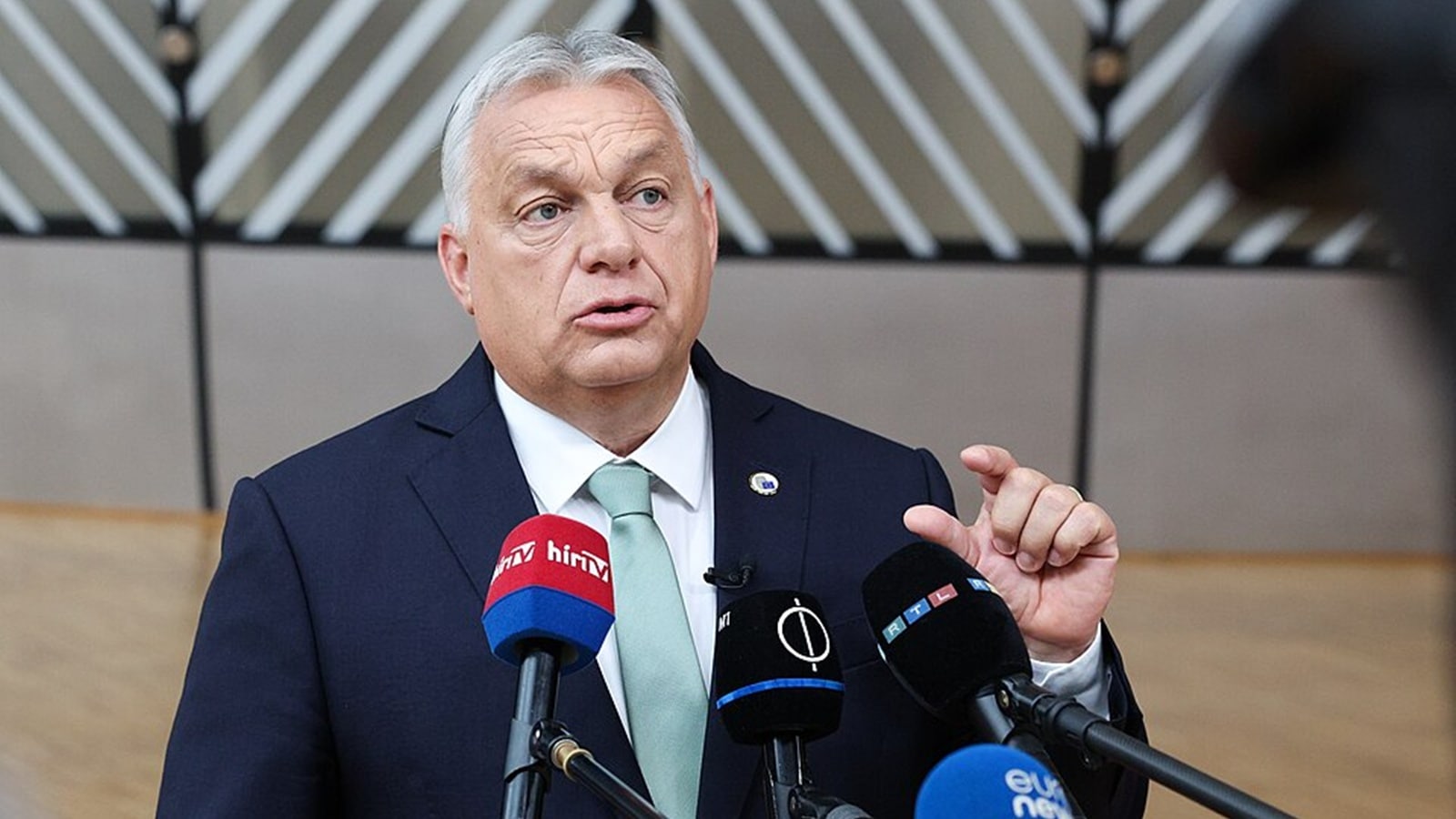

In a surprising turn of events, Hungarian citizens voted on Sunday to remove Prime Minister Viktor Orbán from office after a 16-year tenure characterized by authoritarian rule and alignment with global far-right movements. The election saw Péter Magyar, a former ally of Orbán, emerge victorious as a pro-European candidate, signaling a shift in Hungary’s political landscape with potential international ramifications.
Magyar, who campaigned on a platform focusing on transparency and everyday issues such as healthcare and public transport, has committed to restoring Hungary’s ties with the European Union and NATO, which have deteriorated under Orbán’s administration. European leaders quickly extended their congratulations to Magyar following the election results.
As of the latest count, Magyar’s Tisza party garnered more than 53% of the vote, compared to 38% for Orbán’s Fidesz party, although it remains uncertain whether Tisza will secure a two-thirds majority in parliament to govern independently. Orbán, a prominent figure allied with both U.S. President Donald Trump and Russian President Vladimir Putin, acknowledged his defeat, describing it as “painful.” He expressed his intent to serve Hungary from the opposition, stating, “I congratulated the victorious party.”
“Thank you, Hungary!” Magyar exclaimed on social media, as his enthusiastic supporters celebrated along the Danube in Budapest, chanting “We got it! We did it!”
Orbán, who has held the title of the EU’s longest-serving leader while simultaneously being one of its most critical voices, has undergone a significant ideological transformation from his earlier days as a liberal anti-Soviet activist to a nationalist figure embraced by the global far-right.
Voter turnout was notably high, exceeding 77% by 6:30 p.m., marking a record in Hungary’s post-Communist electoral history. Both political factions reported instances of electoral misconduct, suggesting that some results may be contested. Magyar urged his supporters to maintain a peaceful demeanor and suggested celebrating with a “big, Hungarian carnival” if the outcomes align with their hopes. Tisza’s vice president, Mark Radnai, called for unity following the tense campaign, emphasizing the importance of reconciliation.
The EU is particularly interested in how Magyar will navigate the ongoing conflict in Ukraine. Orbán has been criticized for obstructing EU efforts to assist Ukraine during its conflict with Russia, all while fostering close relations with the Kremlin and maintaining Hungary’s reliance on Russian energy sources. Reports have surfaced indicating that a senior member of Orbán’s government had been sharing sensitive EU discussions with Moscow, leading to allegations of Hungary acting in Russia’s interests within the bloc.
Orbán’s influence extends beyond Hungary, as he is viewed as a key player in the global far-right populist movement. His governance and Fidesz party are seen as benchmarks for conservative, anti-globalist politics by certain factions, while he faces condemnation from proponents of liberal democracy. A young voter in Budapest, Marcell Mehringer, expressed his desire for Hungary to embrace its European identity and for citizens to fulfill their civic duties in uniting the nation.
During his lengthy time in office, Orbán implemented strict measures against minority rights and media freedoms, undermined various state institutions, and has faced allegations of diverting substantial funds to benefit his business allies—a claim he has denied. His administration has consistently strained relations with the EU, using his veto power to block critical decisions, including a recent €90 billion loan to Ukraine, leading to accusations of obstructing vital support.
Magyar, 45, quickly emerged as a formidable opponent after breaking away from Orbán’s Fidesz in 2024 to establish the Tisza party. He has actively campaigned across Hungary, holding numerous rallies to gain public support. In a recent interview, he described the election as a “referendum” on Hungary’s future direction—whether to continue its current path toward Russia under Orbán or to reintegrate into the democratic fabric of Europe.
As a member of the European People’s Party, a mainstream center-right political coalition, Tisza faces significant challenges in this election. Orbán’s control over state media and substantial portions of the private media landscape has provided him a considerable advantage in shaping public discourse. Additionally, the electoral system has been heavily influenced by gerrymandering, requiring Tisza to secure about 5% more votes than Fidesz to achieve a simple majority.
Moreover, hundreds of thousands of ethnic Hungarians residing in neighboring countries have historically favored Orbán’s party, complicating the electoral landscape further. Reports have suggested that Russian intelligence services may have plotted to interfere in the election to favor Orbán, while he has countered by accusing Ukraine and other EU allies of attempting to influence the outcome for a “pro-Ukraine” government. Such claims contribute to the perception of Orbán as a potential threat to the future of the European Union.