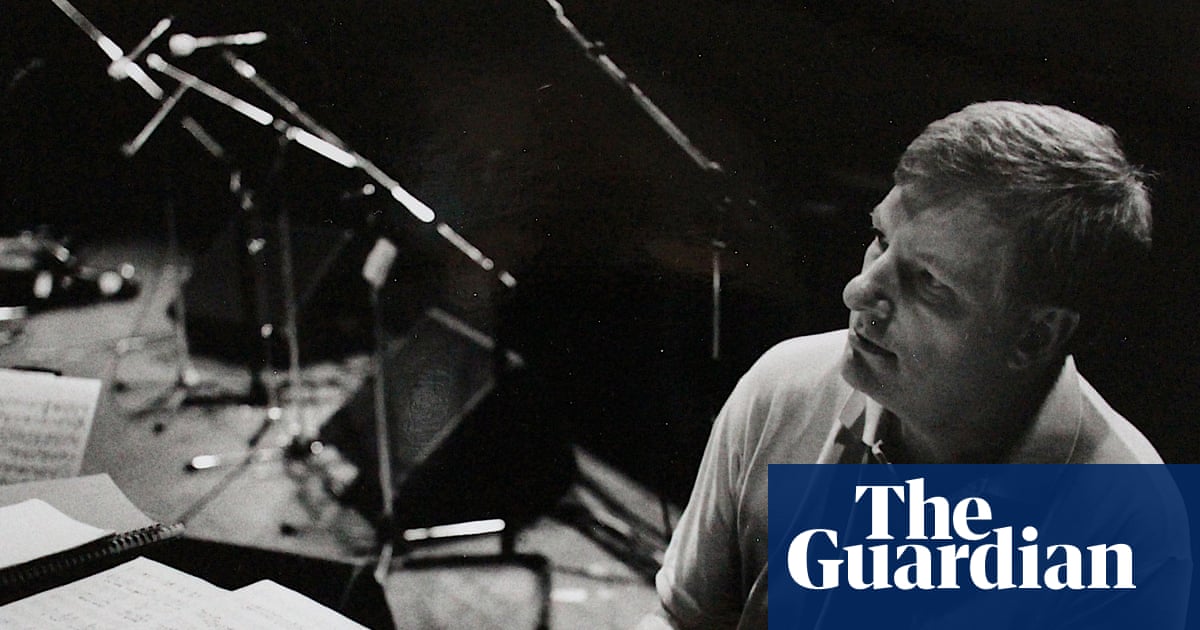

On May 25, 1968, Ronnie Scott’s Old Place, the iconic basement venue located on Gerrard Street in London’s Chinatown, prepared to close its doors for the last time, with the final performance delivered by the ten talented musicians of Mike Westbrook’s Concert Band.
These musicians, drawn from diverse backgrounds, exemplified Westbrook’s innovative approach to jazz, blending various styles and historical influences into a contemporary and original sound. A full house formed a queue extending from the club’s entrance to Shaftesbury Avenue, and the audience remained to applaud the work of a musician who would go on to become a pivotal figure in British jazz history.
This performance was just one highlight in the extensive career of Mike Westbrook, who passed away at the age of 90. His journey in music began during his studies in Plymouth in the 1950s when he formed a band that referred to itself as a workshop, a term embraced by many jazz musicians of the time who sought to explore the interplay between composition and improvisation.
This exploration became a hallmark of Westbrook’s music, whether he was interpreting the poetry of William Blake, adapting the works of his idol Duke Ellington, or rearranging songs from the Beatles’ Abbey Road. He partnered with theater director John Fox and the Welfare State, led a brass band through French villages, collaborated with his second wife, vocalist and librettist Kate Westbrook, and performed his arrangements of Rossini’s operatic pieces at the Albert Hall in 1992, marking the first time jazz was included in the BBC Proms’ main program.
Despite his English roots and initial success on British stages, there was a sense that Westbrook gained greater recognition abroad. In 1984, he received commissions for his suite On Duke’s Birthday from two jazz festivals in France, celebrating Ellington’s legacy. Additionally, a music festival honoring Westbrook was organized by a jazz association in Catania, Sicily, in the summer of 1992, featuring a 25-piece ensemble performing his works over three days in a historic baroque setting. His Rossini arrangements would later be revisited in 2022 by his last big band, the Uncommon Orchestra, in a performance at the Teatro Rossini in Lugo, Italy.
In his later years, Westbrook occasionally offered intimate solo piano recitals that showcased his inclusive musical philosophy. For up to two hours, he would weave through a repertoire of gospel, folk, pop, and jazz standards, bringing new interpretations and emotional depth to classics like Mood Indigo, My Way, and Skylark.
Born in High Wycombe, Buckinghamshire, Mike Westbrook was raised in a musically inclined family; his father Philip was a banker and amateur percussionist, while his mother Vera taught piano. He grew up in Torquay and Plymouth, receiving his education at Kelly College in Tavistock. His passion for music blossomed in his teenage years as he immersed himself in the recordings of jazz legends like Ellington, Louis Armstrong, and Fats Waller, forming a foundational understanding of jazz that influenced his future work. Although his first instrument was the trumpet, he soon transitioned to piano, teaching himself the instrument and music reading.
His studies in accounting were interrupted by national service, after which he pursued painting at Plymouth Art College. His first band emerged at the local arts center, featuring an octet that included a young soloist, John Surman, who would become a prominent collaborator. In 1963, after working as a scenic artist at Westward TV, he relocated to London and continued his education at Hornsey School of Art. There, Surman was joined by other musicians, forming a sextet that quickly garnered attention.
When Ronnie Scott moved his club to a new venue, he offered Westbrook and his band a residency at the Old Place, allowing them to cultivate an audience and build their reputation. On other evenings, Westbrook performed with different artists at the Little Theatre Club in Covent Garden, where he explored new directions in free improvisation. This environment enabled him to develop material for extended works that would culminate in albums such as Celebration (1967), Release (1968), and Marching Song (1969), all of which showcased his artistic ambitions and were recorded by producer Peter Eden for Deram, a label known for supporting progressive music during that era.
However, Westbrook was not destined to be confined to a narrow artistic path or the limitations set by industry expectations. Following an Arts Council grant that allowed him to leave his teaching position and pursue music full-time, he premiered the extended piece Metropolis at the Mermaid Theatre, which led to a collaboration with John Fox and the Welfare State on a groundbreaking multimedia production.