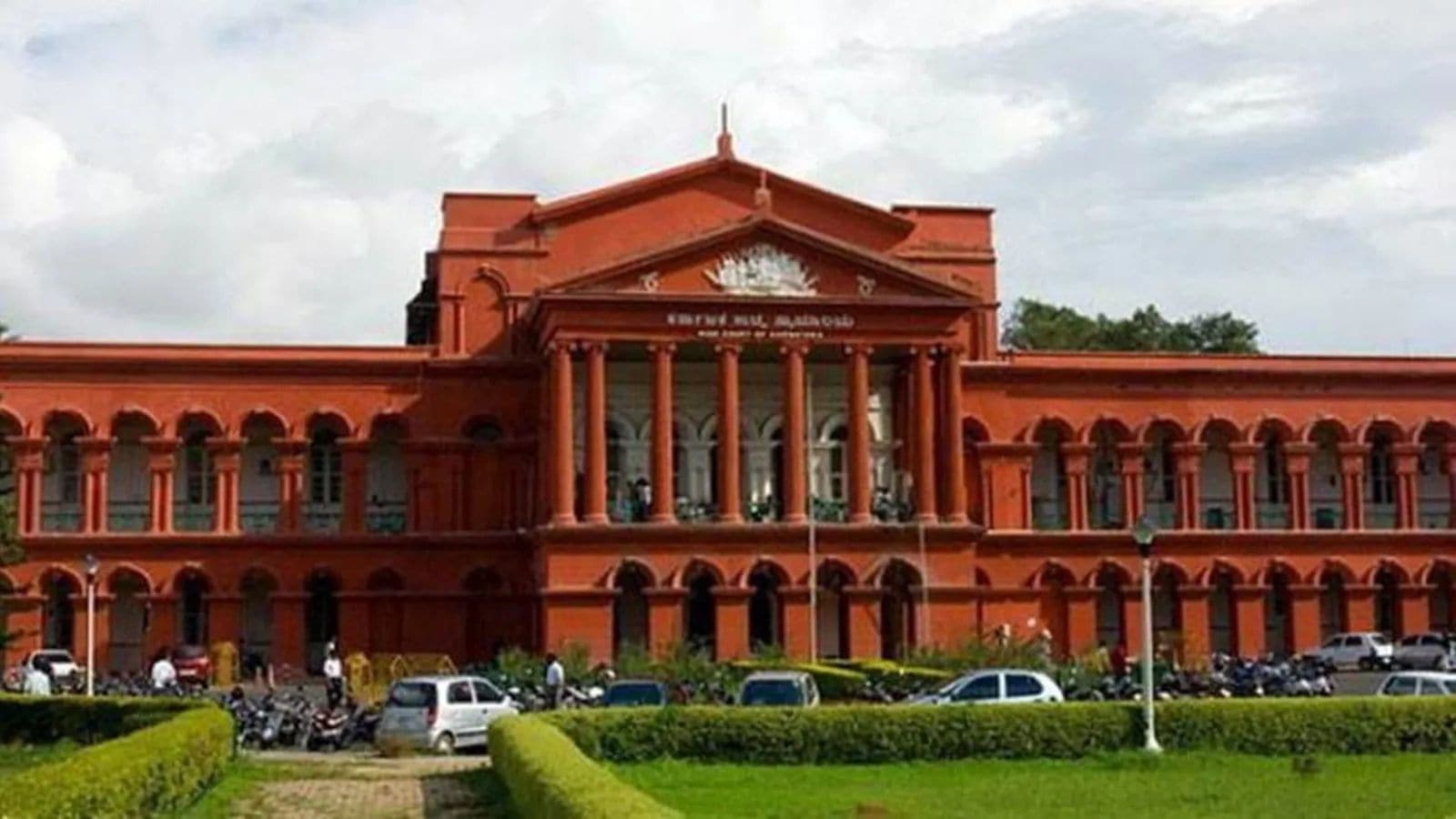

The Karnataka High Court has determined that the head priest of a religious institution, despite living an ascetic lifestyle, still engages in administrative responsibilities. Consequently, following his passing, the institution or his successor will be recognized as a legal representative eligible to seek compensation for loss of dependency.
A Division Bench, comprising Justice Suraj Govindaraj and Justice Tyagaraja N Inavally, has partially upheld the appeal made by S B Shivamurthy Shivachary Hiremutt, the successor priest of the Bale Honnur Shrimad Rambapur Virsinhasan Mutt.
The court stated, “Rather than individual dependent family members, it is the institution that benefits from the individual’s role, services, and spiritual influence. Thus, the dependency is centered on the institution, and the institution bears the repercussions of the death of the mathadipati in terms of disrupted leadership, management, and continuity of its operations,” as mentioned in the ruling dated April 2.
After the accidental death of Sutreshwar Shivacharya Swamiji, the priest of the Balehonnur Shrimad Rambhapuri Simhasana Mutt in Chikmagalur, Karnataka, in 2011, the petitioner sought recourse from the Motor Accidents Claims Tribunal.
However, the Tribunal concluded that the successor of the mutt was not a legal representative eligible to claim for loss of dependency, only granting compensation for the loss of estate amounting to Rs 1,00,000 and Rs 20,000 for funeral costs.
Advocate Krupa Sagar Patil, representing the appellant, contended that applying the definition in subsection (11) of Section 2 of the Code of Civil Procedure shows that any individual who legally represents a deceased person’s estate qualifies as a legal representative. This includes individuals who manage the estate, and in cases where a party sues or is sued in a different capacity, the person inheriting the estate after the death of the party involved should also be considered.
Patil emphasized that the mutt was entitled to compensation for loss of dependency, arguing that the Tribunal’s denial was unjustified.
The bench remarked that the Tribunal mistakenly classified a mathadipati within a religious order as merely an ascetic, severing ties with his biological family, thus negating any possibility of dependency.
“The severance acknowledged by the Tribunal relates solely to the material renunciation associated with asceticism, and does not imply a total disconnection in all aspects. The religious institution benefits from the fruits of his labor and service and is therefore positioned as a legal representative entitled to seek compensation,” the court stated.
Furthermore, the bench clarified that the role of a mathadipati transcends that of a typical individual earning a livelihood, as it is intricately linked to the functioning, management, and ongoing operations of the Mutt. Upon taking on the role of a mathadipati, an individual relinquishes personal ownership and material aspirations. Hence, the mathadipati operates not as an individual but as a custodian representing the institution.
The bench underscored that the death of a mathadipati leads to more than just the end of a single life; it results in significant institutional setbacks, such as a loss of spiritual leadership, disruptions to administrative continuity, and a decrease in the effectiveness of the institution, which could adversely affect offerings and institutional revenue.
This loss is not speculative but a direct outcome of the death, making it legally compensable.
The bench noted that any awarded compensation would not benefit any individual, including the successor Swamiji, who is also an ascetic bound by similar renunciatory values. Instead, the compensation would be granted to the Mutt as an ongoing religious entity. The Tribunal’s mistake lay in equating dependency solely with familial ties and ignoring the dependency of the institution.
The court emphasized that the law pertaining to compensation under the Motor Vehicles Act aims to provide fair and just relief. Therefore, the interpretation of terms such as ‘legal representative’ and ‘dependency’ should be broad and purposeful, not restrictive.
The bench concluded that a mutt qualifies as a “legal representative” under the law and has incurred institutional and economic losses due to the priest’s death. Thus, the Tribunal’s refusal to grant compensation was inconsistent with established legal principles.
Consequently, the bench amended the Tribunal’s decision, increasing the compensation amount from Rs 1,20,000 to Rs 4,74,330.