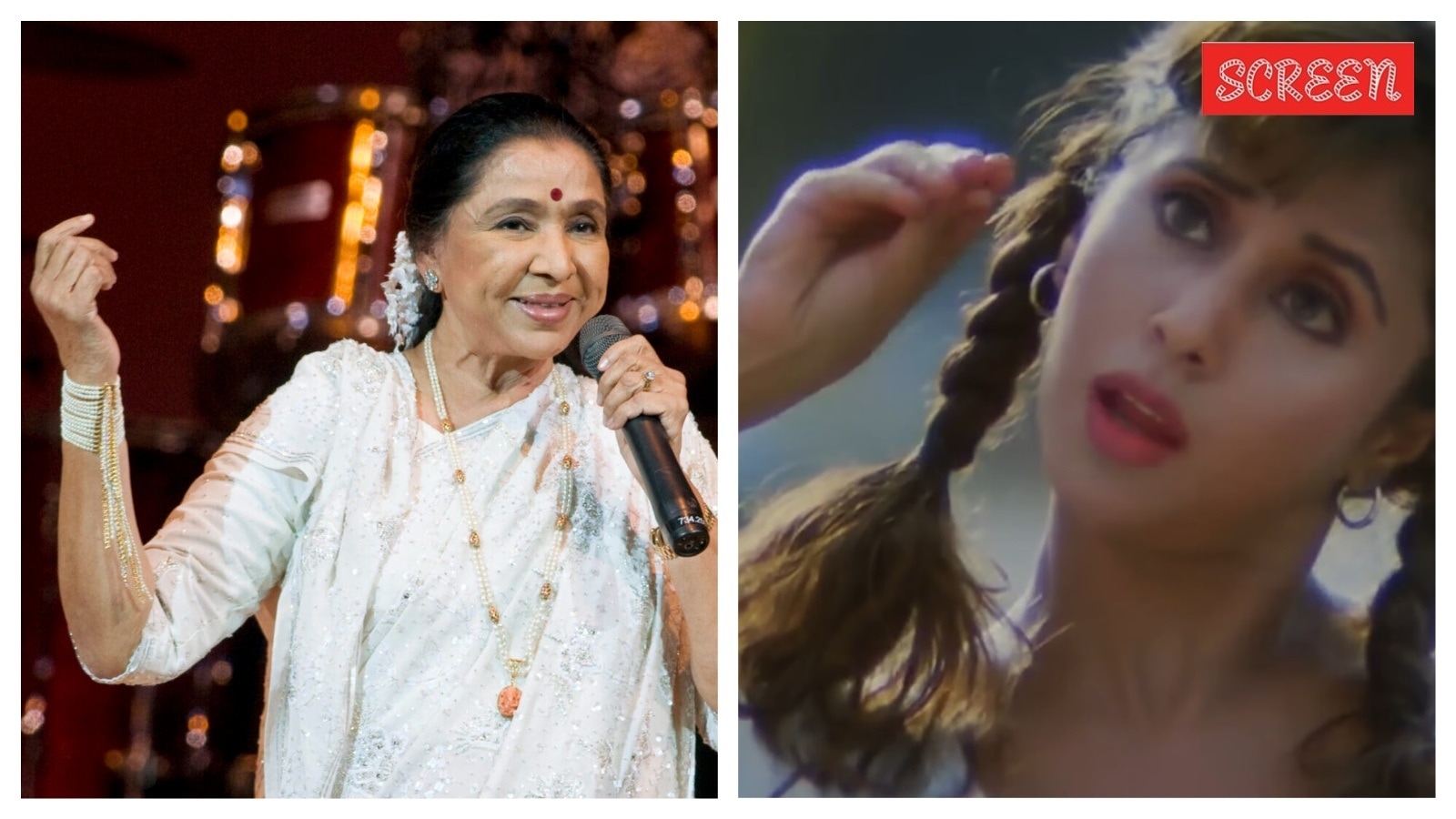

When “Rangeela” debuted, AR Rahman made a striking entrance into the Hindi film industry, marked by the dynamic opening of the title song, “Rangeela Re.” This introduction was not solely a personal milestone for Rahman; it also spotlighted choreographer Ahmed Khan, who brought a fresh, street-style dance aesthetic to the Hindi film audience. Additionally, the film showcased the imaginative visual narrative characteristic of director Ram Gopal Varma. Urmila Matondkar, who started her career as a child actress in Shekhar Kapur’s “Masoom” (1983), emerged in this film as a confident leading lady, signaling her evolution in the industry.
At the film’s outset, a singular voice resonated with the audience—both familiar and audaciously vibrant—welcoming them into a transformative cinematic experience. Asha Bhosle, who passed away today at the age of 92, sang, “Yaayi re, yaayi re, zorr laga ke nache re,” inviting viewers to embrace this new artistic direction, just as she had done throughout her remarkable five-decade career beginning in 1943.
Ram Gopal Varma, in an exclusive interview with SCREEN, remarked that “Rangeela Re” was more than just a song; it was a groundbreaking moment in Bollywood. While AR Rahman crafted the innovative composition, it was Asha Bhosle’s vibrant energy that infused the track with an enduring essence. Varma highlighted her “playful sensuality” and incredible vocal range, which he believed created cinematic magic and redefined the rebellious spirit of the film’s score.
Although lead actor Aamir Khan was also a newcomer, the film was supported by veterans like Jackie Shroff and Asha Bhosle, who lent their gravitas to a project determined to break barriers and redefine cinematic storytelling. With her extensive experience, Asha could have easily taken charge in the studio, but Varma fondly recalled her entering the recording space “with the grace of a queen, yet possessing the curious enthusiasm of a newcomer eager to collaborate with a visionary like Rahman.”
Varma noted that it took Bhosle just one take to adjust her phrasing before the magic of her performance flowed effortlessly. He regarded her as his “all-time favorite singer,” describing her as “the heartbeat of an entire era,” whose voice transcended generations, blending classical roots with contemporary styles across various languages and emotions. Together, Varma and Rahman managed to unleash a dormant passion within Bhosle, revealing her extraordinary talent.
Asha Bhosle deliberately forged her own identity apart from her legendary sister, Lata Mangeshkar, by exploring a wide array of musical styles. She became synonymous with the original item girl, Helen, delivering memorable cabaret performances. With “Dum Maaro Dum” from Dev Anand’s “Hare Rama Hare Krishna,” she propelled Zeenat Aman into the spotlight as a cultural icon for future generations.
In collaboration with the dynamic Gulzar and her husband, RD Burman, Bhosle created the provocative Christmas carol “Raat Christmas Ki Thi” from the 1987 album “Dil Padosi Hai,” where she provocatively attributed her adventures to the free will of Jesus Christ. This playful track was released alongside their National Award-winning song, “Mera Kuchh Saaman” from “Ijaazat.” Her impressive vocal range allowed her to delve into both deep emotional pieces like “Radha Kaise Na Jale” and lively tracks such as “Chori Pe Chori” from “Saathiya.”
Ram Gopal Varma encapsulated her versatility, stating, “From sensuality to soul-stirring depth, she captured the full spectrum of human emotion like no one else.” He further explored her diverse potential through vibrant songs like “O Bhavre” with Yesudas in “Daud” (1997) and “Sapne Mein Milti Hai” from “Satya” (1998). Varma even flipped Bhosle’s romantic persona, challenging her to perform the anti-love anthem “Kambhakht Ishq” in his 2001 film “Pyaar Tune Kya Kiya.”
The pinnacle of their collaboration was the audacious track “Khallas,” composed by Sandeep Chowta for the 2002 film “Company,” which coincidentally marks its 24th anniversary today. Varma reminisced about the seductive energy of “Khallas,” featuring a fiery performance by Isha Koppikar, highlighting how Bhosle’s commanding voice and the song’s infectious rhythm made it a quintessential item number that continues to resonate.
Beyond Varma and Rahman, only Radhika Sapru and Vinay Shukla captured Bhosle’s sensuality in songs like “Raat Shabnami” from Leslie Lewis’ 1997 album “Janam Samjha Karo” and “Lucky Lips” from their 2005 film “Lucky: No Time For Love,” composed by Adnan Sami. Bhosle’s last notable film songs—“Prem Mein Tohre” from “Begum Jaan” (2017) and “Aasmaa” from “Saand Ki Aankh” (2019)—showcase her rich voice tempered by age. Yet, it’s likely that even at 92, Asha Bhosle still had the energy to deliver another captivating performance, should the industry around her embrace that possibility.
For ongoing updates from the cinematic world, follow Screen Digital on YouTube.