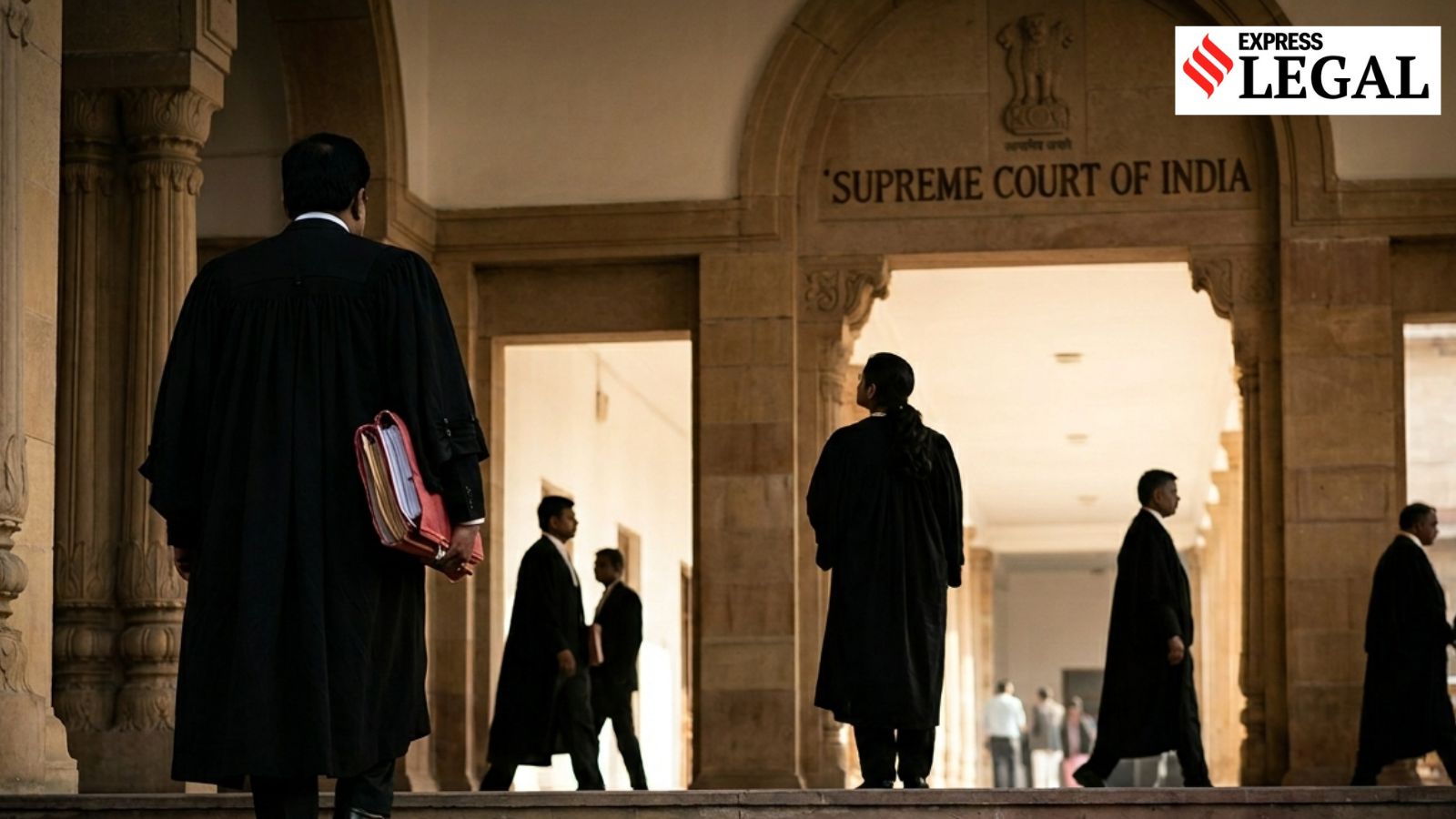

The Supreme Court has raised concerns about an increasing trend among higher courts to criticize judicial officers while exercising their appellate or supervisory authority. This behavior, described as “discordant,” poses a risk to the morale of the district judiciary and could adversely affect the careers of those serving as judicial officers.
During a recent hearing, a bench consisting of Justices Vikram Nath and Sandeep Mehta reviewed an appeal against a Calcutta High Court decision that revoked a defendant’s bail nearly eight years after it was initially granted, citing procedural and technical issues.
The Supreme Court emphasized on April 9 that it has become common for higher courts to disparage judicial officers in their rulings. It stated, “The High Court, as a court of record, should protect the integrity of district judicial officers,” and subsequently overturned the Calcutta High Court’s ruling.
The case arose from a tenancy dispute between the appellant and the complainant regarding part of a building. In 2016, the complainant initiated a civil suit to assert her tenancy rights.
The defendant was granted bail by a magistrate in 2018, which was later affirmed. However, the complainant contested this bail through a criminal revision in the Calcutta High Court the same year, a matter that lingered for several years.
On March 6, a single judge of the Calcutta High Court ruled in favor of the complainant, revoking the bail based on procedural discrepancies and insufficient reasoning.
After this decision, the defendant was rearrested and subsequently granted bail again by the magistrate on March 16. The decision to cancel bail was then appealed to the Supreme Court.
In its ruling, the Supreme Court criticized the high court’s justification, stating that revoking bail after such an extended period on technical grounds was legally indefensible.
The court reiterated that once bail is granted, it should not be revoked arbitrarily unless there are significant reasons, such as the misuse of bail or interference with the administration of justice.
Additionally, the Supreme Court pointed out that the high court overlooked essential facts, including that the dispute had significant civil implications and that there was no evidence suggesting any immediate danger to the complainant.
The apex court also dismissed the negative comments directed at the magistrate by the high court, which included orders to note these remarks in the magistrate’s annual confidential report (ACR) and to seek explanations. The Supreme Court deemed such comments as “entirely inappropriate and unnecessary.”
The Supreme Court emphasized that while it is permissible to scrutinize the orders of subordinate courts, any criticism should be constructive and institutional rather than personal or punitive.
To rectify errors in trial court decisions without jeopardizing the reputation of judicial officers, the court recommended implementing internal administrative processes. It highlighted practices in certain high courts where critiques of judgments are documented separately and submitted to administrative judges for suitable action instead of being included as strictures in public court orders.
The Supreme Court has instructed its registry to disseminate this judgment to all high courts, indicating a push for systematic reform in the management of judicial accountability.
Vineet Upadhyay serves as an Assistant Editor at The Indian Express, where he focuses on comprehensive coverage of the Indian legal system.
His expertise spans various areas, including constitutional and civil rights, criminal justice, enforcement, consumer rights, and environmental law.
With over a decade of professional experience, Vineet previously worked as a Principal Correspondent/Legal Reporter for The Times of India and held important positions at The New Indian Express. His career has involved reporting from key legal centers such as Delhi and Uttarakhand.