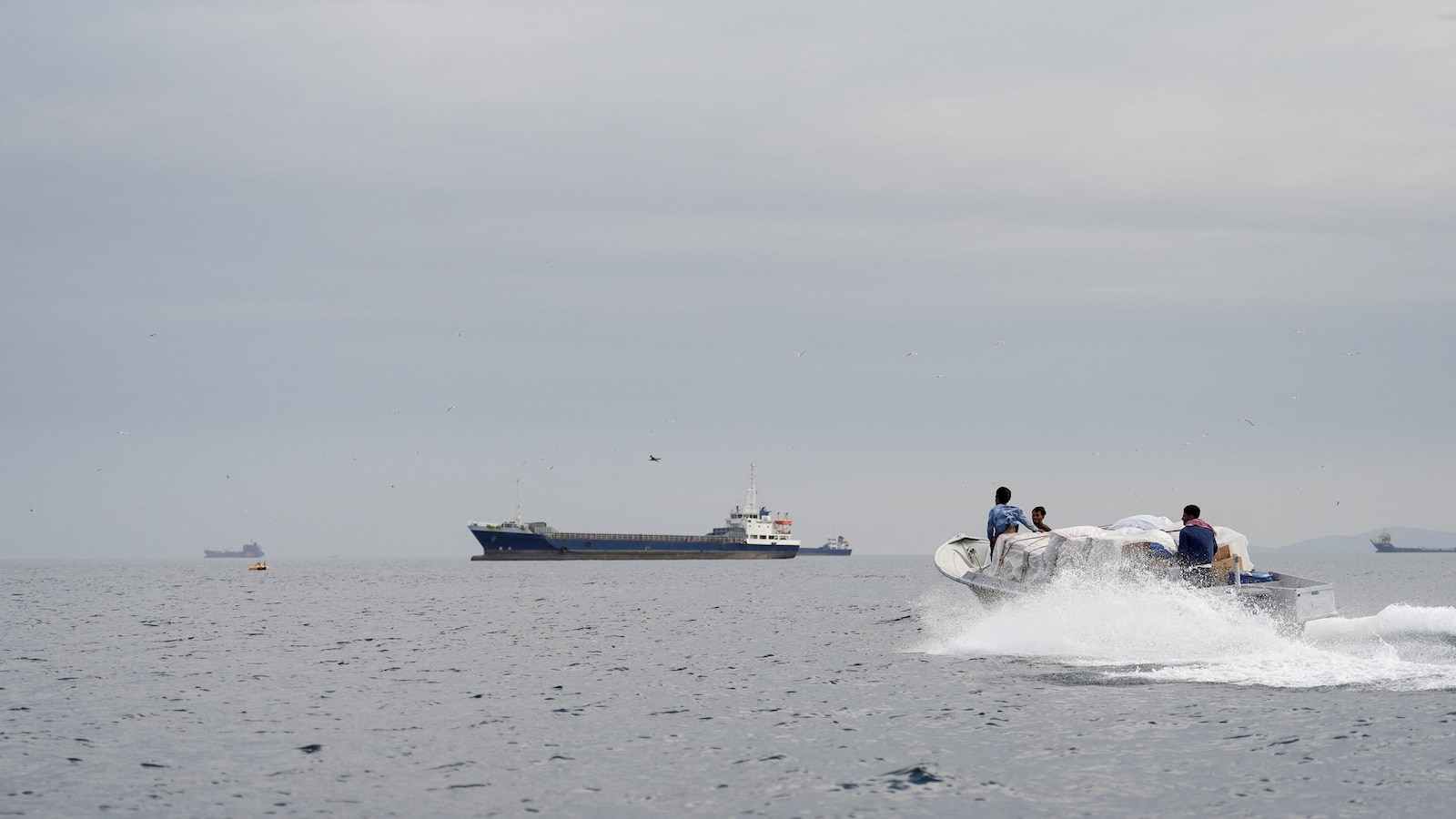

The United States and Iran have asserted that the strategically important Strait of Hormuz is now “fully open.” However, significant uncertainties persist regarding the timeline for restoring commercial shipping to its pre-war volumes.
This vital waterway in the Persian Gulf typically facilitates the passage of approximately 20% of the world’s oil and gas supplies. Since the conflict erupted in late February, very few vessels have navigated through the strait.
On Friday morning, both President Donald Trump and Iranian Foreign Minister Abbas Araghchi announced a new agreement aimed at permitting unrestricted traffic in the Strait of Hormuz.
The strait was initially expected to reopen with the commencement of a U.S.-Iran ceasefire ten days prior, but Iran later retracted, insisting that Israel cease its military actions in Lebanon before proceeding.
Following a recent agreement between Israel and Lebanon, Iran’s Foreign Minister was the first to reveal the new deal concerning the strait.
The announcement prompted a swift and favorable response from financial markets, with oil prices falling by approximately 9% in both U.S. and global markets. U.S. oil is now trading at levels not seen since the early days of the conflict.
Nevertheless, there are crucial caveats to the situation outlined on Friday.
President Trump clarified that the U.S. naval blockade preventing ship movements to and from Iranian ports will remain in effect, meaning that Iranian oil tankers are still unable to transit through the strait.
On his social media platform, Trump emphasized that he would not lift the blockade until a comprehensive nuclear agreement with Iran is finalized. “THE STRAIT OF HORMUZ IS COMPLETELY OPEN AND READY FOR BUSINESS AND FULL PASSAGE, BUT THE NAVAL BLOCKADE WILL REMAIN IN FULL FORCE AND EFFECT AS IT PERTAINS TO IRAN, ONLY, UNTIL SUCH TIME AS OUR TRANSACTION WITH IRAN IS 100% COMPLETE. THIS PROCESS SHOULD GO VERY QUICKLY IN THAT MOST OF THE POINTS ARE ALREADY NEGOTIATED,” he wrote.
The Strait of Hormuz is accessible to vessels traveling to and from ports other than those in Iran. However, U.S. authorities are closely monitoring Iranian maritime activities and are prepared to maintain the blockade as necessary, according to Admiral Brad Cooper, the head of U.S. Central Command, who addressed a small group of reporters including those from ABC News on Friday.
According to Matt Smith from Kpler, a maritime data analytics firm, approximately 700 ships are currently stranded in the Persian Gulf, with around 250 of these being tankers holding 165 million barrels of crude and other products.
Prior to the onset of the war in February, the strait witnessed between 50 and 100 shipments of crude oil and liquefied natural gas daily, as reported by the World Trade Organization. In recent weeks, only a handful of vessels have managed to make the journey each day.
A seafarer, who requested anonymity for safety reasons, shared with ABC News that they are trapped on a “fully loaded” tanker in the Persian Gulf near the strait. “It’s been almost 50 days since the war started, and uncertainty is our greatest fear. Not knowing if we will escape this situation alive is our primary concern because there is no safe place here,” they expressed.
Iran’s declaration that the strait is open also comes with a stipulation that vessels must follow a “coordinated route” established by Iranian authorities, which requires ships to stay closer to Iran’s coastline.
Moreover, there is ambiguity regarding Iran’s acceptance of the continued U.S. blockade. Iranian state media reported that the foreign minister’s statement was “published without the necessary and sufficient explanations.” They indicated that Iran retains full oversight over ship passage and that such passage would be deemed invalid if the alleged naval blockade persists.
Despite the foreign minister’s statement asserting that the strait is “completely open,” the Islamic Revolutionary Guard Corps of Iran announced that the route is restricted, barring military vessels and permitting movements only with the authorization of the IRGC Navy.
On Friday, U.S. Central Command reported that a U.S. Navy guided-missile destroyer had directed an Iranian merchant vessel to return to port, with a total of 19 ships turned around during the blockade.
MarineTraffic data indicates that the first passenger vessel to navigate through the strait following the announcement was an empty cruise ship, the Celestyal Discovery, which had been docked in Dubai for 47 days.
If shipping traffic is to be fully restored, the pace will ultimately depend on the decisions made by shipping companies and their assessment of the associated risks.
Similarly, the International Maritime Organization mentioned that it is “verifying the recent announcement regarding the reopening of the Strait of Hormuz,” without commenting on whether it is considered safe for transit.
ABC News reporters Desiree Adib and Steve Beynon contributed to this report.