
Former head of the Australian Building and Construction Commission (ABCC), Nigel Hadgkiss, has testified before the Commission of Inquiry regarding the Construction, Forestry, Maritime, Mining and Energy Union (CFMEU) in Queensland, revealing that the union has violated industrial regulations on at least 25 occasions over the past 14 years.
During his testimony, Mr. Hadgkiss emphasized the necessity for a formal code of conduct and a regulatory body to oversee compliance, noting that the days lost due to industrial disputes were significantly reduced during the ABCC’s operational period.
Mr. Hadgkiss is scheduled to return for further questioning at a subsequent hearing, where he will face cross-examination from legal representatives of the CFMEU’s administrator.
In his address to the inquiry, Mr. Hadgkiss highlighted the CFMEU’s repeated breaches of industrial laws in Queensland, specifically pointing to their disregard for legal requirements pertaining to workplace access. He stated that these violations have not only disrupted construction activities but have also posed safety risks on job sites.
The inquiry revealed that these infractions resulted in fines totaling $4.57 million for the CFMEU and $1.48 million for individual members. Mr. Hadgkiss cited a particular incident from 2023, where CFMEU officials Michael Ravbar and Andrew Blakely unlawfully accessed construction sites associated with the Cross River Rail project to host an unauthorized union barbecue. Despite being instructed to leave, they remained on site and conducted the event during work hours, leading to significant disruptions and safety concerns.
As a consequence of this incident, Mr. Ravbar was fined $9,320, while Mr. Blakely faced a $12,000 penalty, with the union itself incurring a $204,000 fine.
Mr. Hadgkiss has played a pivotal role in the development and enforcement of various codes governing the building and construction sectors across Australia. He noted that the presence of an active regulatory body, like the ABCC, correlates with improved productivity and safety metrics within the industry.
He advocated for a more stringent code in Queensland to address the current challenges faced by the construction industry. Mr. Hadgkiss resigned from the ABCC in 2017 after admitting to violations of the Fair Work Act concerning right of entry regulations. His departure was met with approval from trade union organizations, including the Australian Council of Trade Unions, whose secretary criticized his leadership style as overly harsh and contrary to workers’ rights.
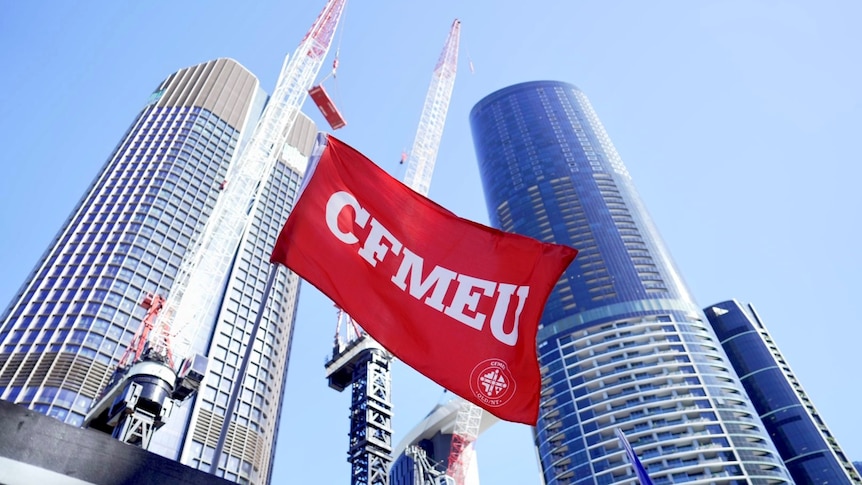
Additionally, Mr. Hadgkiss discussed the importance of the right to association within the proposed code, suggesting that limitations on the display of union flags at construction sites could be necessary. He noted that excessive flag displays often indicate a union-dominated site and can intimidate non-union workers.
He recounted instances where employers faced harassment or violence for attempting to remove union symbols from their sites, illustrating the pressure contractors feel to comply with union demands in order to maintain workplace peace. Mr. Hadgkiss concluded that a robust enforcement body is essential for changing behaviors within the industry, as the lack of regulatory oversight often leads to increased union influence over contractors.
Mr. Hadgkiss is expected to return to the inquiry for further testimony, where he will be cross-examined by CFMEU legal representatives.