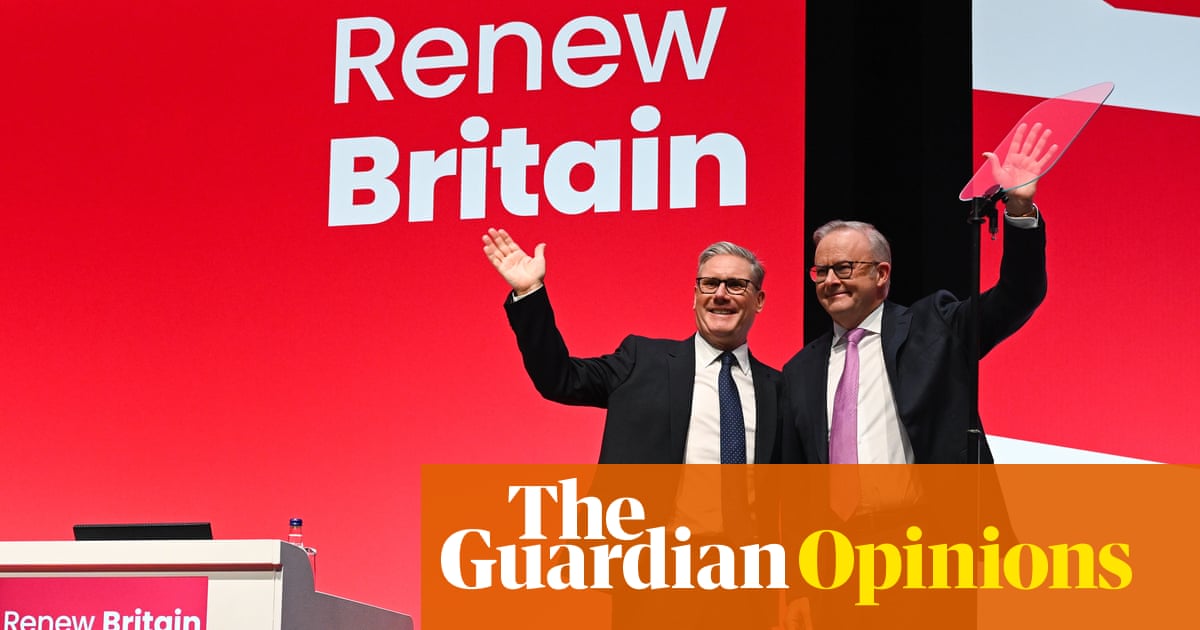

The Labour Party in the UK is currently facing significant challenges, with recent polls suggesting it has dropped to the fourth position among British political parties. The upcoming local elections in May are likely to bring additional difficulties. However, a situation in Australia may offer some inspiration for Keir Starmer and the Labour Party.
Last year, Australia’s Labor Prime Minister, Anthony Albanese, was embroiled in a federal election campaign amid considerable uncertainty. His initial term was characterized by cautious governance with few notable successes. His key initiative, a referendum to establish an advisory body known as a “voice to parliament” for Indigenous Australians, was overwhelmingly rejected. Additionally, his administration struggled to persuade the electorate that it was effectively addressing rising living costs.
Many anticipated a possible defeat for Labor or, at best, a minority government. However, to everyone’s surprise, Albanese achieved a remarkable victory, resulting in a significant electoral swing and a strong parliamentary majority. Since then, the center-right coalition opposing Labor has faced turmoil, leading to changes in leadership within both the Liberal and National parties.
This narrative may provide a glimmer of hope for Labour in the UK during these challenging times. Starmer may be inspired to mirror Albanese’s turnaround. While this notion might seem far-fetched, it was once a distant prospect for Albanese as well.
Despite his strategic abilities, Albanese, often referred to as “Albo,” is not typically recognized for his charisma or eloquence. However, he has capitalized on the current political climate. Following a period of instability in Australian politics, where six prime ministers served between 2007 and 2022 (including two terms for Kevin Rudd), voters sought a return to stability. Albanese was described by some as more of a pragmatic figure than a charismatic leader.
This grounded approach allowed Albanese to regain his footing leading up to the 2025 election. For much of the previous year, the then-opposition leader, Peter Dutton, a staunch conservative, held a lead in the polls. However, the chaotic early days of the Trump administration drew unfavorable comparisons for Dutton. Much like Mark Carney’s experience in Canada, a backlash against Trump created a desire for moderate, center-left governance, facilitating a resurgence for Albanese and Labor. Although Starmer may not encounter the same circumstances, he could benefit if his right-wing adversaries in Reform UK suffer due to their alignment with the former U.S. president.
Starmer’s strategy for the upcoming general election in 2024 appears to echo the successful tactics employed by Albanese in 2022. This includes minimizing targets, advocating for renewal rather than radical change, and not detracting from the unpopularity of the current government. Such guidance likely stems from Australian Labor’s strategy discussions with Labour’s headquarters.
However, even Albanese has come to realize that effective governance requires more than just tactical maneuvers; it necessitates genuine conviction. During his election night address in May 2025, he articulated a guiding principle for his second term: “progressive patriotism,” a concept that Starmer and Labour have also embraced. This initiative aimed to promote national unity while reinforcing Australians’ confidence in their values and institutions, steering clear of the divisive rhetoric associated with Trumpism.
The need for such an approach has become increasingly pressing. Since the previous election, the populist right-wing party One Nation, led by Pauline Hanson, has gained traction, emerging as a strong contender in recent state elections, particularly in Queensland.
Historically, Australia’s economic stability has shielded its political landscape from the kind of unrest often seen when constituents feel overlooked by the political elite. However, there are signs that this immunity is waning. Albanese addressed this concern in a recent speech, stating, “If people feel like the country is not working for them… then government cannot provide stability just by keeping things as they are.” He emphasized that maintaining a status quo that fails to benefit citizens offers no real security.
This scenario presents a vital lesson for Labour. Recently, some party members have urged Starmer to recalibrate his approach, arguing that it is misguided to focus solely on voters attracted to Reform UK, as this strategy risks alienating those gravitating toward the Greens on the left. They advocate for a more progressive positioning.
However, this perspective may only address part of the issue. The challenge may extend beyond mere electoral strategy. It is not a matter of shifting left or right, but rather reconnecting with a disillusioned public that is losing faith in democratic institutions. This effort must begin, as Albanese is currently doing in Australia, by acknowledging that the existing system may not be serving the populace effectively and requires urgent reform.
Does Labour grasp this reality? What principles does it stand for, and who is it truly representing? Unlike its emerging competitors on both sides of the political spectrum, Labour has struggled to provide voters with clear, compelling answers. Without this clarity, the prospects for recovery remain bleak.
Tim Soutphommasane is a professor of political theory and serves as the chief diversity officer at the University of Oxford, having previously held the position of Australian Race Discrimination Commissioner.