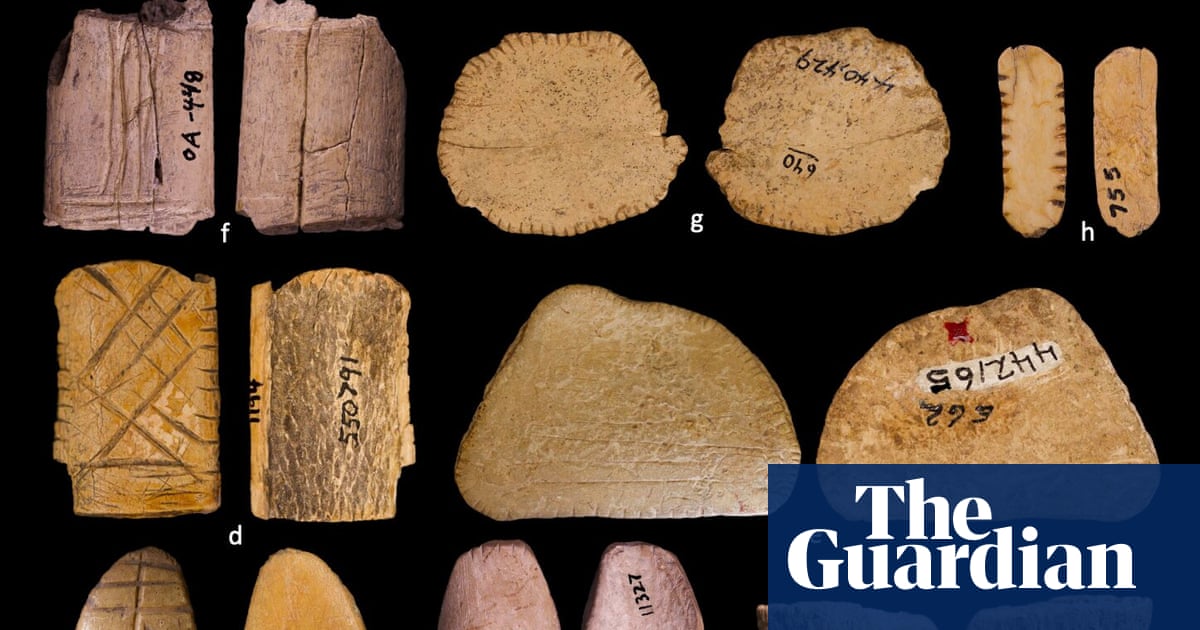

A recent study has revealed that Native American hunter-gatherers were utilizing dice for gaming and gambling purposes over 6,000 years prior to similar practices being documented elsewhere. The research indicates that dice were crafted and employed in the western Great Plains of North America at the conclusion of the last ice age, dating back more than 12,000 years.
Historically, it was believed that the earliest instances of dice originated in the Bronze Age civilizations of Mesopotamia and the Indus Valley. Robert Madden, the study’s author, noted, “Historians have often viewed dice and the concept of probability as developments from the Old World. However, archaeological evidence demonstrates that ancient Native American societies were intentionally creating objects meant to generate random results and utilizing these results in organized games thousands of years earlier than previously acknowledged.”
This evidence implies that early Native Americans had an understanding of chance, randomness, and probability, positioning them as pioneers in humanity’s evolving comprehension and practical application of these concepts.
The research suggests that games of chance and gambling enabled diverse groups with no prior connections to engage, exchange goods, share information, and establish new social ties.
Madden, a PhD candidate in archaeology at Colorado State University, clarified, “Our findings do not assert that ice age hunter-gatherers were practicing formal probability theory. However, they were purposefully creating, observing, and depending on random outcomes in systematic, rule-governed manners that utilized probabilistic principles, such as the law of large numbers. This is significant for understanding the global history of probabilistic thought.”
The oldest examples cited in the study originate from late Pleistocene archaeological sites located in Wyoming, Colorado, and New Mexico. Dating as far back as 12,800 years, the two-sided dice were fashioned from wood or bone and were likely thrown in groups onto a playing surface.
Madden’s research involved re-evaluating artifacts that had often been categorized as “gaming pieces” or had been overlooked entirely. He contends that these misclassified or disregarded items were, in fact, dice.
In an interview with CSU’s The Audit podcast, he explained, “I spent a considerable amount of time systematically exploring online databases and libraries for instances of what I believe are dice. It felt like a treasure hunt, and I kept searching for examples and documenting them. After approximately three years, I compiled the dataset that constitutes this paper, tracing this practice from the well-documented historical period over the last 2,000 years back to the late Pleistocene, around 12,000 years ago. This reveals a remarkable continuity of this practice, which predates the earliest known dice in the Old World by over 6,000 years.”
While the paper references the term gambling, it clarifies that this form of gambling differs from contemporary notions. “When we think of gambling in a modern context, we often envision casinos where players bet against the house,” Madden remarked. “In these ancient games, there was no house involved; it was one player against another. The games were fair, providing equal opportunities and conditions for all participants, and served as a means of exchange, particularly among groups with infrequent interactions.”
The study, titled “Probability in the Pleistocene,” has been published in the journal American Antiquity.