
Australian agricultural producers are monitoring the arrival of crucial fertilizer shipments through the Strait of Hormuz, as the conflict in Iran has led to a significant surge in fertilizer prices, which have risen by 60% since the outbreak of hostilities.
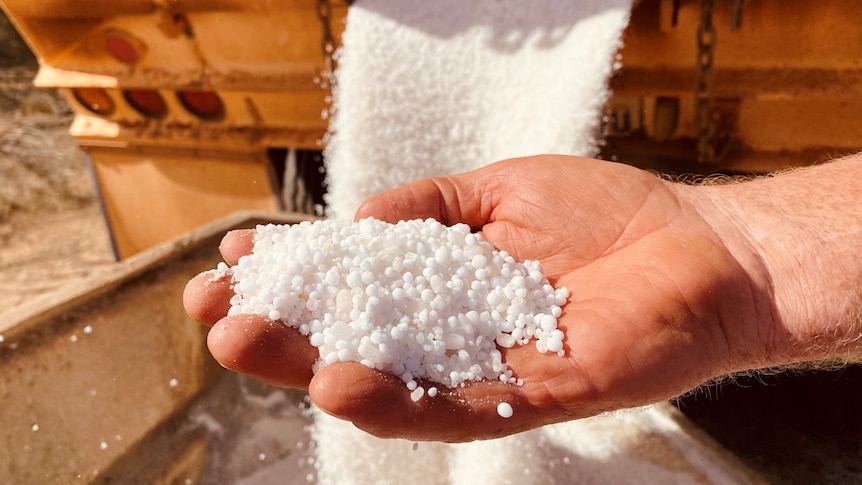
A new facility dedicated to urea production is currently under construction in Karratha, located in Western Australia. Canegrower Dean Cayley, who has never had to rely on his neighbors for assistance, found himself seeking a ton of fertilizer due to the ongoing crisis. “One grower had a bit stored, and he probably only had about five tonnes,” Mr. Cayley explained. “We typically require around 70 tonnes just for my farm.” As the conflict has disrupted the supply chain, urea—a vital component of fertilizer—has become increasingly scarce.
Mr. Cayley emphasized the importance of fertilizers, stating, “Nothing grows without fertilizer and water.” With the winter planting season approaching, farmers are anxiously awaiting deliveries of urea, as approximately 60% of Australia’s supply is sourced from the Persian Gulf. Historically, Australia had a more self-sufficient fertilizer production capability, but that has changed over the years.
The decline in domestic production is evident, particularly after the closure of the urea manufacturing plant at Gibson Island in Brisbane in early 2023, which had operated for over 50 years. The facility shut down due to high natural gas costs. Stephen Annells, CEO of Fertilizer Australia, noted that over the past two decades, local production has decreased significantly due to various factors, including industrial relations, environmental legislation, and energy costs.
Urea, primarily derived from natural gas, is the main nitrogen fertilizer used in Australia. Mr. Annells pointed out that the current prices for gas are prohibitively high for domestic producers. Despite the challenges, the urea industry is not entirely defunct. In 2017, Perdaman Industries announced a plan to construct a new plant in Karratha, with an expected annual output of 2.3 million tonnes of urea. The federal government has invested $490 million into this project through the Northern Australia Infrastructure Facility and Export Finance Australia.
Recently, Perdaman Industries founder Vikas Rambal indicated that the plant might be completed by January 2027, ahead of schedule, thanks to an additional $200 million in government funding and expedited visa processing for up to 400 specialized workers from India. Federal Minister for Industry Tim Ayres expressed the government’s commitment to supporting this initiative, highlighting its importance for Australia’s economic resilience and the necessity for onshore urea production. He also mentioned that options to lower gas costs, including a reservation scheme and market intervention, are being explored.
In 2025, Australia imported approximately 3.8 million tonnes of urea, which is applied before planting and again as a top dressing months later. Argus Media’s fertilizer market analyst Susy Cornford reported that while farmers have sufficient urea for initial applications, supply may be constrained for subsequent needs. The escalation in urea prices has led to what she termed “demand destruction,” as inflated costs and limited availability inhibit market demand. However, she believes that if supply increases, it will be purchased.
Currently, around 235,000 tonnes of urea are en route to Australia on nine vessels, along with an additional 225,000 tonnes of phosphorous fertilizers. Farmers are being encouraged to explore alternative options, although some are advocating for consumer support to offset rising expenses. While urea-based fertilizers dominate the market, phosphate fertilizers are also widely utilized. Mr. Annells noted that Australia possesses significant phosphate reserves in the Georgina Basin, which extends into the Northern Territory.
North West Phosphate extracts between 50,000 and 100,000 tonnes of rock annually, which undergoes minimal processing before being sold domestically, primarily serving the turf and horticulture sectors. Managing director John Cotter explained that his company opted not to manufacture finished synthetic fertilizers due to the prohibitive costs of gas and electricity. In the same area, the Phosphate Hill plant was on the verge of closing in September but has recently found a buyer committed to continuing operations. Despite local production facilities, the majority of phosphorus fertilizers used in Australia are still imported. Mr. Cotter mentioned that his company is collaborating with federal and state authorities to accelerate plans for expanding production to include exports as well.