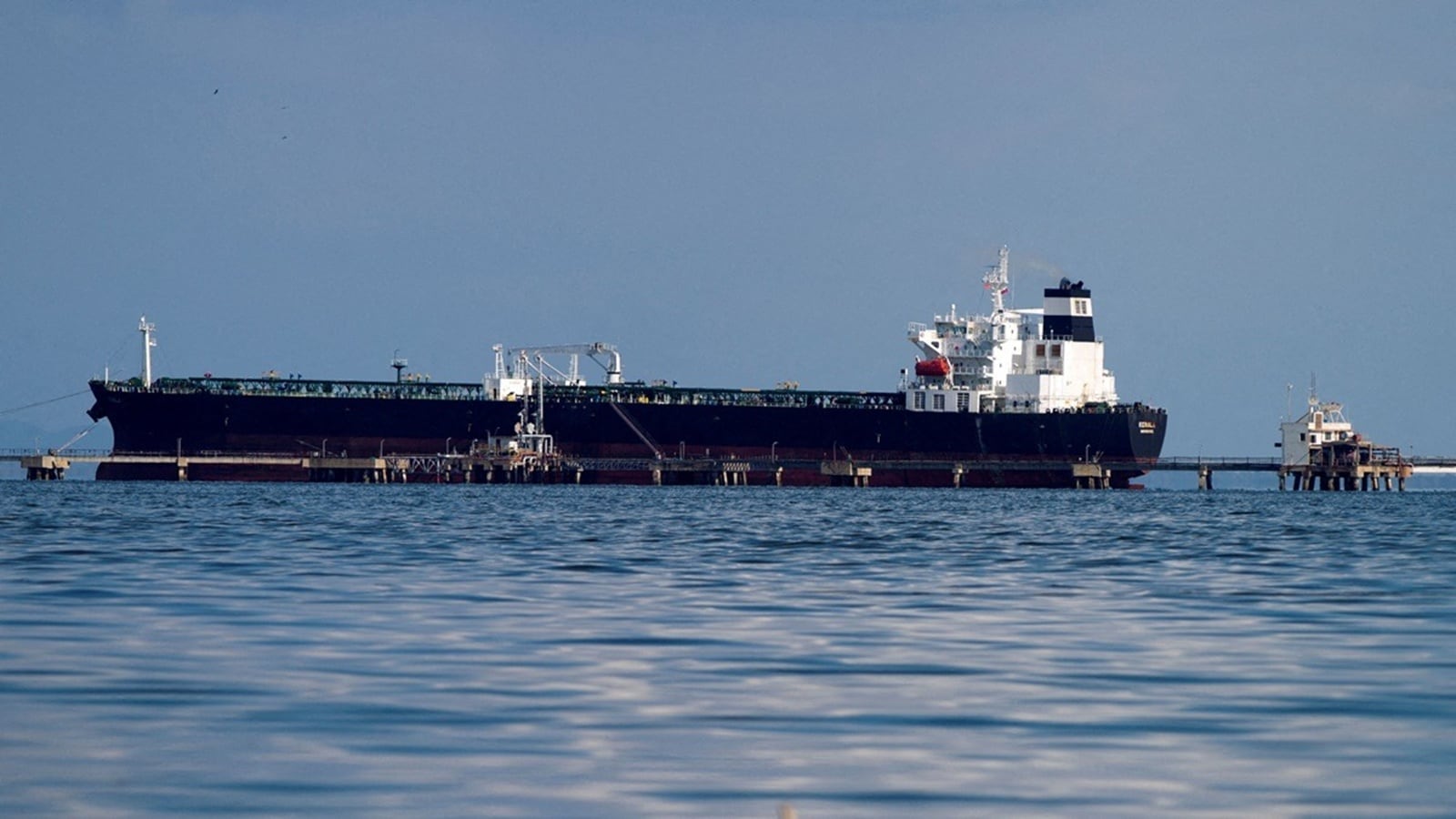

In an unexpected turn of events during the ongoing U.S. blockade of Iranian ports, an Iranian oil tanker, estimated to be carrying approximately 2 million barrels of crude oil, arrived near Gujarat on Tuesday without a specified destination or buyer, as indicated by ship tracking data and industry analysts.
Although India has recently purchased some Iranian oil due to a sanctions waiver granted by the U.S. last month, which allowed the sale of oil already loaded on tankers, Indian refiners are unlikely to acquire oil from this particular tanker. Sources suggest that the cargo was likely loaded after the cutoff date specified in the waiver.
The vessel, identified as the very large crude carrier (VLCC) Derya, reached the waters off Gujarat on Tuesday. According to tracking information from the analytics firm Kpler, it appears the tanker was loaded with Iranian crude on March 28. The U.S. sanctions waiver permitted the purchase of Iranian oil loaded onto tankers before March 20. Since the Derya was likely filled after this date, accepting its cargo could result in secondary sanctions against the buyer imposed by the U.S.
Furthermore, the U.S. has made it clear that it will not be extending the sanctions waiver for Iranian oil. Following unsuccessful peace negotiations between Washington and Tehran over the weekend, the U.S. Navy initiated its blockade of Iranian ports on Monday. This blockade aims to impact Iran’s energy export revenue, particularly to China, further indicating that the sanctions waiver on Iranian crude will not be prolonged.
Given these circumstances, industry experts believe that Indian refiners are unlikely to engage with the oil from this tanker, which may struggle to find buyers elsewhere, except potentially in China. The Derya is operated by Iran’s National Iranian Tanker Company (NITC) and is already under U.S. sanctions, according to global shipping databases.
It is likely that the tanker passed through the Strait of Hormuz before the U.S. blockade commenced on Monday. As of Wednesday afternoon, data from Kpler’s marine intelligence service MarineTraffic indicated that the Derya remained near Gujarat, having made little progress since its arrival on Tuesday.
In light of the ongoing conflict in West Asia, the U.S. had suspended sanctions on Iranian crude already loaded on tankers for a month, starting March 21. This move was intended to facilitate the flow of oil into the international market, thereby alleviating global supply issues and curbing rising crude oil prices. The waiver was akin to one issued for Russian oil earlier in March, during which India has seen a significant increase in Russian oil imports. India has not imported Iranian crude since May 2019, following the reimposition of U.S. sanctions under the previous Trump administration.
The general license issued by the Office of Foreign Assets Control (OFAC) of the U.S. Department of the Treasury on March 21 authorized transactions related to the sale, delivery, or unloading of crude oil and petroleum products from Iran that were loaded onto vessels, including U.S.-sanctioned tankers, before 12:01 AM Eastern Daylight Time (9:31 AM India time) on March 20, valid until April 19.
Following the waiver, at least two tankers carrying Iranian oil and one transporting Iranian liquefied petroleum gas (LPG) have reached Indian ports in recent days, marking the first energy supplies from Iran to India in nearly seven years. Over the recent weekend, the tankers Jaya and Felicity—both carrying Iranian oil—arrived in Indian waters. The Jaya docked at Paradip port for the Indian Oil Corporation (IOC), while the Felicity reached Sikka port for Reliance Industries (RIL), according to industry reports.
Earlier this month, the Indian government confirmed its purchase of Iranian crude, stating that there were no payment-related obstacles to acquiring oil from Tehran following the sanctions waiver. The Petroleum Ministry noted on April 4 via social media that India imports crude oil from over 40 countries, allowing companies flexibility in sourcing oil based on commercial factors. Amid disruptions in Middle Eastern supply, Indian refiners have secured their crude oil needs, including from Iran, with no payment hurdles for these imports.
Vessel traffic through the Strait of Hormuz has been largely suspended due to the conflict that began on February 28; however, Iranian oil shipments have continued relatively uninterrupted. The Strait is crucial, accounting for about one-fifth of global oil and liquefied natural gas (LNG) shipments. Recently, around 2.5 to 2.7 million barrels per day of India’s crude imports—approximately half of its total oil imports—have passed through this strategic waterway, although the long-term average stands around 40%. India relies on imports for over 88% of its crude oil requirements.
Sukalp Sharma serves as a Deputy Associate Editor at The Indian Express, covering various topics and sectors, particularly energy and aviation. With over 16 years of journalistic experience, he has explored numerous areas, including politics, development, equity markets, corporate affairs, trade, and economic policy. He is also an avid photographer who enjoys traveling.