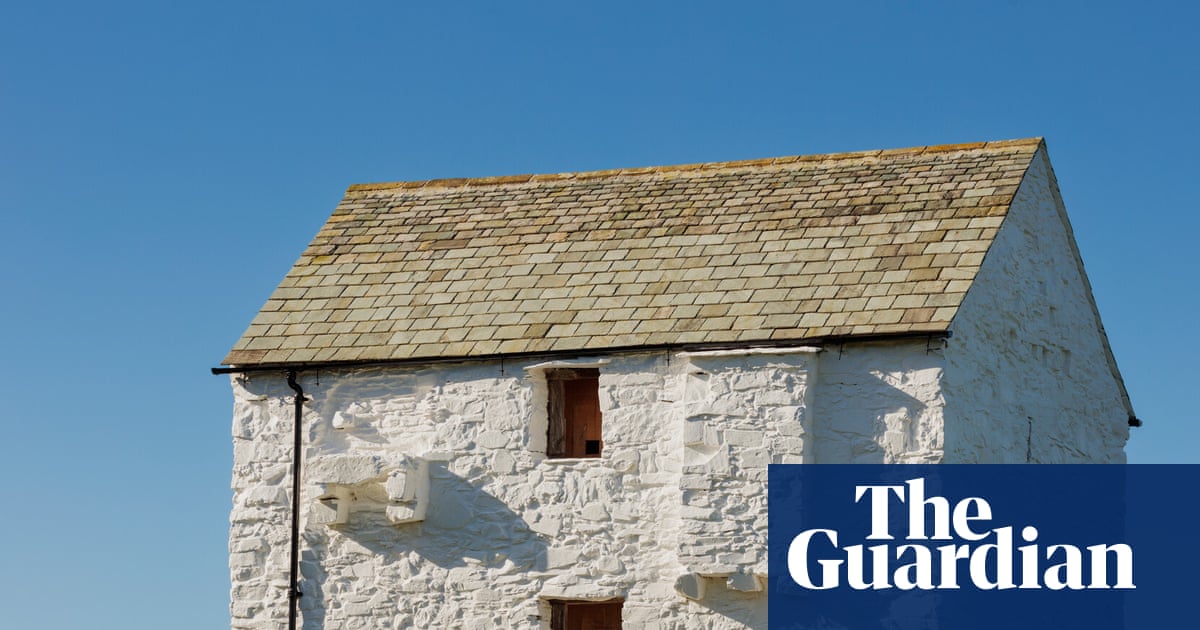

A prestigious roster featuring some of the most remarkable and visually striking edifices in England now includes a unique limestone structure, commonly referred to as Henry’s Castle, situated in the picturesque Lake District. This building, which was recently utilized as a shelter for livestock, joins other notable landmarks such as Battersea Power Station, Middlesbrough’s Transporter Bridge, and the London Coliseum.
The Department for Culture, Media and Sport has conferred listed status upon Henry’s Castle based on recommendations from Historic England. This designation is particularly significant as only 5.8% of listed buildings achieve the Grade II* classification, indicating they possess “more than special interest.”
Investigations suggest that Henry’s Castle may trace its origins back to the 14th century and exhibits characteristics indicative of a high-status structure. Although it has served as a field barn, its initial purpose remains uncertain.
Sarah Charlesworth, the leader of the listing team at Historic England, commented, “Henry’s Castle is a remarkable structure that prompts more inquiries than it resolves. This enigmatic quality is part of its allure.”
Rose Lord, an advisor on built environments at the Lake District National Park Authority, visited the site in 2022. Despite its unsightly condition, marked by layers of animal waste, she recognized it as a significant site, stating, “I could tell it was definitely more than just a field barn.”
She noted features such as a corbelled chimneystack and a corbelled garderobe, which hinted at the barn’s complex history. “The interior was plastered and limewashed, and evidence of fire usage was apparent. The configuration of fireplaces, windows, and doors was unlike anything I had encountered before,” Lord added.
Over a span of four years, a team of archaeologists, architects, and conservation engineers has worked diligently to restore and preserve the building. The oak roof structure stands out as its most extraordinary element, characterized by a hand-finished, chamfered, and pegged central truss typical of high-quality carpentry from the 14th or 15th centuries.
The building’s intended function remains a subject of speculation, with theories suggesting it may have served as a lookout point with defensive capabilities. “Could it have been a hunting lodge for a deer park?” pondered Lord. “It might have also been an elaborate summer residence used only occasionally.”
Historic England noted that Henry’s Castle shares traits with bastles, fortified farmhouses found in the Anglo-Scottish borders designed to safeguard agricultural families and their livestock from invaders. However, its location in a valley near Kendal, a half-hour walk from Underbarrow village, places it too far south to be classified as a bastle.
During the 16th or 17th century, the structure was adapted for domestic purposes and eventually transitioned to a field barn by the 19th century. It derives its name from a farmer named Henry Willison, who was its former owner.
Lord expressed that achieving such a prestigious listing was the “cherry on the cake” for the rewarding restoration project. “Most buildings of this significance have already been identified in earlier surveys,” she remarked.
In the upcoming weeks, interpretation panels will be installed, alongside a nesting box intended to attract owls to the area.