
Upon arriving in Tajikistan with my boyfriend, Tim, to undertake the ascent of two 7,000-meter peaks, I was engulfed by a pervasive sense of unease. This feeling, difficult to pinpoint, manifested as a constant, unsettling hum within me.
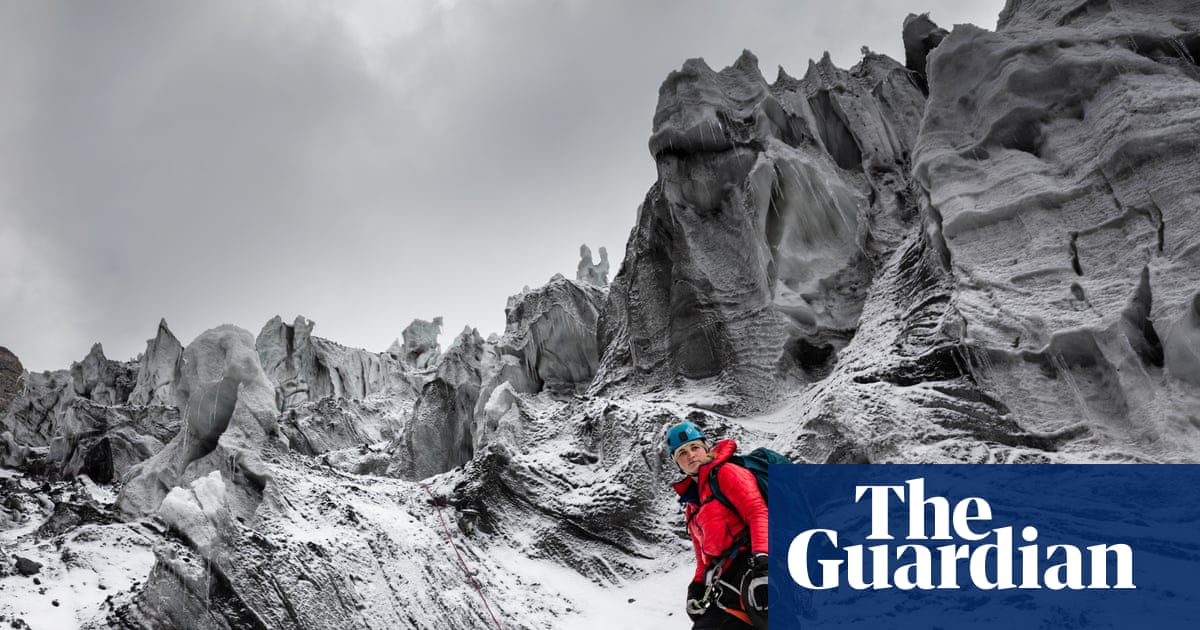
We were airlifted to a jagged glacier that would serve as our base camp, providing some protection against the potential for avalanches from the towering mountains surrounding us. As we descended, the helicopter flew perilously low, almost grazing the sharp ice formations beneath us. The aircraft itself was aging, evidenced by a noticeable gap in its rear, which contributed to my growing apprehension.
Once the helicopter departed, we found ourselves isolated with a small group of climbers, awaiting a pickup in a month. In 2018, Tim and I had arranged our climb independently, a choice I often make to keep costs manageable. The Pamir mountains, while less renowned than the Andes or Himalayas, offered the remoteness and adventure we sought.
On paper, our itinerary appeared straightforward; however, the reality revealed a far more challenging scenario. The climbing route proved to be significantly more technical than the sparse online accounts had suggested. Each day involved steep ice climbs, unstable crevasses, and a looming deadline—failure to vacate certain ice walls by 4 PM could trigger dangerous landslides. We encountered daily avalanches and rockfalls that narrowly missed us, which is not uncommon in such environments. Additionally, the fixed lines intended to assist climbers were essentially useless, resembling mere garden twine. Fortunately, we had brought our own equipment.
Yet, it was not solely the harsh conditions that troubled me. From the moment we arrived, an intangible sense of foreboding lingered, unrelated to fears of failure or disappointing others. I had previously retreated from climbs without hesitation, but this feeling was different—subtle and hard to articulate. The heightened uncertainty surrounding our expedition made every decision feel consequential, compelling me to consider descending from the mountain.
I assured both myself and Tim that we would prioritize safety. Our first peak, Korzhenevskaya (renamed Ozodi Peak in 2020), proved too hazardous to continue, and we turned back at approximately 6,800 meters. It simply was not worth the risk.
Back at base camp, we awaited our scheduled helicopter pickup on August 12, five days away. Despite repeatedly inquiring with local coordinators about an earlier departure, they were hesitant to alter the timetable. With limited communication, as most spoke only Russian, we were left feeling isolated and fatigued, forced to accept our circumstances.
Then, the day preceding our scheduled flight, the distant sound of helicopter rotors reached us. Another pick-up was arriving, but it was not for us. A sense of disappointment washed over me until someone called my name, offering us a chance to board if we hurried.
We scrambled to pack, my body wracked with coughing due to altitude sickness and exhaustion. Even base camp had been a grueling experience, devoid of any comforts.
As we ascended, the helicopter barely cleared the glacier’s peak. During the flight, Tim and I held hands, and upon landing safely, I experienced a long-missed sensation of relief and tranquility.
The following day, the same helicopter returned to collect the remaining climbers. Tragically, we later learned that it had never made it back. The flight we were originally scheduled for crashed into the glacier, resulting in the deaths of five individuals. The thirteen survivors endured a harrowing night amidst the wreckage. Remarkably, two of the deceased had occupied the very seats we had sat in, as the tail section struck an ice tower, leading to a catastrophic loss of control.
Back in London, life returned to normal for Tim and me. Despite having experienced numerous expeditions, I couldn’t shake the feeling that our journey to Tajikistan had been distinct from the outset.
Since then, I have learned to heed my instincts, regardless of the situation. It’s natural to feel apprehensive before any adventure—often a beneficial response that sharpens one’s awareness and prompts thorough preparation. However, I have also come to understand that fear and intuition are not synonymous. Fear is loud and urges you to stop, while intuition often communicates quietly, asking for your attention.
Now, if something feels amiss, I no longer disregard it. I recognize the importance of voicing my concerns and taking action, even when it may seem irrational. Opportunities are not always guaranteed to come around again.
Lucy Shepherd’s book, Into the Wild, is set to be published by Penguin Michael Joseph on April 16, priced at £25. To support the Guardian, you can order your copy at guardianbookshop.com, though delivery charges may apply.