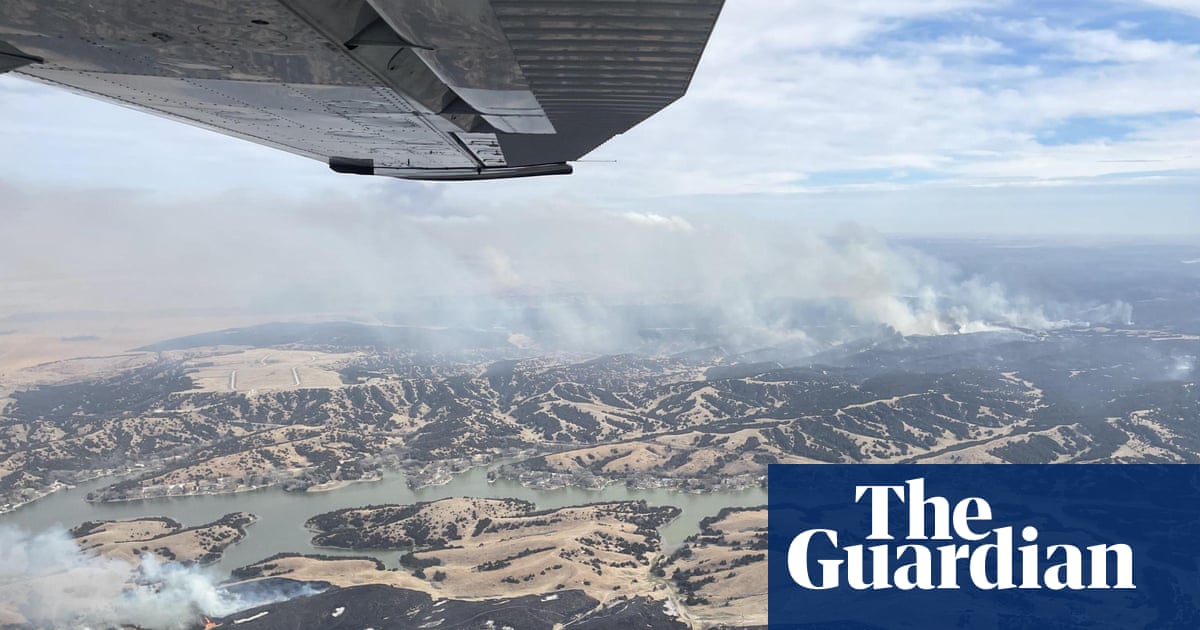

Typically, the expansive grasslands of the American Great Plains would begin to flourish with greenery during this time of year. However, the central region of the United States, home to many beef ranchers, has faced devastating wildfires this spring, resulting in over a million acres of land being scorched and rendered lifeless.
In Nebraska, several significant fires have erupted, breaking previous records for land burned within a single month. The most notable incident was the Morrill fire, which ravaged more than 642,000 acres before being brought under control in March, marking it as the largest wildfire in the state’s history.
Fires are not uncommon in this area during the early season, as the low levels of precipitation leave the grasses dry and dormant, and powerful winds sweep across the plains. While regions in the western United States typically experience their most severe fire threats in the summer and fall, the grasslands are particularly vulnerable to ignitions in the spring.
In recent years, however, the frequency and severity of wildfires have escalated dramatically.
According to Dr. Dirac Twidwell, a rangeland ecologist at the University of Nebraska, there is a notable shift in the wildfire dynamics within this region. He explains that extreme weather patterns can lead to an increased likelihood of catastrophic fires. Intense summer storms contribute to grass growth, which, if unprotected by snow cover, dries out and elevates fire risks, particularly when winds pick up.
This year, Nebraska experienced a convergence of conditions that set the stage for disastrous fires. Following a summer of heavy rains, the winter turned out to be the second warmest and fourth driest on record.
Dr. Twidwell remarked, “The probability of ignition skyrockets. The conditions have aligned unfavorably.”
As temperatures rise and seasonal extremes become more prevalent, the cattle-producing regions have been battered by spring wildfires in recent years.
In February 2024, Texas witnessed its most extensive wildfire ever, transforming the scenic hills of the Panhandle into a desolate landscape, with local estimates indicating over 10,000 livestock fatalities linked to the blaze. The following year, Oklahoma faced a series of fires throughout March, which resulted in the destruction of hundreds of homes and claimed four lives.
The alarming trend persisted in March 2026, with a massive fire in Nebraska that spread rapidly, traversing more than 70 miles in just 12 hours. The Morrill fire tragically took the life of 86-year-old Rose White, a great-grandmother, who was attempting to escape her home. This fire devastated parts of the Nebraska Sandhills, one of the world’s largest remaining temperate grasslands, turning lush areas into ash and sand.
The Morrill fire was not an isolated incident; numerous other fires have erupted across Nebraska recently. Many miles of fencing and grazing land have been destroyed, leading to significant livestock losses.
Collin Thompson, a rancher in Nebraska, expressed his heartbreak as he surveyed the damage left by the Cottonwood fire, which consumed approximately 130,000 acres. In a video shared by the Nebraska Farm Bureau, Thompson described his land as resembling a war zone, stating, “The fire took all the grass. There’s none left.”
Homer Buell, a fourth-generation rancher, noted that he had never encountered a winter as dry as this one. While his property was spared from the recent fires, he acknowledged the ongoing challenges faced by the community.
The concentration of cattle operations in the Great Plains raises concerns about long-term impacts from the fires, especially if the grasses do not recover swiftly. Nebraska, a leading beef producer where cattle outnumber residents by four to one, faces significant worries about range recovery. Experts predict that grazing may not be feasible on burnt lands for the remainder of the year.
The ranching communities, bonded across state lines, have begun receiving donated hay from volunteers nationwide, providing some relief. However, ranchers remain hopeful for beneficial summer rains to aid in the recovery of the scorched pastures.
As of late March, over 40% of Nebraska was classified as experiencing “extreme drought,” and nearly half of the High Plains region, which includes Wyoming, Colorado, Kansas, and the Dakotas, was reported to be in “severe drought.” The drought has also affected rangelands and water resources in Texas and Oklahoma, according to a federal drought status report issued on April 2.
The wettest months are yet to come for the Great Plains, which typically sees the bulk of its rainfall in spring and summer. If precipitation falls short or arrives too forcefully, communities may continue to face hardships.
Buell emphasized that the most significant impacts of the fires may be felt long after they have been extinguished. He pointed out that losing the feed source for cattle is just one consequence, with secondary effects potentially being equally or more detrimental, particularly if rain arrives post-fire. “If we don’t get rain, it’s truly a dire situation,” he remarked.
Nevertheless, experts are optimistic that the affected lands will recover and may even emerge healthier than before.
Historically, wildfires regularly swept through these grasslands long before they were cultivated for ranching and farming. Such fires were naturally ignited and also intentionally set by Indigenous peoples to promote the regeneration of vegetation and soils.
Dr. Victoria Donovan, an assistant professor of forest management at the University of Florida, noted, “While I hesitate to use the term benefit due to the devastating impact on people, fires can play a role in maintaining ecosystem health.”