I have never identified as a religious or spiritual individual, despite being raised in a devout community. Throughout my schooling and university years, I encountered numerous friends and acquaintances who attempted to engage me in various forms of prayer disguised as social activities. During a particularly challenging time in my youth, I briefly experimented with prayer, seeking divine intervention to change my sexual orientation, but fortunately, my pleas went unanswered.
Even with my skepticism towards organized religion, I have always held a certain admiration for nuns and similar figures. This fondness may be influenced by popular culture, particularly the films Sister Act and its underrated sequel, Sister Act 2. While there are numerous distressing accounts involving nuns and others in positions of authority, these women are frequently depicted as compassionate and approachable representatives of the patriarchal structures within organized religion, devoted to noble causes and actively caring for their communities—except for Sister Michael from Derry Girls.
This topic has been particularly relevant for me lately, especially after learning about the Dominican Sisters of Mary, Mother of the Eucharist, a Catholic order. While I may not fully understand the significance of their name, I have gleaned information from social media, particularly that they have launched a podcast as part of their outreach efforts. This initiative, devoid of personal phones or involvement in production from the sisters, allows them to share their thoughts and experiences through simple conversation. They cover a range of topics, including insights into their daily lives.
A moment that gained widespread attention occurred when one sister expressed her enjoyment of playing ultimate Frisbee at their residence, to which another sister enthusiastically responded, “Sister, and you are so good at that!” This exchange quickly became popular, not solely because it features religious sisters hosting a podcast—which can be surprising—but also due to the calmness and authenticity they exude. In an era dominated by cruelty and superficiality, their genuine kindness is especially appealing.
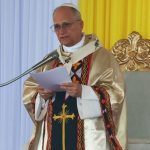
Recently, former U.S. President Donald Trump engaged in a public disagreement with Pope Leo, following the latter’s remarks during prayer, where he condemned idolatry, the pursuit of power, and war, emphasizing that true strength lies in serving life. Interpreting these comments, it appears they were directed at Trump and the conflict involving Iran. In response, Trump labeled the pope as “soft on crime,” a statement I would have once considered suitable for satire prior to 2017. It is ironic that the leader of the Catholic Church, an institution I have often criticized and with which I have fundamental disagreements, now appears to be articulating the most rational and humane viewpoints: denouncing war and affirming the value of human life.
In recent months, I have observed many former Catholics jokingly remarking about how Pope Leo is awakening their latent Catholic feelings, alongside non-Catholics resonating with his messages. This trend seems to reflect a yearning for moral clarity rather than spiritual revival. It is reassuring to see someone in a position of authority correctly identifying ethical right and wrong, especially as many contemporary leaders seem to lack the courage to do so. While I do not foresee myself converting to Catholicism or embracing religion, the alarming events in the world—from genocides and inhumane wars driven by greed to pervasive issues like human trafficking and the negative impact of generative AI—have led me to seek something greater.
Humanity has always been capable of evil, but the current climate makes such malevolence feel particularly acute. The brazen nature of these actions, often perpetrated by those who profess to be devout, is striking. Observing individuals who claim religious faith engage in heinous acts for personal gain has prompted me to reconsider the concept of souls—something I had previously not contemplated.
I perceive these individuals as lacking substance, as empty shells. Witnessing their unpunished transgressions is profoundly disheartening, leading me to hope that the afterlife they assert to believe in is indeed real, as it would be fitting for them to face eternal consequences for their deeds. However, the psychological toll of observing their unchecked behavior has stirred an unfamiliar sentiment within me. It is not faith per se, but rather a belief that humanity is capable of much better.
While I doubt I will ever embrace religion, I find myself increasingly connected to those who demonstrate kindness and a desire to care for one another and the planet. This inclination does not stem from a desire to embody a certain archetype; rather, I simply want to see improvements in the world and feel anger towards those perpetuating harm. I yearn for accountability for their actions, which remain elusive, thus fostering a profound moral solidarity with others that resembles a form of non-religious faith.
Those who are able must resist the encroaching darkness—not for the sake of reward in an afterlife, but because it is fundamentally the right course of action. And Sister, you could excel at that.