By Florion Goga, Middle East Correspondent
Greetings from Riyadh, Saudi Arabia. This is Matthew Doran, ABC’s correspondent in the Middle East, reporting on day 48 of the ongoing conflict, day nine of the newly established ceasefire—which is expected to extend to Lebanon—and day four of the US-imposed blockade on the Strait of Hormuz.
US President Donald Trump has once again utilized social media to announce significant developments, stating that a 10-day ceasefire in Lebanon will commence at 7 AM AEST on Friday. The current hostilities in Lebanon, which have persisted despite a broader truce between the US, Israel, and Iran, primarily involve Israel and the militant group Hezbollah, resulting in numerous civilian casualties.
Israeli Prime Minister Benjamin Netanyahu indicated that the Israeli military would maintain a presence within 10 kilometers of the Lebanese border during the ceasefire, designating this area as a “security zone” that is “stronger, more powerful, more continuous, and more solid” than before. He emphasized that the peace negotiations hinge on two main conditions: the disarmament of Hezbollah and a sustainable peace agreement, while acknowledging Hezbollah’s stipulations for a full Israeli withdrawal and a “quiet-for-quiet” ceasefire arrangement. Hezbollah has urged residents to “remain patient and endure” and advised against returning to homes in targeted regions until the situation is clearly resolved, citing Israel’s history of failing to uphold agreements.
The Israeli security cabinet held a meeting on Thursday evening to finalize the details of the ceasefire. Israel’s public broadcaster KAN suggested that President Trump was “forcing” this ceasefire upon Israel in a bid to strengthen his negotiations with Iran.
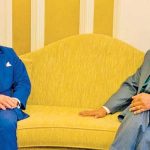
Lebanon’s Prime Minister Nawaf Salam expressed support for the ceasefire, characterizing it as a goal his government has been advocating for since recent discussions between Israeli and Lebanese ambassadors in Washington. Trump mentioned plans to invite both leaders to the White House for further “meaningful talks.”
Earlier in the day, speculation arose about a potential phone call between Netanyahu and Aoun. Trump claimed on Truth Social that this would mark the first conversation between the leaders of Israel and Lebanon in over 30 years; however, Lebanese network LBCI reported that President Aoun informed US Secretary of State Marco Rubio that he would not be accepting a call from Netanyahu anytime soon.
Prior to the ceasefire announcement, Israel had destroyed the last bridge connecting southern Lebanon to the rest of the nation, continuing its airstrikes against alleged Hezbollah targets. The Israeli military campaign over the past six weeks has resulted in nearly 2,200 fatalities, including many civilians, and has displaced over one million Lebanese individuals.
US Defense Secretary Pete Hegseth, referred to as the Secretary of War by the Trump administration, stated that Iran’s new Supreme Leader Mojtaba Khamanei is injured but believed to be alive. During a Pentagon briefing, Hegseth conveyed that the US military is “locked and loaded” to resume strikes against Iran if a resolution to the conflict is not reached.
What does this signify? For several days, it seemed that a ceasefire in Lebanon was imminent, particularly following a week-long pause in hostilities elsewhere in the region. However, achieving this agreement was expected to be complex. Discussions between the Israeli and Lebanese ambassadors to the US earlier in the week, although separate from US-Iran negotiations regarding the broader conflict, indicated the White House’s determination to leverage all possible avenues.
It appeared that these diplomatic talks were initiated under US pressure for Israel to alter its approach, as there were concerns that the IDF’s extensive bombardment of Lebanon—culminating in over 300 deaths in a single 10-minute span last Wednesday—could jeopardize prospects for a deal with Iran to reopen the Strait of Hormuz and address its nuclear intentions.
Tehran, supported by mediator Pakistan, asserted that Lebanon was always included in the regional ceasefire, while Israel, with US backing, maintained otherwise. Following Trump’s announcement, the initial lack of public support for the ceasefire from the Israeli government suggested reluctance to reach this point. Avigdor Liberman, a political opponent of Netanyahu and former defense minister, criticized the ceasefire, calling it a “betrayal of the residents of the north,” who have endured relentless Hezbollah rocket attacks over the past six weeks.
Hezbollah representative Hassan Fadlallah was quoted in Iranian state media as stating that Tehran’s “efforts have borne fruit in establishing a comprehensive ceasefire in Lebanon.” Trump’s ambition to be perceived as a significant deal-maker on the global stage is evident, but the real challenge lies in the specifics and enforcement of this ceasefire.
The last ceasefire agreement in Lebanon, reached between Israel and Hezbollah in late 2024, did not effectively end hostilities. Israel faced accusations of frequent violations by conducting strikes deep within Lebanese territory whenever it perceived a threat from Hezbollah. Recent events in Gaza also illustrate Israel’s willingness to continue its military actions, even in the face of potential agreements. It is unlikely that Israel will immediately withdraw its forces from southern Lebanon.