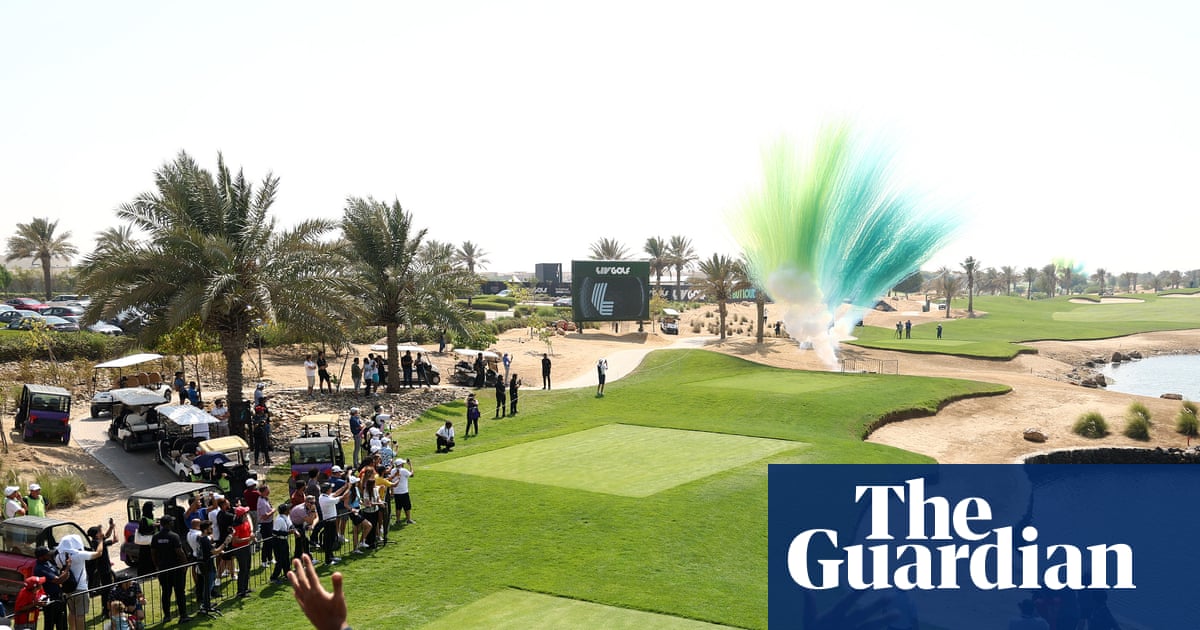

This week, an unexpected gathering of LIV Golf executives in New York has sent ripples throughout the sports industry, reaching far beyond their upscale offices in Hudson Yards, Manhattan.
While a reduction in Saudi Arabia’s extravagant sports spending was anticipated—having reportedly cost the kingdom over $10 billion in the last five years—the recent announcement from the Public Investment Fund (PIF) regarding its withdrawal of financial backing for LIV Golf has taken many by surprise.
Notably, PIF’s potential cutback was not mentioned in an email from LIV’s CEO, Scott O’Neil, to his employees on Wednesday evening, heightening anxieties among staff about job security. These concerns extend beyond golf, as other sports officials worry that they too may face similar budget reductions from Saudi Arabia.
LIV Golf has been the primary channel through which Saudi Arabia aimed to establish itself as a prominent player in the global sports arena over the past five years, channeling over $5 billion into the rebel tour. However, LIV is not the only sector impacted by PIF funding; numerous sports, including football, boxing, motorsport, tennis, esports, and mixed martial arts, have also become interdependent on this financial support. As one sports executive outside of golf remarked, “We all rushed to Saudi for quick profits and now we’re left questioning the future.”
Despite facing criticism for sportswashing, Saudi Arabia has maintained that its sports investments are integral to its broader Vision 2030 initiative, which seeks to diversify the economy away from oil and into areas such as leisure and tourism for domestic advantage.
A source familiar with both the Saudi Ministry of Sport and the Saudi Pro League has indicated that the rumored cuts to LIV should be understood within this context, as PIF shifts its focus toward investments that promise financial returns and long-term benefits for the economy and public health. “The current investment strategy prioritizes domestic advantages and the establishment of sustainable businesses,” they explained. “LIV is increasingly seen as a remnant of a past era, making it particularly vulnerable.”
It is telling that reports regarding LIV’s potential downfall coincided with PIF releasing its financial strategy for 2026-2030, which underscored the importance of “value realization through performance, innovation, and private sector engagement.” While sports did not feature as one of PIF’s six main investment areas, it will be included under the umbrella of tourism, travel, and entertainment.
Another source with government ties suggested that the shift in policy reflects a broader move towards privatizing Saudi Arabia’s sports sector, which sheds light on LIV’s precarious position. Although individual teams may be sold off, achieving this would be challenging; O’Neil acknowledged earlier this year that even with a reduced prize fund, it could take another decade for the tour to become profitable.
In a contrasting move, PIF confirmed the sale of a 70% stake in its Saudi Pro League club, Al-Hilal, to a private firm owned by Prince Al Waleed bin Talal Al Saud, illustrating why football is perceived as a more promising long-term investment.
While PIF retains majority stakes in three other SPL clubs—Al-Ittihad, Al-Ahli, and Al-Nassr—plans are in place for their eventual sale. Cristiano Ronaldo holds a minor stake in Al-Nassr, and there are hopes that he may increase his investment after his playing career concludes.
Efforts are also underway to attract more private investment for the 11 new stadiums being constructed for the 2034 World Cup. Although some budgets have been trimmed and timelines extended, a significant portion of PIF’s World Cup funding remains protected.
However, FIFA may soon face challenges regarding Saudi Arabia’s commitment to sustainability, as further spending cuts are on the horizon.
While PIF’s subsidiary, Surj Sports Investments, reportedly fulfilled its $1 billion commitment to DAZN, which financed the streaming service’s acquisition of Club World Cup TV rights from FIFA last year, sources have characterized this as a singular transaction unlikely to be repeated.
Given DAZN’s substantial losses exceeding $2.5 billion in 2023 and 2024, it is hard to foresee SURJ turning a profit on this investment in the near future, which may leave FIFA in a difficult position when seeking to sell the next set of Club World Cup rights before the 2029 tournament.
PIF’s pivot toward privatization also raises questions for Newcastle United, which has benefitted from around £500 million in investments since PIF’s acquisition of the club for £305 million four years ago. Sources from Newcastle reported on Thursday that they have received assurances regarding the club’s significance within PIF’s strategic portfolio, though the practical implications of this remain uncertain.
While PIF’s spending ability on Newcastle is constrained by Premier League and UEFA financial regulations, the ongoing delays regarding plans for a new £1 billion stadium are noteworthy.
Beyond football, sources in Saudi Arabia have pointed to esports as another vital area of investment that will be safeguarded due to its popularity among the nation’s young population, 69% of whom are under 35. The Esports World Cup has been hosted in Riyadh since 2024 and is set to return in August, with the prize pool reportedly rising to $75 million.
Saudi Arabia is also likely to maintain its substantial investments in boxing and MMA, influenced by Turki Alalshikh, a close adviser to Crown Prince Mohammed bin Salman and head of the General Entertainment Authority. Under Alalshikh’s leadership, the GEA has initiated a partnership with UFC president Dana White’s TKO Group to establish a new boxing league.