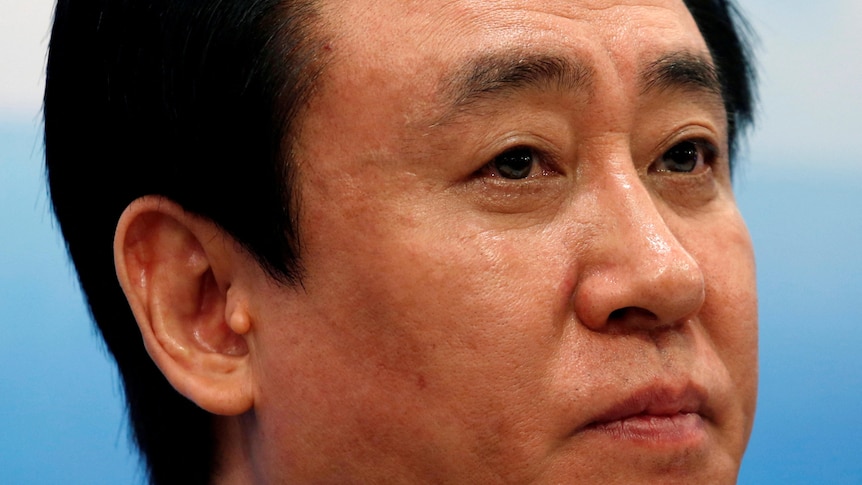

The founder of Evergrande, Hui Ka Yan, has admitted guilt to multiple offenses, including fraud in fundraising and the unlawful acceptance of public deposits, as reported by a Chinese court.
The court has indicated that it will disclose its decision at a future date, although no specific timeline has been provided.
Meanwhile, outside of mainland China, liquidators for Evergrande are engaged in legal proceedings aimed at freezing the offshore assets of Hui and his former spouse. This effort is part of a larger quest to recover billions in dividends and compensation that were disbursed to Hui and other past executives.
Hui Ka Yan, also known as Xu Jiayin, who is 67 years old, conveyed feelings of regret during a trial that spanned two days this week, according to a statement from the court in Shenzhen, located in southern China.
The court has announced it will issue a verdict at a later date, though no timeline has been given.
Once regarded as one of the largest property developers in China, Evergrande was often ranked second by market value, boasting over $50 billion. However, the company began its downward trajectory after regulators accused it in 2019 and 2020 of inflating its revenue figures by $45.3 billion (approximately 50%) and $74.1 billion (nearly 80%), respectively.
In January 2024, a court in Hong Kong mandated the liquidation of Evergrande after determining that the firm, which has liabilities exceeding $300 billion, was unable to finalize a restructuring agreement with its creditors.
Hui’s rise to wealth began in a rural village in central Henan province, where he was raised by his grandmother. He amassed his fortune through the development of affordable housing.
China’s economic challenges are being attributed to the long-term effects of the One Child Policy, established over 40 years ago to enhance productivity. While the policy has since been revoked, the demographic shifts it caused are now leading to a decline in population, a retiring workforce, and significant economic issues.
In 2017, Hui was recognized by Forbes as Asia’s richest man, with a net worth of $45.3 billion.
After launching Evergrande in Guangzhou in 1996, the former steel technician transformed it into the largest property developer in China by contracted sales, heavily leveraging debt in the process.
As of 2023, Hui’s wealth was estimated at $3 billion, and he was taken into custody by Chinese authorities in September of that year on suspicions of engaging in “illegal activities” following the downfall of his real estate business.
Hui’s companies, including Evergrande Group and Evergrande Real Estate Group, are also facing allegations of unlawfully extending loans, fraudulently issuing securities, and corporate bribery, as stated by the court.
In legal battles outside of mainland China, Evergrande’s liquidators continue to seek court intervention to freeze the offshore assets of Hui and his ex-spouse in an effort to recover $6 billion in dividends and compensation that were allocated to Hui and other former executives.
In addition to property development, Evergrande announced in 2021 that it had diversified into various sectors, such as clothing, transportation, and healthcare, claiming to have transitioned “from real estate to multi-industry and digital technology.”
The company also ventured into the electric vehicle market, investing 47.4 billion yuan (about $9.8 billion) to establish a significant presence in the new energy automotive sector.
Evergrande made its public debut on the Hong Kong Stock Exchange in 2009, but was officially delisted in August of the previous year.