
In the first month of the ongoing US-Israeli conflict in Iran, the world’s leading 100 oil and gas firms accrued over $30 million per hour in unearned profits, as revealed by an exclusive analysis for the Guardian. Major players such as Saudi Aramco, Gazprom, and ExxonMobil have emerged as significant beneficiaries of this financial windfall, highlighting the continued prosperity of entities resistant to climate action.
The war has driven oil prices to an average of $100 (£74) per barrel in March, resulting in an estimated collective profit of $23 billion for these companies during that month. If oil prices remain steady at this level, it is projected that these firms will generate a staggering $234 billion by year-end. This analysis utilized data from Rystad Energy, a prominent intelligence provider, which was further examined by Global Witness.
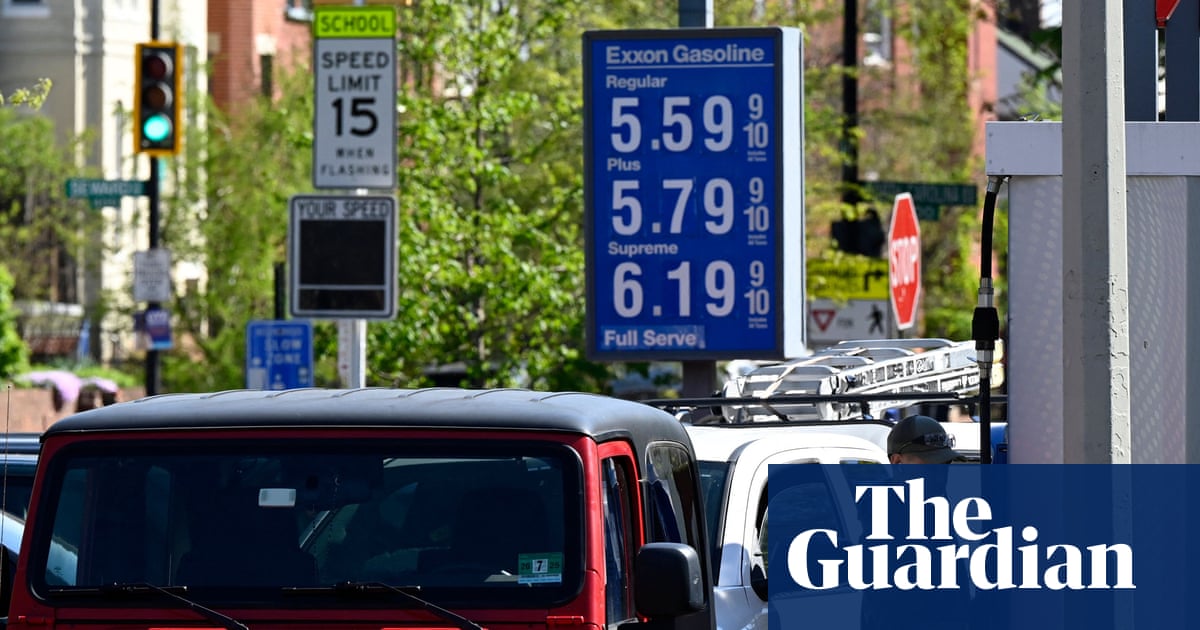
The unexpected profits are being funded by everyday consumers who face escalating costs for fuel and energy. Many businesses are also feeling the pinch, as they contend with increased energy expenses. In response, numerous nations, including Australia, South Africa, Italy, Brazil, and Zambia, have reduced fuel taxes to alleviate the financial strain on their citizens, resulting in decreased revenue for public services in those countries.
Calls for implementing windfall taxes on the extraordinary profits of oil and gas corporations are intensifying. The European Commission is currently reviewing a proposal from finance ministers of Germany, Spain, Italy, Portugal, and Austria, urging that those profiting from wartime circumstances ought to contribute to alleviating the financial burdens faced by the public. In a letter dated April 4, the ministers expressed that such measures could provide temporary relief to consumers and help mitigate rising inflation without adding pressure to public budgets. The EU’s fossil fuel expenditures have surged by €22 billion since the onset of the conflict in Iran.
Saudi Aramco stands out as the primary beneficiary, with projections suggesting it could achieve war-related profits of $25.5 billion in 2026 if oil prices maintain an average of $100. This figure adds to the already substantial profits generated by this largely state-owned company, which has reported earnings of £250 million daily from 2016 to 2023. For decades, Saudi Arabia has effectively thwarted and delayed international climate initiatives.
Three Russian firms—Gazprom, Rosneft, and Lukoil—are expected to realize approximately $23.9 billion in war-related profits by year-end. The ongoing conflict has further bolstered Russian revenues, with oil export earnings reaching €713 million daily, a 50% increase since February, according to data from the Centre for Research on Energy and Clean Air.
ExxonMobil, which has a history of dismissing climate change, is anticipated to garner $11 billion in unearned profits by 2026 if current oil prices persist. Shell is projected to benefit by $6.8 billion. Both companies have also seen significant increases in their stock values since the conflict began, with ExxonMobil gaining $87 billion in market capitalization and Shell adding £25 billion.
Chevron is also poised to see considerable windfall profits of $9.2 billion from the Iran conflict, as noted in the analysis. The company’s CEO, Mike Wirth, has capitalized on this situation, selling $104 million in shares between January and March.
The repercussions of the Iran conflict are expected to be long-lasting. Fatih Birol, head of the International Energy Agency, recently described the crisis as the most profound disruption the global energy market has ever faced.
Rising oil and gas prices prompted UN climate chief Simon Stiell to issue a warning in mid-March, stating, “Dependency on fossil fuels is eroding national security and sovereignty, placing nations in a vulnerable position and driving up costs.” He emphasized that renewable energy sources provide a safeguard against price volatility, asserting that “sunlight does not rely on narrow and precarious shipping routes.”
These wartime profits for oil and gas companies contribute to what has historically been an exceptionally lucrative sector for both petrostates and shareholders. Over the last fifty years, the oil and gas industry has averaged $1 trillion in annual profits, with even higher earnings during crisis years like 2022. The fossil fuel sector also benefits from substantial subsidies, totaling $1.3 trillion in 2022, as reported by the International Monetary Fund.
Patrick Galey, head of news investigations at Global Witness, remarked, “Global crises consistently lead to substantial profits for oil giants, while ordinary individuals bear the financial burden. Until governments address their reliance on fossil fuels, public spending power will remain at the mercy of autocrats.”
Jess Ralston, head of energy at the Energy and Climate Intelligence Unit, stated, “This crisis in the oil and gas sector underscores the costs associated with our reliance on unstable fossil fuel sources. Investing in net-zero technologies offers a pathway not only to enduring energy security but also to restoring balance in the climate system. Calls to ramp up fossil fuel production or retreat from net-zero goals in response to this crisis would only jeopardize our energy security and increase vulnerability to adverse climate effects.”
Energy policy expert Beth Walker from the E3G think tank added, “Governments should utilize taxes on excess profits to expedite the transition to green energy, rather than deepening their reliance on fossil fuels.”
Saudi Aramco, Shell, and TotalEnergies declined to provide comments, while ExxonMobil, Chevron, Gazprom, Petrobras, and ADNOC did not respond to inquiries.
The calculations regarding estimated war profits were derived from Rystad Energy’s UCube database, which compiles comprehensive field-by-field data, news, and intelligence, considering oil and gas demand to project supply capacities. The windfall profits were assessed by contrasting the free cash flow from oil and gas production in March, when prices averaged $100 a barrel, against the $70 price preceding the Iran conflict. This assessment reflects upstream profit estimates after accounting for taxes, royalties, and operational expenditures.