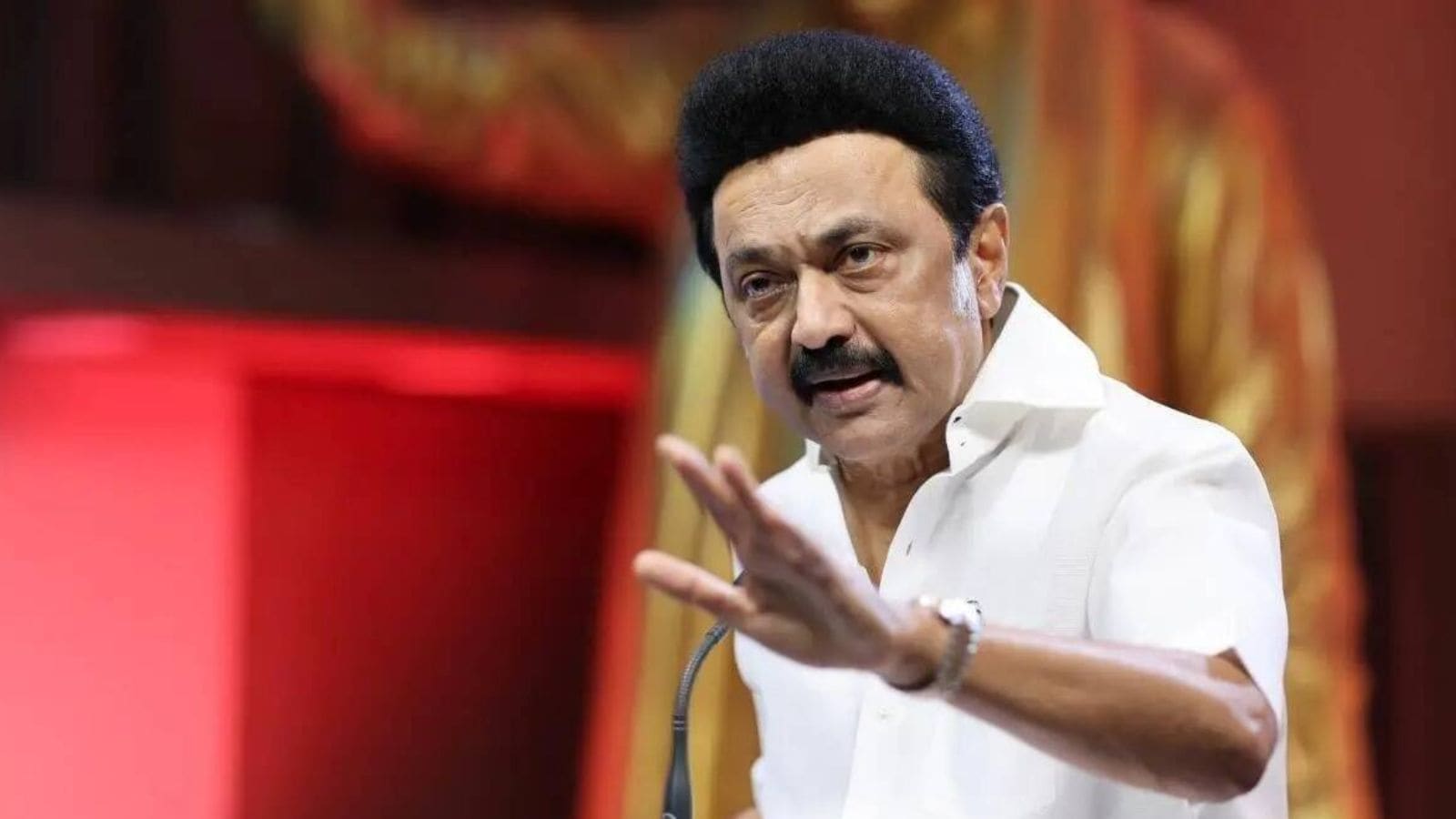

Following a stern “final warning” issued to the Union government regarding delimitation, Tamil Nadu’s Chief Minister M K Stalin took immediate action by organizing an urgent meeting with DMK district secretaries on Wednesday. He has called for statewide black flag protests scheduled for Thursday.
In reference to Tamil Nadu’s legacy of political activism, Stalin indicated that if institutional responses are inadequate, public demonstrations will ensue. In an interview on Wednesday, he elaborated on the DMK’s intensified stance:
You have characterized delimitation as not only a political concern but also a matter of equity and federal integrity. What principles, in your opinion, should guide India at this juncture?
India’s foundation was not established through mere numbers; it is built on trust, restraint, and a collective constitutional vision. The Constitution does not encourage states to engage in a demographic competition; rather, it calls for responsible governance. States that prioritize population stabilization, education, and public health do so for the nation’s benefit, not to have their influence diminished.
Are you suggesting that this issue transcends delimitation?
Indeed, what we are witnessing exceeds delimitation; it concerns the reconfiguration of power that favors a single party. Is this meant to enhance democracy, uplift women, or merely serve political expediency?
This pattern is not new. We witnessed similar actions during the demonetization process, where hasty decisions rendered legitimate currency worthless. Presently, it is delimitation that threatens to marginalize Tamils and suppress their voices. This matter is not just about figures; it pertains to the significance of those voices. In a parliamentary democracy, every vote is crucial. Even governments, like that of Atal Bihari Vajpayee, have fallen by a slim margin. A slight imbalance can drastically affect national outcomes. Expanding representation without appropriate safeguards risks widening disparities between states such as Tamil Nadu and Uttar Pradesh.
You mentioned Vajpayee and the critical nature of balanced representation. Why is this historical context significant now?
That is precisely why Vajpayee opted to freeze delimitation—to maintain balance until the nation developed more evenly. Why abandon this wisdom now? Why not uphold it until true equality is achieved? If representation begins to favor population growth alone, disregarding governance achievements, we are not rectifying the imbalance; we are establishing a new form of injustice. States that have adhered to national priorities should not be politically sidelined. This undermines the essence of cooperative federalism.
Tamil Nadu’s perspective is not trivial; it is unique. As articulated by our leader and DMK founder Perarignar Anna (C N Annadurai), we hail from a Dravidian heritage that has much to contribute—social justice, rationalism, state autonomy, and inclusive governance. This perspective should be amplified, not silenced in parliamentary discourse. Federalism is not merely an administrative framework dictated by Delhi; it is a constitutional agreement. A weakened covenant compromises the very idea of India.
You have also expressed concerns about linking women’s reservation to delimitation. How do you perceive this moment impacting representation and justice in India?
The matter is straightforward: should justice be delivered now or postponed? Women’s reservation is both a moral and democratic necessity. It should not be conditional on uncertain processes like delimitation or delayed census results. Tying the two together risks deferring a necessary reform into an indefinite future, despite widespread national support.
Moreover, this linkage alters the nature of the reform. What ought to have been a decisive advancement for gender equality is now clouded by a contentious political maneuver. This raises the valid concern that a social justice initiative is being exploited as a pretext for a more profound restructuring of representation.
India has already shown, through local governance, that women’s reservation can be swiftly implemented. In Tamil Nadu, we have achieved 50% representation for women in local bodies, with female mayors in cities such as Chennai, Coimbatore, and Madurai. The issue lies not in feasibility but in political determination.
Furthermore, fairness must be consistent. If, while broadening opportunities, we redraw boundaries in ways that disadvantage certain states—especially those that have met development objectives—we risk pursuing justice with one hand while undermining it with the other.
Let me inquire: what has prevented the government from enacting a 33% reservation within the existing 543 seats in 2024, despite the DMK’s insistence among the Opposition? Why introduce new stipulations? Why alter the established timeline? The rush and confusion surrounding delimitation raise further concerns.
A mature democracy must differentiate between what is urgent and what is complex. Women’s rights are urgent—they cannot be postponed. Delimitation is a separate exercise with distinct dynamics and outcomes. Both must be addressed, but one should not impede the other.
You also referred to the protests of the 1950s and 1960s. What was your intention in mentioning that?
History is not invoked lightly. The movements of the 1950s and 1960s were not anti-India; they aimed to shape a Union that honors diversity, dignity, and federal balance.
These movements demonstrated that when institutions falter and dialogue is insincere, democratic expression does not diminish—it intensifies and gains strength among the populace. In Tamil Nadu, this expression has consistently been peaceful, principled, and grounded in constitutional values.
I am merely highlighting that such a tradition exists—not for confrontational purposes, but for rectification. It reflects a society that engages, questions, and stands firm when fairness is at stake. If this reminder disturbs some, they should reflect on why. This is not a threat; it is a call for course correction. Acknowledging it will fortify the Union; ignoring it will weaken it.