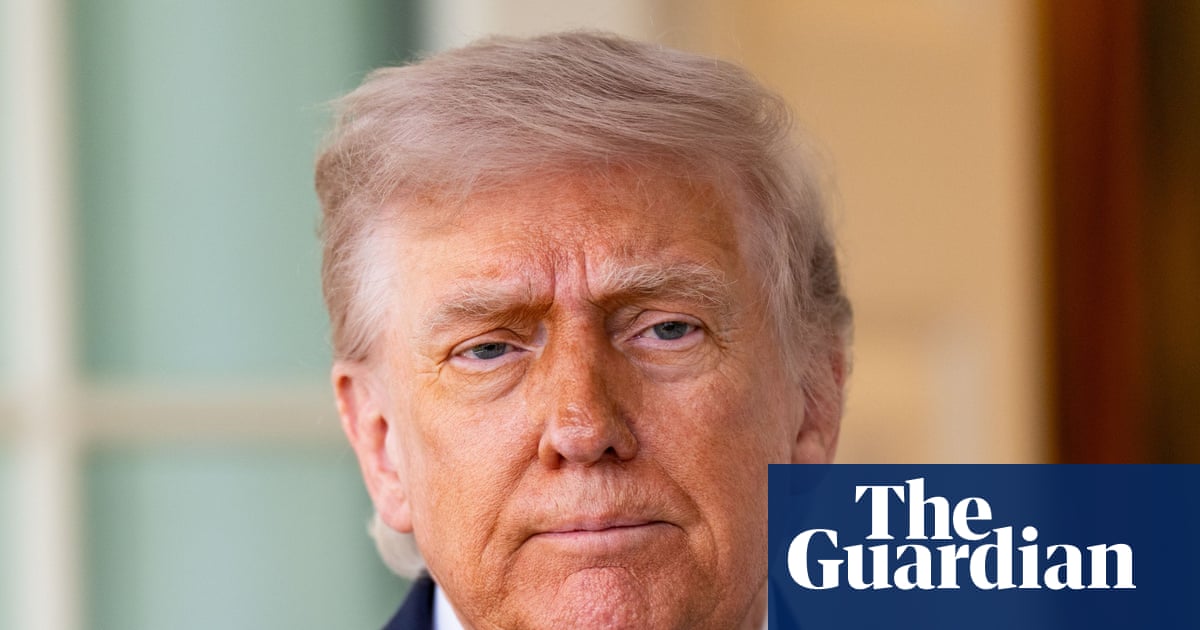

Donald Trump has indicated that peace negotiations between the United States and Iran may restart in Islamabad within the next couple of days, praising the role of Pakistan’s army chief as a mediator.
During a conversation on Tuesday with a reporter from the New York Post, who was in Islamabad for the initial round of ceasefire discussions over the weekend, Trump shared his thoughts on the potential for renewed talks. The reporter noted that the president had subsequently reached out with an update.
“You should remain there, because something might unfold in the next two days, and we are more inclined to return,” Trump stated. He commended Field Marshal Asim Munir, the army chief of Pakistan, for his effective mediation efforts, saying, “He’s doing an amazing job, which makes it more likely that we will go back there.”
Munir is a significant figure in Pakistan and has established a good rapport with Trump, who has referred to him as his “favorite field marshal,” as well as with Iran’s Revolutionary Guards.
A Pakistani official remarked on Tuesday that he anticipates the resumption of talks soon, although it might take a day or two longer than Trump suggested. “The game is on,” the official commented.
Islamabad is working quickly to set a meeting date that allows sufficient time for negotiations before the two-week ceasefire concludes on Wednesday, April 22.
Trump’s remarks followed renewed speculation regarding negotiations, stemming from a lengthy 21-hour discussion session over the weekend. These talks concluded with US Vice President JD Vance exiting on Sunday morning, citing Iran’s failure to provide a definitive commitment against pursuing nuclear weapons.
In response to the conclusion of the talks, Trump announced a US naval blockade targeting vessels utilizing Iranian ports in the Gulf, aimed at exerting economic pressure on Iran. This action also serves as a countermeasure against Iran’s near-total obstruction of the Strait of Hormuz to ships from other Gulf ports following the onset of a US-Israeli attack on February 28.
The US Central Command reported that over a 24-hour span, “no vessels managed to breach the US blockade, and six merchant ships complied with directives from US forces to turn back and re-enter an Iranian port in the Gulf of Oman.”
Independent reports confirmed that some tankers approaching the strait on Monday altered their course, with one tanker, the Rich Starry, reversing its route and successfully navigating through the waterway.
The closure of the Strait of Hormuz, a critical passageway for one-fifth of the world’s oil and liquefied natural gas, has resulted in a surge in oil prices, which rose above $100 a barrel. However, crude prices fell to around $95 following news of potential renewed talks on Tuesday.
The US Treasury Department has stated that it does not intend to extend a temporary relaxation of sanctions on Iranian oil, which was intended to alleviate supply shocks caused by the conflict. The initial authorization allowed for the delivery of Iranian crude and other petroleum products loaded onto vessels before March 20. This measure was part of a broader strategy initiated by the Trump administration to control soaring energy prices.
Meanwhile, unprecedented discussions between Israel and Lebanon have taken place in Washington regarding the ongoing cross-border conflict, which intensified after the US-Israeli attack on Iran. Hezbollah, aligned with Iran, launched rockets at Israel, prompting a severe military response from Israel, including bombardments of Beirut and other urban areas, along with an incursion into southern Lebanon.
Following a two-hour meeting, the US State Department commended both parties for what it termed “productive discussions aimed at initiating direct negotiations between Israel and Lebanon.”
Hezbollah has publicly declared that it will not adhere to any agreements reached by Israeli and Lebanese negotiators in Washington.
When questioned about the potential revival of US-Iranian discussions, Vance expressed a willingness to explore the option. “The key question moving forward is whether the Iranians will demonstrate sufficient flexibility,” he told Fox News on Monday evening, noting that while Iran had shown some willingness in Islamabad, it did not go far enough.
Regarding future talks, he stated that such inquiries would be “best directed at the Iranians.”
Reports from the Islamabad discussions indicated that a significant point of contention was Vance’s delegation’s demand for a 20-year suspension of Iran’s uranium enrichment, while Iran proposed a shorter moratorium of less than 10 years.
An Iranian official criticized the US delegation for making overly ambitious demands during the Islamabad talks, asserting, “Iran did not concede on the battlefield, nor will it yield at the negotiation table.”
The status of negotiations remains unclear following the Islamabad meeting, particularly concerning Iran’s stockpile of highly enriched uranium (HEU), which is nearing weapons-grade purity and is believed to be concealed in deep underground sites across central Iran.
During prior negotiations in Geneva before the conflict erupted, Iran had offered to dilute its HEU stockpile, thereby extending the timeline required to produce a nuclear weapon. However, the US has called for its complete removal.
A Pakistani official noted that Iran insists on Vance leading the Iranian delegation in any upcoming discussions, as Tehran lacks trust in Trump’s special envoy, Steve Witkoff, and in the president’s son-in-law, Jared Kushner, as reliable negotiators.
On Tuesday, senior representatives from Saudi Arabia, Egypt, and Turkey were present in Islamabad for discussions with Pakistani officials regarding the next steps in mediating the conflict.
Pakistani Prime Minister Shehbaz Sharif is scheduled to depart on Wednesday for a visit to Saudi Arabia, Turkey, and Qatar to garner support for the peace process and seek assistance with proposals to reopen the Strait of Hormuz, as well as to address Iran’s demand for war reparations. However, Sharif’s regional tour may need to be truncated should negotiations resume rapidly.