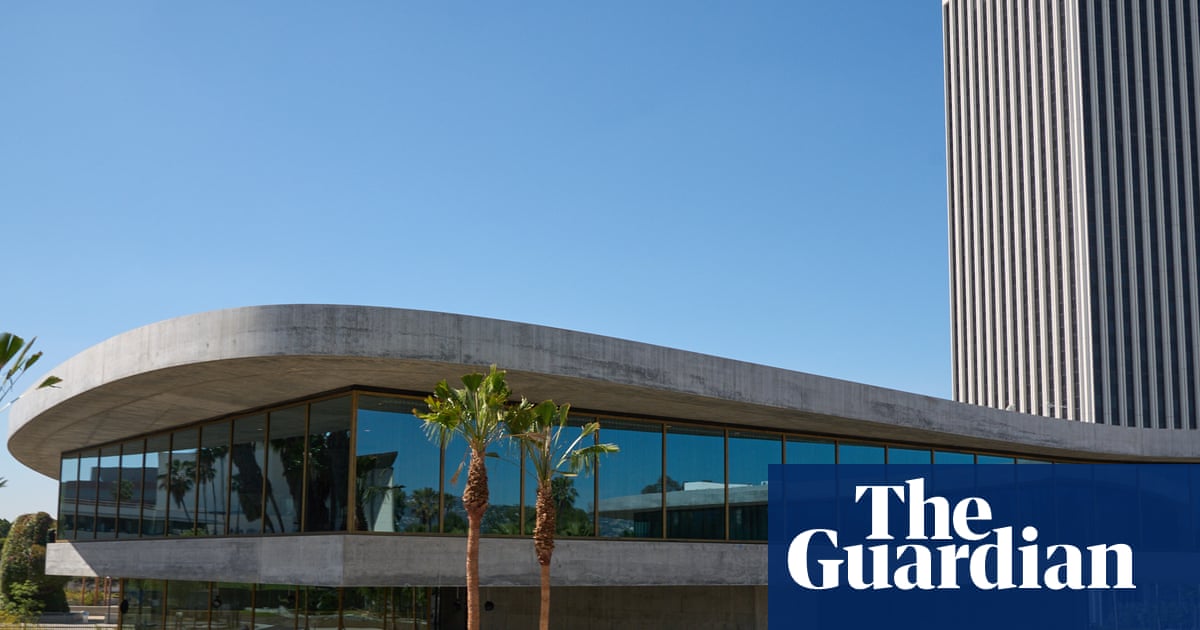

As you drive along the palm-fringed Wilshire Boulevard in Los Angeles, a remarkable new pedestrian bridge comes into view. This structure, crafted from glass, elegantly soars above the roadway, flanked by two massive concrete panels. As you approach, the bridge’s sinuous curves create an organic, fluid shape reminiscent of an inkblot. Viewed from certain perspectives, it exudes a retro-futuristic vibe, akin to a Jetsons-style airport terminal or California’s “Googie” architecture; from others, the sweeping roof resembles a giant tongue, playfully extending toward its surroundings.
This architectural marvel houses the newly inaugurated David Geffen Galleries at the Los Angeles County Museum of Art (LACMA). Designed by renowned Swiss architect Peter Zumthor, the $724 million structure is less of a traditional museum and more of a monumental piece of infrastructure. Spanning 110,000 square feet and elevated nine meters above the ground, it casts a commanding presence over the street. After two decades of development plagued by delays, controversies, and budget overruns—compounded by the challenges of building on unstable ground in a seismic area—the building finally opens its doors this weekend.
The ambitious project is the vision of Michael Govan, who assumed the role of LACMA’s director in 2006. Govan aimed to create a museum unlike any other, leveraging the allure of an extraordinary structure to attract donations, including $125 million from Los Angeles County. His previous experiences at the Guggenheim and Frank Gehry’s Bilbao facility sparked his passion for the transformative potential of iconic architecture. At LACMA, he was determined to create a lasting monument, regardless of the challenges that lay ahead.
“My request to the architect was to consolidate everything onto a single level,” Govan explains. “I wanted transparency, no hierarchy, and no facade.” Standing in the expansive gallery, surrounded by a diverse array of art, he emphasizes his desire for concrete. “While some argue that concrete isn’t the most eco-friendly material, if it lasts for 500 years, it’s quite sustainable!” he says with a charming smile, displaying the charisma that helps him secure significant funding.
Rather than conducting a typical design competition, Govan directly approached Zumthor, a highly respected figure in architecture known for his masterful use of concrete. At 82, the Pritzker Prize laureate has crafted everything from a striking charred chapel in Germany to a cave-like retreat in Devon. However, the scale of the LACMA project was unprecedented for Zumthor, akin to asking a small boat builder to construct an aircraft carrier.
Upon arrival at LACMA’s park-like grounds—unfortunately separated from the sidewalk by an unwelcoming steel fence—visitors encounter a stark concrete plaza. They are directed to ascend a long outdoor staircase or take an elevator located within one of the eight supporting pavilions, reminiscent of the sturdy legs of a concrete elephant. Currently, the public space feels somewhat desolate, akin to standing beneath a highway overpass, but there is optimism that it will come alive with visitors and events. A branch of Erewhon, a trendy grocery store known for its extravagant products, offers a touch of LA culture, with plans for a unique “LACMA mix” that may feature a charcoal blend with black sesame granola.
Once inside, the experience improves significantly. Wandering through the galleries, which vary in size, ambiance, and color, proves to be delightful. Some galleries are intimate, designed for a single artwork—like a Qing dynasty robe dramatically illuminated against dark blue walls—while others are more spacious, showcasing furniture and old masters set against rusty-red walls reminiscent of Corten steel. However, the theatrical atmosphere can sometimes feel overwhelming; the darker tones and subdued lighting may evoke a somber mood akin to a crypt filled with artifacts from the past six millennia.
Amidst the concrete, guests can find a bright respite through panoramic views of the verdant park and bustling street, framed by glimmering metallic curtains. This elevated perspective offers a pleasant spot to observe the vibrant activity below, with Bruce Goff’s unique pavilion for Japanese art appearing particularly inviting against the backdrop of grey concrete. The curtains, designed by Reiko Sudo, filter the California sunlight and introduce a touch of domesticity to the environment.
The comfortable leather seating and drapes create an atmosphere reminiscent of exploring the vast estate of a Hollywood mogul with a passion for art. The curved concrete forms and expansive glass surfaces echo the mid-century designs of John Lautner, suggesting that Zumthor’s underlying goal was to create a grand, oversized version of a Case Study house. Elevated and securely behind the tall fence, the entire venue exudes an exclusive, compound-like ambiance, enhanced by the gift shop’s offerings of $150 tote bags made from the curtain fabric and $215 LACMA-branded sweaters.
Govan has faced criticism for opting against a chronological display in favor of thematic groupings, but this approach largely succeeds. One moment, visitors find themselves captivated by works from contemporary artists, and the next, they are drawn into the rich history encapsulated in the galleries.