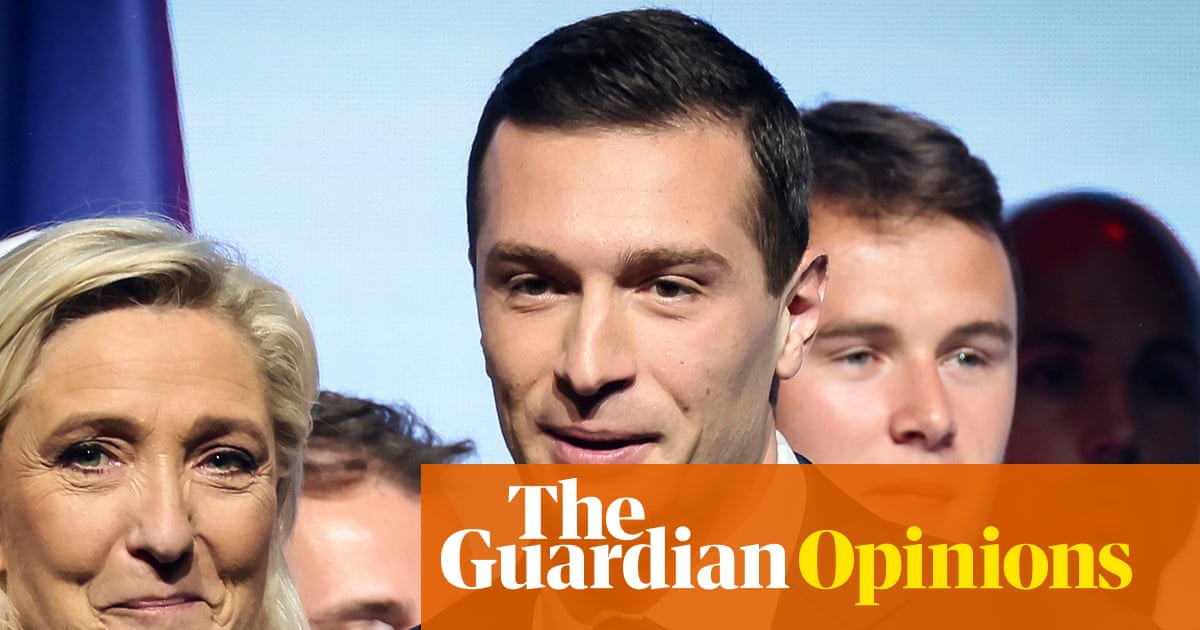

In the lead-up to France’s 2027 presidential election, political factions are on the lookout for a candidate capable of garnering support from the moderate right, center, and moderate left to challenge hard-right populist Jordan Bardella in the crucial run-off. This effort intensified following last month’s municipal elections, where the left successfully retained control of many major cities while conservative and far-right parties, particularly the National Rally (RN), gained traction in smaller towns. The upcoming year is set to be a rigorous campaign to identify a unified candidate who can take on Bardella, aged 30, or his political mentor Marine Le Pen, aged 57, in the final round. Le Pen’s eligibility remains uncertain, pending an appeals court ruling in July regarding her conviction for misappropriating EU funds.
Current opinion polling indicates that the RN, known for its anti-immigration and Eurosceptic stance, holds a significant lead in initial voting intentions, with Bardella’s support reaching as high as 38%. Absent any extraordinary developments, he is likely to secure a position in the run-off, leaving only one opportunity for a candidate who can harmonize support from mainstream conservatives and liberal centrists while also appealing to enough socialist, green, and radical left voters.
The next year will be pivotal in determining which name appears on the ballot. The left is fragmented, with divisions between radical France Unbowed leader Jean-Luc Mélenchon and various center-left factions, including socialists, greens, and communists. The likelihood of these groups coalescing around a single progressive candidate appears minimal.
Mélenchon, aged 74, has exacerbated divisions during the municipal elections, facing accusations of “intolerable antisemitism” from prominent Socialist party members and refusing to distance himself from a militant group involved in the violent death of a young far-right activist. He is expected to mount a third presidential campaign next year.
Polls indicate that while he may gather enough support to prevent other leftist candidates from advancing to the second round, he would struggle to reach the run-off himself unless the center-right also becomes fragmented. Surveys consistently show Bardella defeating Mélenchon by a considerable margin, as many moderate left and centrist voters would likely abstain from voting for him.
On the center-left, there is no clear candidate, although both Raphaël Glucksmann, aged 46, and former president François Hollande, aged 71, are contemplating their candidacies. Glucksmann, who spearheaded the socialist campaign for the upcoming European Parliament elections, resonates with urban professionals but lacks appeal among working-class and rural voters. Hollande’s significant drawback is his lackluster performance during his presidency from 2012 to 2017, which left him unpopular and led him to forgo a second term.
On the center-right, former Prime Minister Edouard Philippe, aged 55, has emerged as a potential frontrunner, bolstered by the recent municipal elections. As the leader of the center-right Horizons party and re-elected mayor of Le Havre, Philippe has shown promise in polls against Bardella. Despite this, the political landscape remains precarious, as early leaders often do not secure victory by the election’s conclusion, akin to the unpredictable nature of the Tour de France.
Rather than capitalizing on his local election success, Philippe has chosen to delay launching a national campaign, opting to fulfill his mayoral responsibilities while occasionally engaging in national discussions to maintain his visibility. This strategy, however, allows room for other center-right contenders to assert themselves.
Gabriel Attal, aged 37, the ambitious leader of the centrist Renaissance party and a former minister, is preparing to announce his presidential ambitions, which could potentially divide the already diminished center within Macron’s camp, although current polls show him trailing behind Philippe.
Bruno Retailleau, aged 65, leading the diminished Gaullist party now known as Les Republicains, has declared his candidacy. Retailleau, a conservative law-and-order politician with a background as Macron’s interior minister focused on immigration issues, seeks his party’s nomination through an internal referendum. Nevertheless, he faces challenges from his rival Laurent Wauquiez, aged 51, who leads the party’s legislative faction and other ambitious Gaullist candidates.
Wauquiez has proposed a primary election to select a unified candidate from the center to the far-right, excluding the RN. Yet, at this juncture, only lesser-known figures have expressed interest. Philippe has dismissed the proposal as impractical, and previous primary elections have lost their unifying power amid increasing fragmentation and polarization in French politics.
Meanwhile, seasoned politicians are leveraging their media presence to position themselves as potential “hommes providentiels.” Dominique de Villepin, aged 72, remains a prominent figure as a former foreign minister who opposed the U.S. invasion of Iraq in 2003. After leaving office in 2007, he engaged in consulting but has returned to politics, establishing a small party called Humanist France to support his presidential aspirations.