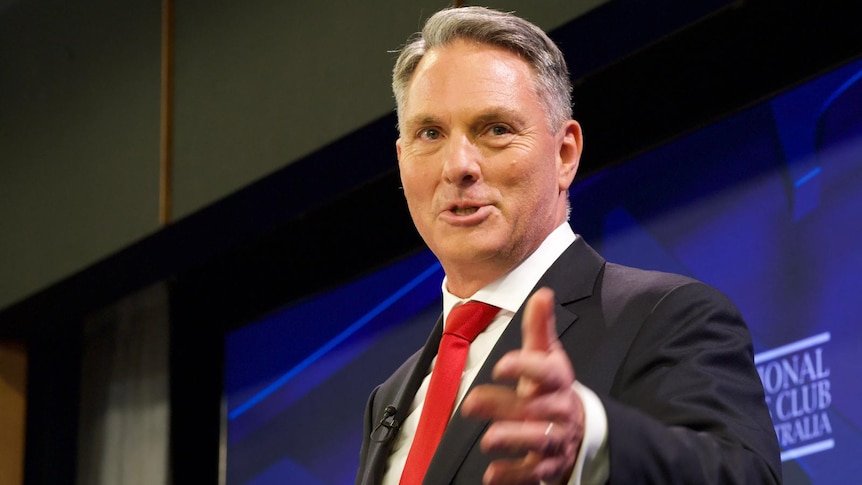

Australia is set to enhance its defensive capabilities with a new National Defence Strategy unveiled by Defence Minister Richard Marles. The strategy emphasizes the importance of a rules-based international order, which Marles argues empowers middle powers like Australia.
Over the next ten years, the government anticipates saving $10 billion, with initial reductions including the phased retirement of the C-27 Spartan aircraft from its fleet. Marles reiterated the United States’ alliance as crucial for Australia’s national security during a significant address in Canberra. While promoting a vision of increased self-sufficiency in defense, he stressed that Australia cannot sever its essential ties with Washington.
The new defence strategy proposes an increase of approximately $53 billion in overall defense spending over the next decade. This will include substantial investments in air and missile defense systems, communication technologies, command and control frameworks, autonomous operations, and the AUKUS submarine program. However, it also entails a $5 billion cut from existing defense programs, reallocating funds toward new military priorities.
Marles highlighted the goal of fostering greater self-reliance within Australia’s defense sector, which involves bolstering the domestic defense industrial base and developing critical military platforms on home soil. Nevertheless, he emphasized that “self-reliance should not be confused with military self-sufficiency,” affirming that the alliance with the US remains foundational to Australia’s defense strategy.
In his remarks at the National Press Club, Marles acknowledged US frustrations with allies potentially relying on American leadership without contributing adequately to collective defense. He asserted that the rules-based order must be supported by the hard power necessary for effective deterrence, particularly in the context of countering China’s expanding military capabilities.
Marles countered assertions made by Canadian Prime Minister Mark Carney, who suggested that the rules-based order is no longer effective. Instead, Marles affirmed Australia’s commitment to collaborating with like-minded nations to positively influence the strategic landscape of the region. He stated, “There is no effective balance of power in the Indo-Pacific without the ongoing presence of the United States.”
He cautioned against the belief that the rules-based order is “extinct,” arguing that it continues to facilitate numerous global interactions. Marles pointed out that, despite its imperfections, the global rules-based order benefits Australia, asserting the necessity of striving for improvement rather than abandoning it altogether.
The updated 2026 defense strategy largely maintains the priorities previously established in the 2024 strategy and the defense strategic review, emphasizing Australia’s need to “project force” through investments in nuclear-powered submarines and missile defense systems. The projected spending on submarines is expected to increase significantly, rising from an initial forecast of $76 billion to as high as $130 billion over the next decade. Additionally, there will be an increased focus on countering drone threats, with missile defense funding expected to grow from $18 billion to $30 billion during the same period.
Marles stated the government’s commitment to transforming the Australian Defence Force into an “integrated, focused, and more lethal force” to deter any potential adversary from coercing Australia through military means, identifying this as the nation’s most pressing risk.
However, specifics about the $5 billion in defense spending cuts and reprioritizations over the next four years, expected to total $10 billion over the decade, remain vague. One known reduction involves the retirement of the C-27 Spartan aircraft, which have been primarily used for personnel transport across the Pacific and are deemed too costly to maintain, with plans to replace them with commercial airliners.
Shadow Defence Minister James Paterson acknowledged increases in defense spending but expressed concerns over the clarity of funding sources and the actual new investments in capabilities. He questioned how much of the purported increase is genuine funding versus accounting adjustments.