
Australia has successfully arranged two shipments of fuel, utilizing newly granted powers that enable the federal government to support the delivery of additional fuel cargoes. Prime Minister Anthony Albanese announced this development during his visit to Malaysia, revealing that 100 million liters of extra diesel will be imported from Brunei and South Korea.
Mr. Albanese stated that these shipments represent the initial batch of what is anticipated to be “many expected shipments” secured through the new legislative framework. This recent legislation, which was approved by Parliament last month, allows petrol companies to purchase fuel while transferring the financial risks associated with potentially costly shipments to the government.
On Thursday, the Prime Minister detailed that the fuel security powers had been activated to procure two diesel shipments, amounting to 570,000 barrels, from Brunei and South Korea. “This marks the beginning of many anticipated shipments made possible by the government’s new strategic reserve powers, backed by Export Finance Australia,” he remarked.
The decision to enhance fuel security was influenced by the ongoing conflict in the Middle East. “This is encouraging news and represents a practical outcome of our recent engagements,” he noted, highlighting discussions with regional trading partners. “The additional fuel can be allocated to areas of greatest need, such as our agricultural sector.”
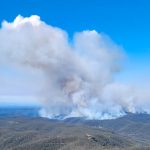
The diesel was acquired by Viva Energy, the operator of the oil refinery in Geelong, Victoria, which recently experienced a fire. In light of this incident, Mr. Albanese has expedited his return from Malaysia to meet with Viva Energy on Friday for an assessment of the fire’s repercussions.
Describing the scenes as “distressing,” the Prime Minister expressed relief that no injuries occurred. He acknowledged that there would “clearly” be ramifications for the fuel supply and committed to collaborating with the company to expedite the resumption of any offline operations.
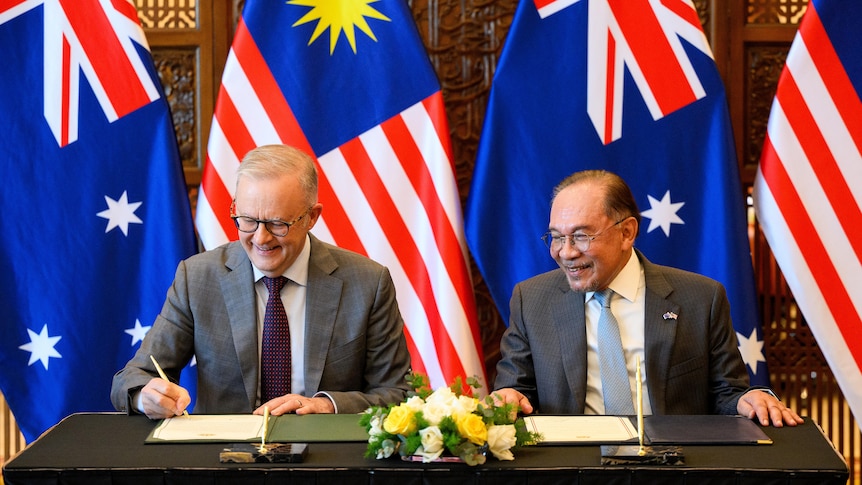
During a joint press conference with Malaysian Prime Minister Anwar Ibrahim in Kuala Lumpur, Mr. Albanese made the fuel shipment announcement. Their discussions led to an agreement for energy trade between Australia and Malaysia on a “no surprises basis.”
This agreement marks the third such arrangement Mr. Albanese has established with Asian nations within a week, aimed at ensuring continued fuel supply amidst the war in the Middle East. “This conflict has triggered unprecedented shocks to global energy supply,” he remarked. “We are working collaboratively to prepare and protect our citizens from the adverse effects of this international crisis.”
Mr. Ibrahim noted the significant changes in global dynamics since Mr. Albanese’s last visit to Kuala Lumpur the previous year, emphasizing the ongoing energy market stresses and supply chain disruptions resulting from the conflict. “Malaysia will always be a dependable partner to Australia,” he assured.
Malaysia ranks among Australia’s primary suppliers of crude oil and refined fuels, providing 14% of Australia’s diesel, 10% of its petrol, and 11% of its jet fuel. In a similar vein to recent engagements with other regional nations, Mr. Albanese aimed to leverage Australia’s role as a vital trade partner to secure supply guarantees.
Australia is a major provider of liquefied natural gas imports to Malaysia and supplies a considerable volume of agricultural products. “Australian resources are essential for powering our region, while our farmers contribute to feeding it,” Mr. Albanese stated. “Nearly 60% of Malaysia’s wheat and 75% of its lamb and beef imports come from Australia, and our regional neighbors understand that ensuring fuel and fertilizer availability for Australia is crucial for food security in the region.”
This dialogue with Malaysia’s Prime Minister followed Mr. Albanese’s signing of similar agreements with Brunei and Singapore.