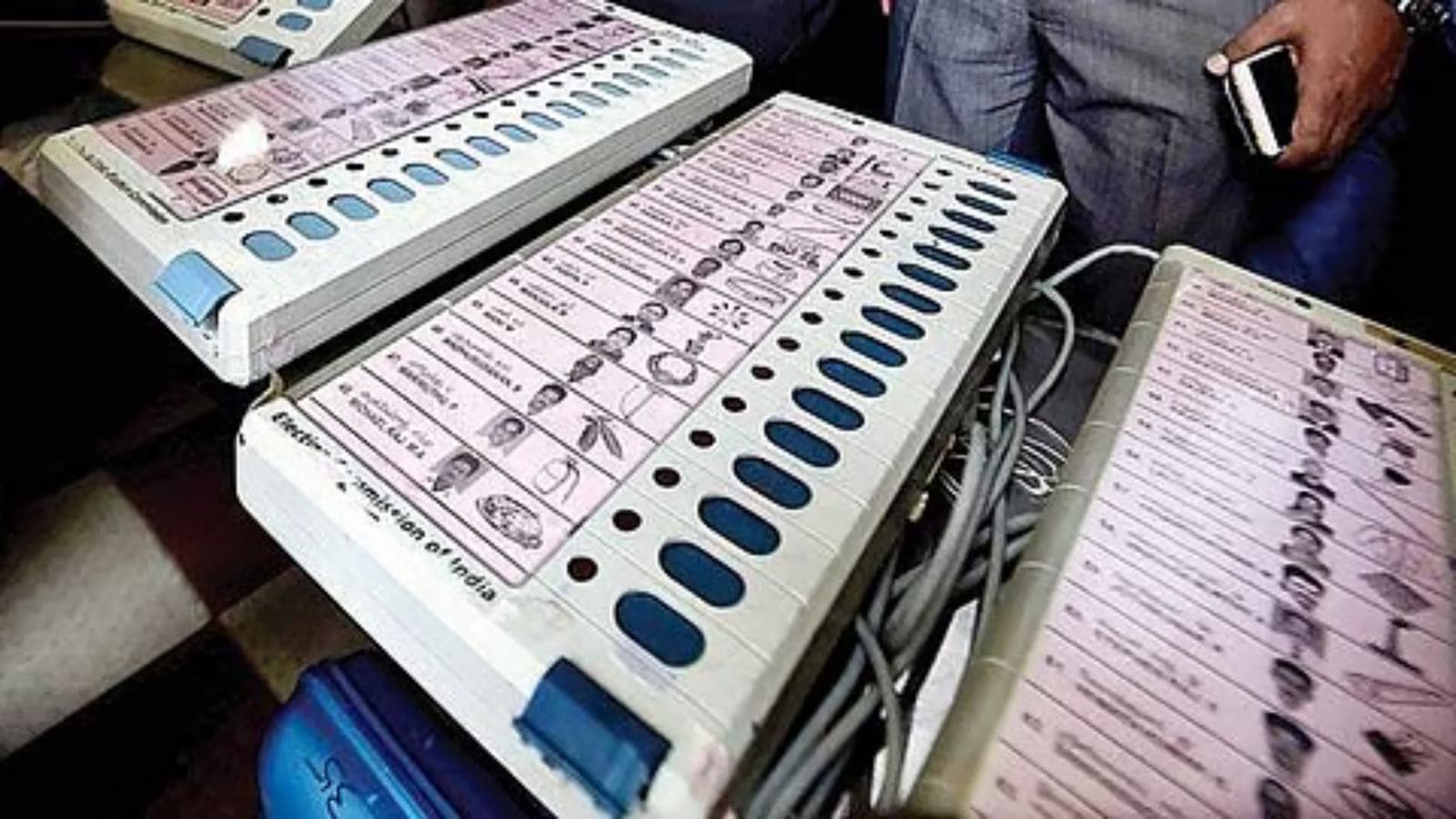

Prolonged discussions and differing opinions regarding the standard operating procedures (SOPs) for verifying data from the Electronic Voting Machines (EVMs) and matching it with the Voter Verified Paper Audit Trail (VVPAT) resulted in the postponement of a potential “diagnostic verification” of 20 EVMs utilized in the Chandivli assembly constituency during the 2024 elections in Mumbai.
The EVMs were scheduled for diagnostic checks on Thursday and Friday following a petition by Congress candidate Naseem Khan, which was supported by an order from the Bombay High Court issued on February 12.
Khan expressed dissatisfaction with the verification process proposed by the engineers from Bharat Electronics Limited (BEL) and officials from the Election Commission of India (ECI). He stated that their method, which involved merely connecting the Control Unit with the VVPAT and Ballot Unit and checking for a readiness message, was inadequate. “This is absurd and undermines the Supreme Court’s directive,” Khan asserted.
He emphasized that the Supreme Court’s order explicitly required verification by engineers from ECI-authorized firms, including an examination of the microcontroller’s burnt memory programs.
“Simply powering on the device does not constitute verification,” he remarked.
Accompanying Khan during the inspection were notable tech specialist Madhav Deshpande and attorney Bipin Joshi, among others.
The Supreme Court’s directive, dated May 7, 2025, from a bench led by Chief Justice Sanjiv Khanna and Justice Dipankar Dutta, mandated that engineers must certify the integrity of the burnt memory and microcontroller data, confirming that no tampering had occurred. It also allowed candidates to request a mock poll on the EVMs, with ECIL or BEL engineers operating the machines and displaying the recorded data to authorized individuals.
In an interview, Deshpande underscored the importance of transparency in the EVM process. “The Supreme Court’s ruling is clear: data engineers should verify that the data and programs have not been altered. This requires a comprehensive analysis of the programs against their original versions, and comparing the data from the end of the polling day with current data. Merely powering on the machine does not satisfy this requirement,” he explained. He also noted that the data from the Real-Time Clock (RTC) memory check was requested but not provided.
“Data significantly influences program integrity, and it is crucial to allow for thorough examination of the data. We hope for a favorable resolution to this issue,” he added.
Bipin Joshi, representing Khan, indicated that a formal request has been submitted to the ECI to ensure compliance with the Supreme Court’s order. “We anticipate a response within the next two weeks. Should the ECI deny our request, we are prepared to approach the Supreme Court,” he stated.
An ECI representative present at the meeting remarked, “We adhered to the guidelines set forth by the ECI and communicated what was permitted. There were disagreements regarding this. The applicant is free to pursue further action and will receive a response in accordance with the ECI’s directives.”
In 2024, within 45 days following the announcement of the Maharashtra Assembly election results on November 23, former Congress MLA Naseem Khan filed an application with the Bombay High Court to inspect the EVMs and VVPATs used in the Chandivali Assembly Constituency during that year’s Lok Sabha elections.
Suspecting potential malfunctions in the machines, he paid a fee of approximately ten lakh rupees for the application. Despite some candidates withdrawing their requests due to delays, Khan persisted, ultimately receiving a High Court order permitting the inspection and verification of the EVMs and VVPATs employed in 20 booths of the Chandivali Assembly Constituency.
Today, Khan was once again joined by IT professional Madhav Deshpande and his long-time legal advocate Bipin Joshi.
The Chandivali constituency encompasses 400 booths, and in line with the Supreme Court’s ruling, candidates are limited to inspecting only five percent of the machines, resulting in Khan’s selection of 20 booths where he believes the EVMs may have malfunctioned.
These selected booths include regions such as Asalpha and Jarimari, where Khan has a significant voter base, yet he lost by a margin of 1,000 to 1,500 votes.