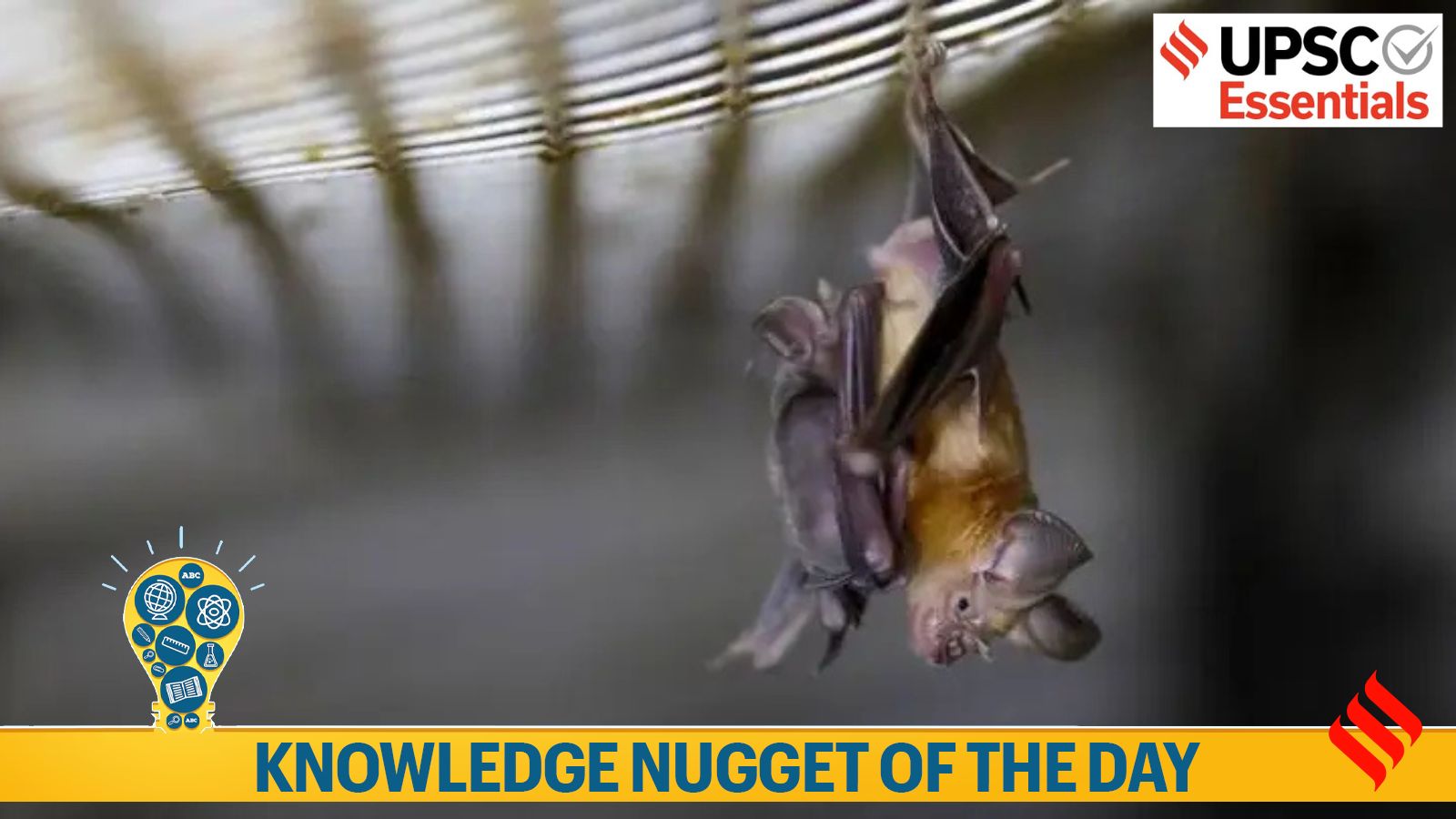

In India, approximately 135 different species of bats exist, yet there is a notable shortage of research facilities dedicated to these significant mammals, as highlighted in the inaugural national evaluation titled “State of India’s Bats” (SoIbats) for the years 2024-25. This assessment was carried out in partnership with the Nature Conservation Foundation (NCF) and Bat Conservation International (BCI).
The report emphasizes the alarming data deficiency concerning bats, which are essential for various ecological functions including pollination, seed dispersal, pest control, and enriching soil through their droppings. The lack of attention and resources devoted to studying bats is a matter of concern.
Among the 135 bat species identified, 16 are endemic to India, accounting for roughly 12% of the total, with seven of these classified as threatened by the International Union for Conservation of Nature (IUCN). The report notes that the insufficient data fails to accurately portray the true conservation status of these species, as 35 species have either not been assessed or lack comprehensive information.
For example, the Khasian Leaf-nosed bat is at risk due to hunting and mining activities in Meghalaya, yet it is not classified by the IUCN, which is responsible for maintaining conservation status lists.
The assessment reveals significant variability in bat species distribution across India. West Bengal boasts the highest number with 68 species, followed closely by Meghalaya with 66, while Uttarakhand has 52, and both Kerala and Karnataka report 41 species each. Sikkim contributes 43 species, indicating a rich diversity.
In urban areas, Delhi is home to 15 bat species despite the challenges posed by urban development. In contrast, Haryana and Punjab have recorded only five species due to limited forest cover and agricultural expansion.
Findings indicate that bats roost in both natural environments and human-made structures. Caves and trees serve as common roosting locales, providing stable microclimates and protection from environmental changes and predators.
Robber’s Cave in Mahabaleshwar, Maharashtra, is known to shelter possibly the largest colony of Phillip’s long-fingered bat, with estimates reaching around 100,000 individuals during breeding seasons. Additionally, bats have been observed roosting in old buildings and even historic monuments.
Several endangered and endemic bat species prefer caves for roosting. The critically endangered Hipposideros hypophyllus, as classified by the IUCN Red List, has been identified in only one cave located at the base of a granite hill in Karnataka’s Kolar district.
Bats are recognized as the smallest mammals globally, with sizes that can range from resembling a small dog to that of a bumblebee. The largest species, flying foxes, can achieve wingspans of up to 2 meters and weigh around 1.5 kilograms, while the bumblebee bat, at just 2 grams, holds the title for the smallest mammal.
Most microbat species employ echolocation, a sophisticated biological sonar system, to navigate their surroundings. They produce high-frequency ultrasonic calls that bounce off objects, allowing them to create a mental map of their environment.
Contrary to popular belief, bats are not blind. Their vision varies among species, aiding in navigation and hunting. Visual cues such as the movement of insects and ambient light assist bats in determining when to depart from their roosts at dusk.
Bats are unique among mammals for their ability to fly. Their wing structure does not provide sufficient lift for takeoff from a standstill, and their small hind legs do not support running to gain speed. Their lightweight bone structure facilitates flight, although it limits their ability to stand without risk of injury.
Notable bat species include the Meghalaya Thick-thumbed Bat (Glischropus meghalayanus), Rainforest Tube-nosed Bat (Murina pluvialis), and others, many of which are crucial to their ecosystems.
Bats are vital to ecological health, providing services such as pollination and pest control. However, some species also serve as reservoirs for zoonotic diseases, including Hendra virus, Nipah virus, and coronaviruses.
Research indicates that bats evolved approximately 50-52 million years ago, coinciding with a rise in global temperatures and the emergence of zoonotic viruses, suggesting a long history of co-evolution with these pathogens.
Ecological behaviors such as migration, mixed-species roosting, and large colony sizes contribute to the persistence and spread of viruses among bat populations. Additionally, transplacental transmission can lead to the presence of viruses in bat offspring.
Nipah Virus primarily affects various animals, including bats and pigs, but can also infect humans who come into contact with these animals, leading to severe illness.