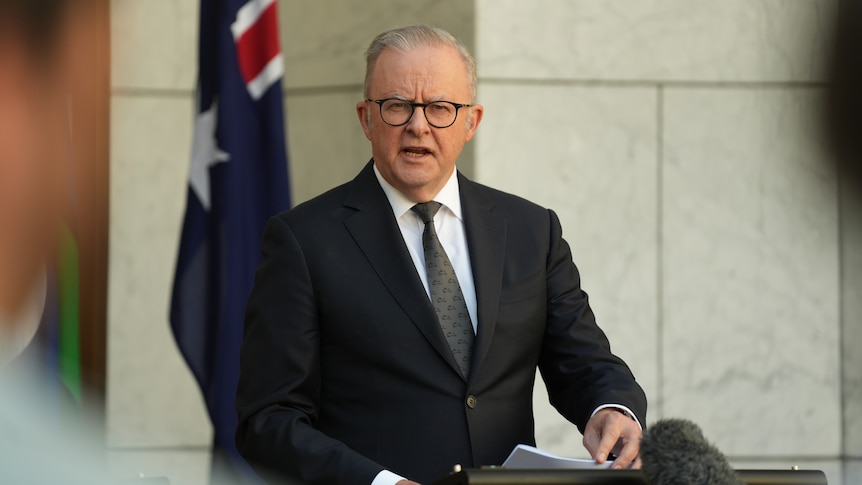

Prime Minister Anthony Albanese will attend a virtual summit with approximately 40 global leaders to discuss measures for ensuring the security of the Strait of Hormuz following the cessation of hostilities between the United States and Iran. The meeting, co-chaired by the United Kingdom and France, aims to establish strategies for keeping this vital trade route open.
Notably, the United States will not participate in this meeting, although it will be kept informed about the discussions. President Donald Trump has previously expressed dissatisfaction with allies who have not joined the US in blockading Iranian ports, which is intended to facilitate non-Iranian shipping through the strait. He also conveyed his disappointment towards Australia for its lack of involvement in the Strait of Hormuz operations.
Both the UK and France have opted out of joining the blockade, asserting that doing so would entangle them in the conflict with Iran. Instead, they are focusing on these international discussions on how to protect the strait post-conflict. Earlier this week, Defence Industry Minister Pat Conroy confirmed that Australia would also refrain from participating in the blockade if requested by the US, emphasizing Australia’s non-involvement in the ongoing conflict.
Reports from Reuters indicate that China has received an invitation to the summit, though it remains unclear whether they will attend. Australia currently has an E-7 Wedgetail surveillance aircraft stationed in the region, providing defensive support to the United Arab Emirates.
Prior to the summit, Foreign Minister Penny Wong stated that Australia is committed to contributing to diplomatic initiatives aimed at ensuring freedom of navigation through the Strait of Hormuz, but only after the conflict concludes. She noted that the discussions would primarily focus on future actions and highlighted the importance of a diplomatic resolution over a military one, given the complexities of securing the strait through military means.
The summit follows a series of discussions between Prime Minister Albanese and leaders from Singapore, Brunei, and Malaysia over the past week, where they addressed fuel supply security and energy supply chains. Albanese expedited his return from Malaysia after a significant fire at Victoria’s Viva Energy oil refinery, which resulted in petrol production plummeting to 60% of its capacity and reduced diesel and jet fuel production to 80% of normal levels.
Upon his return, Albanese expressed the government’s commitment to collaborate with the refinery’s operators to restore full operations, clarifying that the damage did not necessitate invoking the next stage of the national fuel security plan.