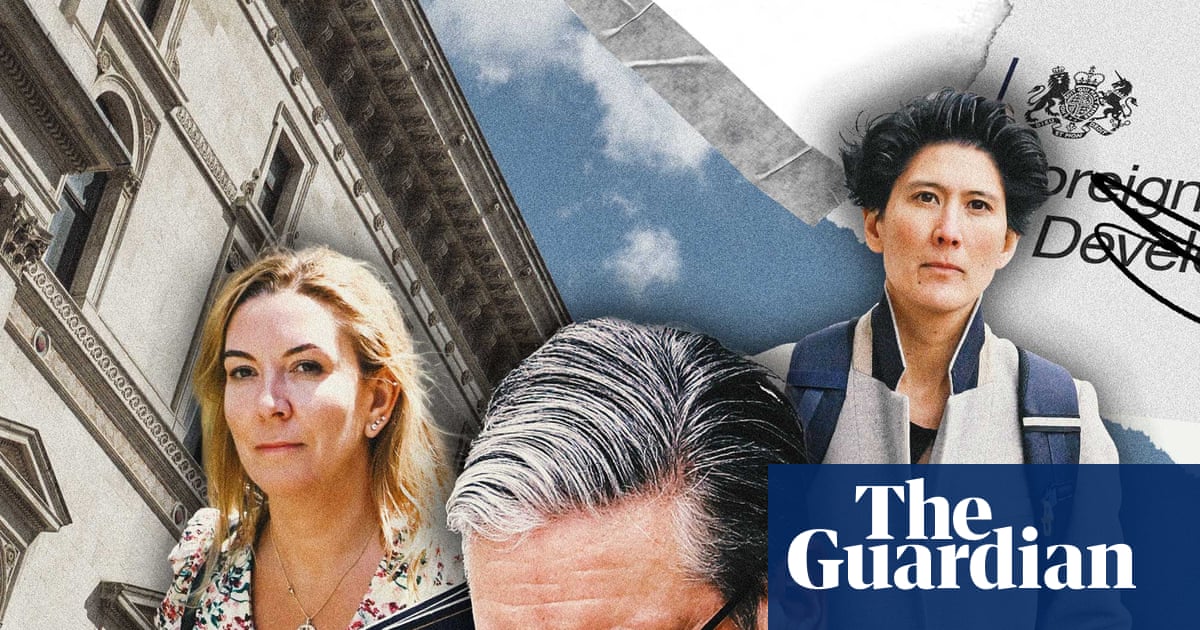

Keir Starmer was reportedly unaware of crucial details concerning Peter Mandelson’s security clearance evaluations, as revealed by two prominent civil servants, including the head of the civil service.
On Friday, the Prime Minister criticized the oversight, labeling it “unforgivable” and “staggering” that senior officials failed to inform him that Mandelson did not pass a security vetting assessment prior to his appointment as ambassador to Washington.
Olly Robbins was dismissed from his position as permanent secretary of the Foreign Office on Thursday following the disclosure that his department had granted Mandelson security clearance despite recommendations against it from the relevant agency.
Further investigations by the Guardian indicated that the Cabinet Secretary, Antonia Romeo, along with Catherine Little, the permanent secretary at the Cabinet Office, were aware of the vetting failure since March but did not inform Starmer until this past Tuesday. This information became known to them in March after UK Security Vetting (UKSV) had advised against Mandelson’s clearance in January 2025.
The delay in notifying the Prime Minister has raised concerns regarding the extent of bureaucratic control within the government, suggesting that civil servants may be influencing decisions more than elected officials.
Romeo, appointed by Starmer in February, was made aware of the vetting failure by Little in March. Little’s department has been responsible for addressing a parliamentary motion that required the government to release all documentation related to Mandelson’s appointment, except for those deemed sensitive to national security or international relations, which were to be shared with the intelligence and security committee (ISC).
A government insider clarified that Little did not withhold the information but was engaged in a complicated process to evaluate the risks associated with disclosing such sensitive information, including to the Prime Minister. The source added that Little had planned to assess these risks and that Romeo supported her approach.
This assessment process reportedly took several weeks, with up to a dozen officials and legal advisors aware of Mandelson’s vetting issues, while Starmer only learned of the situation days ago.
At the heart of the issue is a significant document compiled by UKSV on January 28 of last year, shortly after Starmer publicly named Mandelson as his ambassador to Washington. This document raised serious concerns regarding Mandelson and ultimately recommended denying him security clearance, a recommendation that was overlooked by the Foreign Office.
A spokesperson from the Cabinet Office stated that upon receiving the UKSV document following the parliamentary motion, Little promptly initiated a series of expedited checks to ensure clarity on what could be shared. This included seeking legal advice about the implications of sharing the document and whether it might impact ongoing criminal proceedings. Additionally, Little sought clarification from the Foreign Office regarding their decision-making process in granting Mandelson clearance despite UKSV’s advice. The spokesperson confirmed that the Prime Minister was informed as soon as these checks were completed.
According to another government source, Little has maintained that the outcome of the UKSV evaluation should be made public and that the relevant documentation should be fully disclosed to the ISC. However, there has been internal debate among officials regarding the best course of action, particularly around whether to release the document to the committee.
Before the Guardian’s report surfaced on Thursday, there appeared to be no consensus among officials about the release of the documents. Some raised concerns over national security and cautioned that it would be “unprecedented” to disclose the UKSV findings, even to the ISC, which includes nine members of Parliament and the House of Lords, such as former Attorney General Jeremy Wright and retired Royal Navy Admiral Alan West. Members of the committee are bound by the Official Secrets Act and have access to highly classified materials.
Some officials expressed apprehension that there might be an attempt to suppress the findings and that the document could remain undisclosed. They noted discrepancies between the UKSV report and previous statements from the Prime Minister and his former chief of staff, which suggested that the vetting failures might have contributed to Mandelson’s appointment.
Amidst this impasse, some government officials advocated for setting a precedent to disclose the UKSV documents to the ISC, arguing that failing to do so would contravene parliamentary directives. The deliberations around releasing these documents appear to have extended over several weeks, during which time the Prime Minister was reportedly unaware of the ongoing discussions.
By Wednesday, a potential compromise was under consideration, which involved providing unredacted versions of the document to only two members of the ISC, such as the chair and one additional member. Another option discussed was restricting access to those ISC members who are also privy council members, an advisory body to the monarch.
Sources indicate that Little may soon be called to appear before the ISC in a closed session to provide further clarification on the matter.