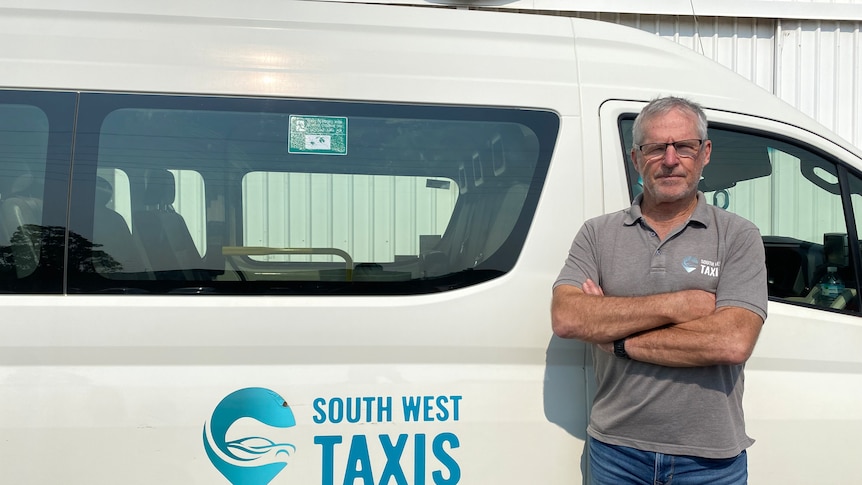

Taxi drivers in regional Western Australia are urgently seeking assistance in light of the ongoing fuel crisis. A representative for individuals with disabilities emphasizes the necessity of supporting transportation services in rural communities.
The Transport Workers’ Union of Western Australia plans to approach government officials today to advocate for an increase in taxi fare rates. Regional taxi operators are expressing their frustration over being unable to adjust their prices amid rapidly rising fuel expenses, which are influenced by stringent state regulations.
The escalation in fuel prices is linked to the geopolitical instability in the Middle East, which has affected costs nationwide. The Department of Transport in WA governs the fare rates for taxi services under the Transport (Road Passenger Services) Act 2018.
Craig Smith-Gander, a taxi operator in the South West, stated that while other businesses have raised their prices, he finds it unfeasible to do so due to regulations. He mentioned, “All of my suppliers, my mechanics, all of those sort of people here in the south, have all increased their prices in the last 12 months.”
He also pointed out that his drivers are facing nearly double the fuel expenses since the crisis began over a month ago. “Most of our vehicles are either owner-operators or leased, and they bear the fuel costs,” he added, stressing that the inability to increase fares is significantly impacting their operations.
According to Assistant WA Transport Minister Jessica Stojkovski, taxi fare evaluations are conducted annually. However, Smith-Gander expressed concern that many drivers may not be able to endure such a prolonged wait. “I think there’ll be people who exit our industry,” he warned, noting that the reduction of taxi services would disproportionately affect rural communities where public transport options are limited.
Official taxi services are crucial for elderly and disabled individuals in smaller towns, where ride-sharing services are not feasible. Stu Schonell, the CEO of Advocacy WA, highlighted that many people with disabilities depend on already scarce wheelchair-accessible taxi services. “This has been a problem we have been raising with the government for years, and it’s only going to worsen as drivers consider leaving the industry due to fuel costs and financial losses,” she said. “If the service is diminished, it will have a severely negative impact on those who rely on it.”
Tim Dawson, state secretary of the Transport Workers’ Union, warned that a lack of government action could have far-reaching consequences for the industry. “To ensure fare increases, the government might need to provide additional funding for wheelchair-accessible taxis. If they don’t, the outcome could be the collapse of the taxi sector or disruptions in food delivery services,” he remarked.
Dawson mentioned that he would be reaching out to key state ministers today and hinted that the Fair Work Commission might become involved. In response to the situation, Minister Stojkovski acknowledged the significant pressures that rising fuel costs place on taxi services. “We recognize the vital role that taxis play in maintaining community connectivity, especially for those who need accessible transport,” she stated. “We will continue to collaborate with the industry to assess the situation and consider any necessary adjustments.”