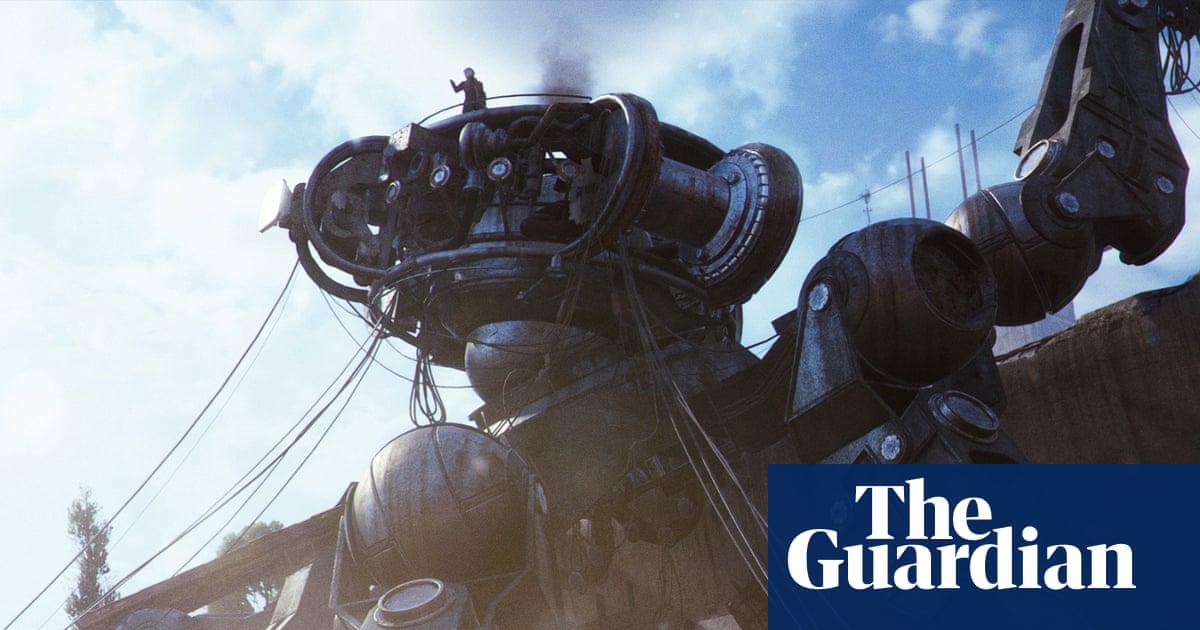

The video game Arc Raiders presents a grim vision of a post-apocalyptic future, where humanity’s remnants are forced to inhabit underground colonies while advanced, hostile AI machines roam the surface. The landscape is dotted with the ruins of once-thriving cities, and daring individuals known as “raiders” venture above ground to scavenge for supplies in this treacherous environment.
Despite the ominous presence of these robotic threats, known as Arcs, they are not the primary danger players face. The game, which launched late last year and has since sold over 14 million copies, reveals a more pressing concern for raiders: the fear of being shot by other players who might steal their hard-earned loot. In this highly competitive realm, ruthlessness often pays off.
However, the developers at Embark Studios in Sweden were surprised to discover that many players approach the game with a more collaborative mindset than anticipated. Executive producer Aleksander Grøndal remarked that the team did not expect such a significant number of players to engage in a “more peaceful version of the game,” adding that they were “pleasantly surprised” by this finding.
This unexpected player behavior has transformed Arc Raiders into a kind of social and psychological case study, prompting interest from social scientists, psychologists, and criminologists. Approximately 20% of players have never eliminated another raider, while half of them have taken down fewer than ten in total.
In contrast to traditional shooter games like Fortnite and Counter-Strike, where eliminating opponents is the main objective, Arc Raiders belongs to the emerging extraction shooter genre. This category emphasizes not only player-versus-player competition but also challenges posed by the environment, requiring players to survive while retrieving valuable resources. The gameplay is characterized by high stakes, where players often face ambushes at the climax of their looting efforts. This raises the question of why players in Arc Raiders are not engaging in the expected violent behavior.
Grøndal noted that the development team anticipated some degree of cooperation among players. “We always wanted that to be part of the experience, but it was surprising to see how many embraced that element… It essentially redefined the extraction shooter concept, demonstrating that it doesn’t always have to revolve around conflict with others,” he explained.
So, what alternative activities are players engaging in instead of combat? Many choose to collaborate in taking down AI adversaries, which range from aerial drones to spherical entities that shoot fire. Others attempt to stealthily navigate around these machines to gather scarce resources. Grøndal also mentioned that players frequently organize impromptu rave parties, using their microphones to share music.
Communication is a significant aspect of gameplay, with players often engaging in conversations rather than combat. A YouTube series titled The Humans of Arc Raiders features interviews with players who discuss personal topics ranging from family issues to mental health challenges. In one memorable exchange, a heavily armed player named Poopy inquires about the experience of parenthood from another raider.
Upon my initial exploration of Arc Raiders, I noticed a stark contrast in the environment, where nature thrived amid the wreckage of fallen machines. As I roamed this retro-futuristic landscape, I encountered fellow players, many of whom generously offered assistance, such as medical supplies. Our interactions mainly involved stealthily cooperating to combat robots, resulting in moments of tension but also relaxation.
During one session, a British player new to the game asked me, “Have you been killed by another person yet?” as we explored a damaged dam. He added, “Everyone I’ve met has been friendly. No one kills each other.” This sentiment echoed my own experiences, as I had grown accustomed to the lack of player-versus-player violence. Therefore, when I was finally eliminated by another player, I felt a sense of betrayal, as though an unspoken agreement to support one another had been broken.
Interestingly, the original concept for Arc Raiders involved a game where players could not harm each other, focusing instead on a shared struggle against AI adversaries. However, during development, the team opted to introduce unpredictable human interactions to enhance gameplay, believing it would prevent monotony.
Communication among players is notably prevalent in Arc Raiders, with many utilizing their microphones more than is typical in other games. The proximity chat feature allows players to announce their friendly intentions, with over 95% of participants making use of this function, according to Grøndal.
While some players do engage in shooting, they represent a minority. Embark Studios revealed that around 30% of players prioritize cooperative play, another 30% are focused on combat, and the remaining 40% enjoy a blend of both styles. Solo players tend to be more amicable, while those in squads of three are more inclined to engage in firefights.
Sean Hensley, a graphic artist from Tennessee who creates YouTube content about mental health and gaming, has become interested in Arc Raiders. He believes that players find greater value in forming connections than in competing against one another, stating, “What players gain from these friendly interactions is more fulfilling than any in-game loot or victory screen.”