
The New South Wales Court of Appeal has invalidated legislation aimed at limiting protests following the Bondi Beach terrorist incident, siding with arguments presented by various protest groups that the laws infringed upon constitutional rights.
In a ruling delivered on Thursday, Chief Justice Andrew Bell stated that the legislation “impermissibly burdened” the implied right to political communication as outlined in Australia’s constitution. This decision was supported by Justices Julie Ward and Stephen Free.
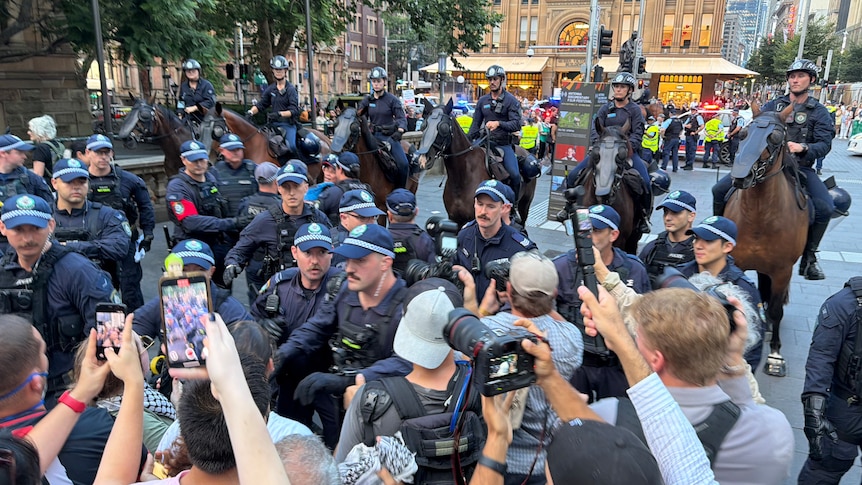
The contentious laws, which were enacted during an emergency parliamentary session on Christmas Eve, were intended to restrict public gatherings in certain areas of Sydney for nearly two months. Following their enactment, the police commissioner issued a declaration that banned protests throughout Greater Sydney, a restriction that was renewed multiple times until it finally expired on February 17.
Initially, the restricted zones included much of Sydney, but by January, the focus was narrowed to the eastern suburbs and the central business district, with allowances made for protests in Hyde Park on Australia Day. These limitations were also enforced during a visit by Israeli President Isaac Herzog in February, which prompted significant public demonstrations.
The legal challenge was initiated by Elizabeth Jarrett of the Blak Caucus, Joshua Lees from the Palestine Action Group, and Michelle Berkon representing Jews against the Occupation ’48. They contended that the laws imposed a “chilling effect” on free speech and unduly restricted political expression.
The plaintiffs highlighted that the criteria for police intervention were minimal and could be invoked for reasons unrelated to terrorism. In contrast, the New South Wales government defended the laws, asserting they were only applicable in specific situations and aimed to “protect the community and enhance social cohesion” in the wake of the Bondi attack.
The state maintained that the restrictions were a reasonable response to the “heightened community tensions” stemming from conflicts in the Middle East, which had led to incidents of violence associated with protests. However, the judges determined that the laws aimed to suppress public gatherings in the name of social cohesion, which they deemed constitutionally invalid.
In their ruling, the judges acknowledged the potential anxiety caused by terrorist acts but argued that this did not justify the prohibition of public assemblies as a means to preserve social order.
In response to the court’s decision, Premier Chris Minns expressed disappointment but defended the government’s rationale for implementing the legislation, citing the devastating impact of the terrorist attack that claimed 15 lives. He emphasized the necessity of such measures for the safety of Sydney at that time.
Outside the court, Joshua Lees described the ruling as a “resounding win,” criticizing the government’s approach as excessively forceful. He urged Premier Minns to resign, claiming that he had been cautioned by various legal experts about the laws’ constitutionality and accusing him of undermining democracy in the state.
NSW Police announced that they would be reviewing the court’s judgment, while Shadow Attorney-General Damien Tudehope highlighted the ruling as evidence of the current government’s mismanagement. He criticized the hasty passage of the legislation during last December’s emergency parliamentary session, stating that it had not undergone sufficient scrutiny before being enacted.