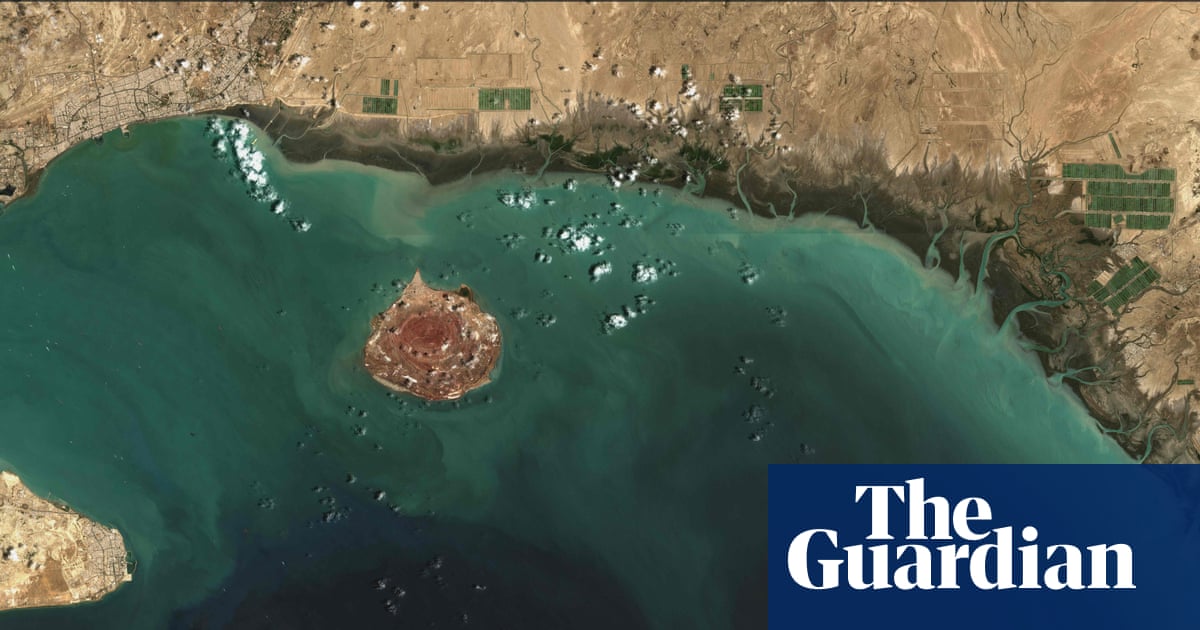

Former President Donald Trump has announced plans to initiate anti-mine operations in the Strait of Hormuz, aiming to facilitate the reopening of this critical waterway, which has been effectively blocked to maritime traffic by Iran since the onset of hostilities involving the US and Israel in late February.
Due to significant losses sustained by its large naval fleet from US and Israeli attacks, Iran has resorted to deploying smaller surface vessels to strategically place mines within the Strait of Hormuz. The exact number of mines laid by Iran remains unclear. However, Iran has left a navigable route for vessels willing to pay a toll.
As reported by US officials in the New York Times, Iran has acknowledged difficulties in locating all the mines it has deployed and lacks the resources to remove them.
The use of mines is part of a broader spectrum of offensive tactics available to Iran in the Strait of Hormuz, which also includes inexpensive drones, anti-ship missiles, and fast-attack boats.
The Islamic Revolutionary Guard Corps (IRGC) showcased its capabilities involving small vessels and mines in a propaganda video filmed in a naval bunker in January 2025.
Iran is believed to have utilized two primary types of mines: the Maham 3 and Maham 7. Unlike older mines that detonated upon physical contact, these modern variants employ magnetic and acoustic sensors to initiate explosions when a vessel approaches.
The Maham 3 is an anchored mine weighing 300 kg, designed for deployment in waters up to 100 meters deep. In contrast, the Maham 7 is a 220 kg mine meant for shallower environments, featuring a conical shape to minimize sonar detection as it rests on the seabed.
Despite the significant losses to its navy, analyses indicate that Iran still possesses approximately 80% to 90% of its small boats and mine-laying vessels, which means it could potentially deploy additional mines if hostilities persist.
While laying mines can be accomplished swiftly and easily, clearing them is a complex and perilous task. Although the strait is relatively narrow, the area affected by the mines is substantial, making US crewed minesweepers vulnerable targets should fighting resume.
A safer and more efficient approach for the US would involve the use of uncrewed marine mine-hunting technologies. These include the Knifefish undersea mine hunter, a submersible device, and the MCM anti-mine vessel, which resembles a speedboat.
The US could also utilize the AN/ASQ-235 (Archerfish) airborne mine neutralization system, which can be deployed from an MH-60S helicopter. This system, operated by the helicopter crew, employs sonar-equipped vehicles to locate and neutralize mines.
While employing uncrewed systems mitigates risk to personnel from the mines, these technologies would still necessitate US ships and aircraft to operate in close proximity, thereby exposing personnel to potential missile or drone attacks if the ceasefire were to collapse.
On April 11, two US destroyers, the USS Frank E Petersen and USS Michael Murphy, passed through the strait, a move characterized by US Central Command as “setting conditions for clearing mines.” Tehran’s response to more extensive operations remains uncertain, particularly regarding the potential impact on the existing ceasefire.
The global economy’s dependence on maritime trade gives countries that deploy mines significant leverage, particularly given the relatively low cost of laying them. Even a small number of mines can effectively obstruct sea lanes, especially since some mines are designed to detonate after a specific number of ships have traversed the area, thus creating an atmosphere of uncertainty.
International laws governing the Strait of Hormuz are complex, compounded by the fact that neither Iran nor the US is a signatory to the 1994 UN Convention on the Law of the Sea. While international law prohibits the use of mines to obstruct innocent passage through international straits, Iran asserts that portions of the strait fall within its territorial waters.
It remains ambiguous whether Iran would be obligated to provide a detailed map of the mines to the US, with whom it remains engaged in an armed conflict—albeit currently on hold due to a ceasefire—especially given the US’s own military blockade in the region.