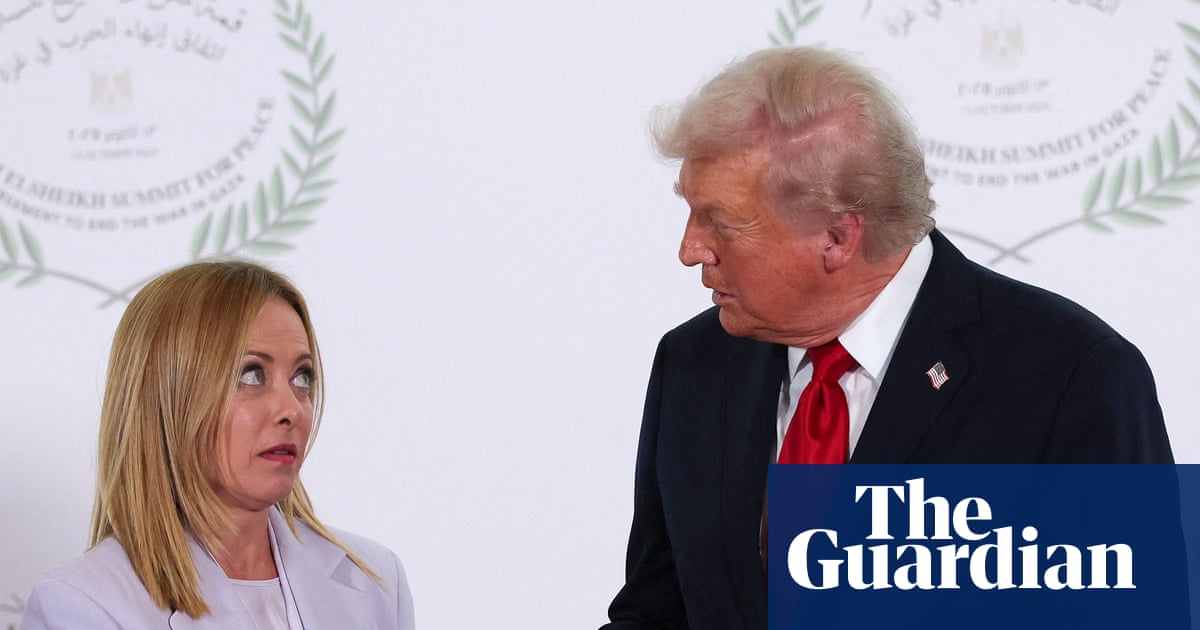

Six months ago, Giorgia Meloni, Italy’s far-right prime minister, found herself on a stage in Sharm el-Sheikh, surrounded by male leaders as they convened to discuss a peace agreement concerning Gaza.
During this gathering, Donald Trump directed both compliments and criticisms at the attendees, referring to Meloni as a “beautiful young woman.” He turned to her and asked, “You don’t mind being called beautiful, right? Because you are. Thank you very much for coming.”
Though visibly uncomfortable, Meloni accepted the praise. She had been diligent in positioning herself as a reliable European ally to Trump, having made a brief visit to his Mar-a-Lago estate in Florida and being the only European leader present at his inauguration as US president.
However, this relationship, initially forged on shared nationalistic sentiments, is now deteriorating. In a recent interview with the Italian newspaper Corriere della Sera, Trump criticized Meloni, claiming she “lacked courage” for not supporting the US-Israeli stance against Iran.
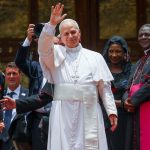
This criticism followed Meloni’s remarks that Trump’s derogatory comments about Pope Leo—who has become a prominent critic of the Iran conflict—were “unacceptable.”
“She is the one who is unacceptable,” Trump retorted, asserting that Meloni appears indifferent to the potential threat posed by a nuclear-armed Iran, which could endanger Italy.
This exchange capped a tumultuous month for Meloni, whose administration faced a significant setback in a judicial reform referendum in March. Additionally, her close ties to Trump have become politically risky in Italy, a nation with a strong anti-war sentiment.
Analysts believe Meloni needed to repair her public image and regain popular support, and Trump’s conflict with Pope Leo offered a timely opportunity for her to distance herself from the former president.
Cecilia Sottilotta, an associate professor of politics at the University for Foreigners in Perugia, noted that Meloni, during the Sharm el-Sheikh event, was uncomfortable with Trump’s compliment, recognizing its diminishing nature. “However, there comes a time when never standing up to your partner becomes a problem,” she stated, emphasizing that the Pope Leo controversy was beneficial for Meloni, as Italians have a deep respect for their popes and oppose wars.
After the onset of strikes in Iran in late February, Meloni began to carefully distance herself from Trump. In parliament, she condemned the conflict while simultaneously warning about the dangers of a nuclear-capable Iran threatening Italy and Europe.
Following her referendum defeat, she took a firmer stance, refusing to allow the use of a Sicilian airbase for US military operations related to the Iran conflict.
Despite this, her balancing act was evident in her defense of Pope Leo. Meloni labeled Trump’s attack on the Pope—whom he described as “weak” and pandering to the “radical left”—as “unacceptable,” but this was only after she faced opposition pressure for not addressing Trump’s remarks in a prior social media post praising the Pope’s role in fostering peace.
“Her instinct right up until the very end was to walk the tightrope,” remarked Sottilotta. “But this is a significant crisis, and at this point, you cannot afford to remain neutral.”
Additionally, the recent electoral defeat of her far-right ally Viktor Orbán in Hungary is believed to have influenced Meloni’s response to Trump, particularly after US Vice President JD Vance’s visit to Budapest to support Orbán’s campaign.
Sottilotta noted, “Vance going to Orbán was like delivering the kiss of death. So when she saw that, she really understood.”
As Meloni now looks ahead to the general elections in 2027—which were expected to favor her coalition prior to the referendum—she is strategizing a careful shift in her political stance.
In a further indication of her distancing from the conflict, Italy recently suspended a defense pact with Israel, a nation she had previously supported strongly. Furthermore, during a meeting with Ukrainian President Volodymyr Zelenskyy in Rome this week, she reaffirmed her government’s commitment to Ukraine, vowing to assist in enhancing the country’s defenses against Russian aggression. On Friday, she is set to meet with French President Emmanuel Macron and British Prime Minister Keir Starmer in Paris to discuss security in the Strait of Hormuz, both of whom have also faced Trump’s ire.
While Meloni’s party, Brothers of Italy, has witnessed a decline in support recently, it continues to lead in the polls, as does her personal approval rating, despite a waning of her political sheen. Unless the fragmented opposition can present a viable alternative, these polling trends are likely to remain consistent. Her administration is expected to prioritize the passage of an electoral law aimed at ensuring a comfortable victory in the upcoming elections.
Lorenzo Pregliasco, co-founder of the political analysis firm YouTrend, stated, “I believe the coalition remains favored in the sense that it has a clear leader. The opposition still needs to define an alternative.”
Since taking office in October 2022, Meloni’s government has generally enjoyed stability, primarily due to its cohesion rather than any significant achievements that would enhance the lives of Italians.
Mattia Diletti, a political science professor at Sapienza University in Rome, observed, “She has managed the Trump issue, which was a tactful move in the short term. However, unless she implements some substantial changes domestically, her popularity will decline. Italians may be indifferent to international politics, but they are concerned about the Iran conflict and broader Middle Eastern issues, as these directly affect their lives.”