
On Thursday, leaders from various Opposition parties launched a fierce critique of the government regarding its decision to introduce new Bills in the Lok Sabha amidst ongoing Assembly elections. They accused the Bharatiya Janata Party (BJP) of leveraging the issue of women’s seat reservations to facilitate delimitation of constituencies for electoral gain.
The Lok Sabha saw the introduction of the Constitution (131st Amendment) Bill, aimed at modifying the women’s quota legislation, after a vote was requested by the Opposition.
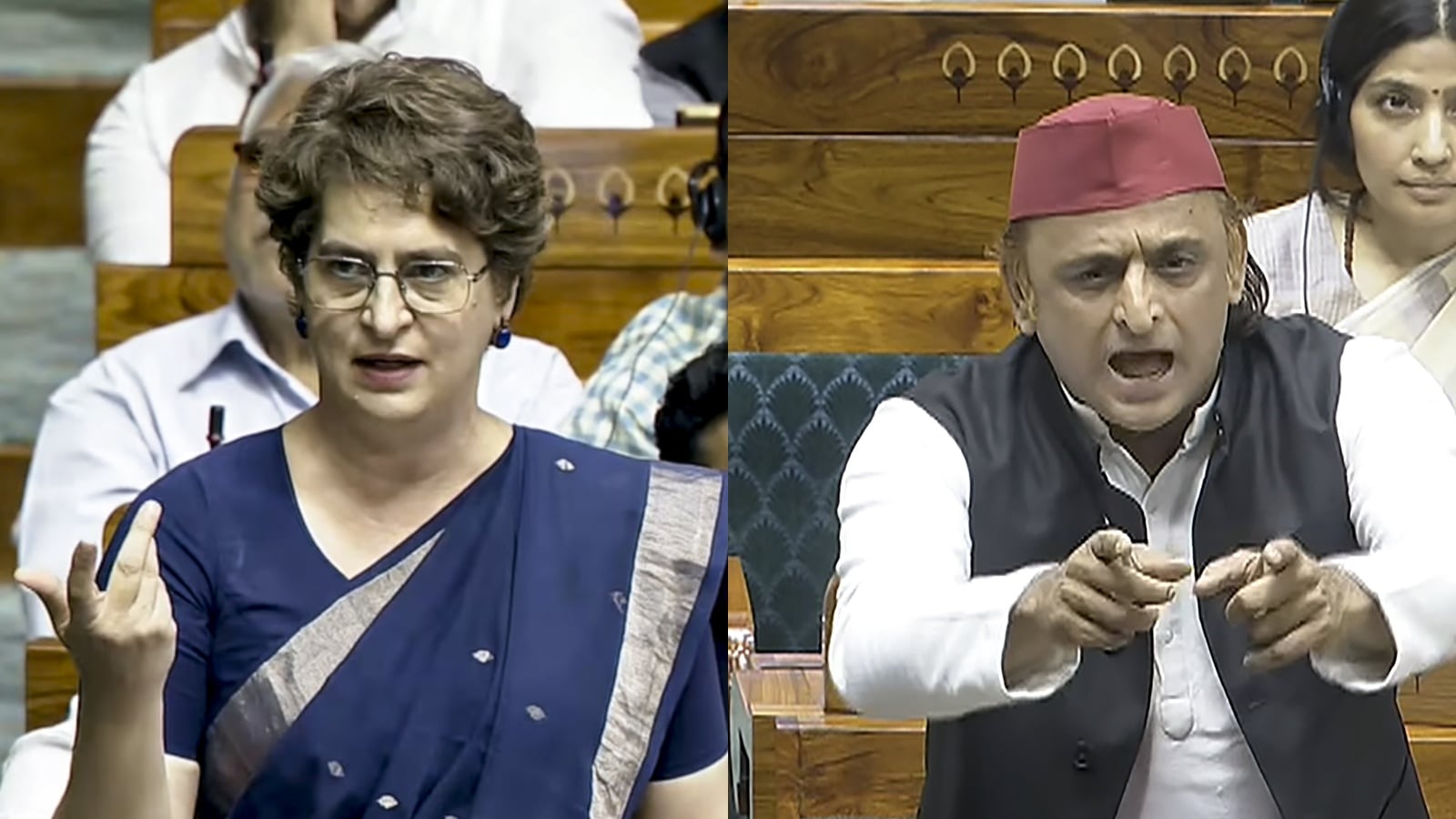
Prominent figures from the Opposition, including Congress leaders Priyanka Gandhi Vadra and Gaurav Gogoi, along with Samajwadi Party MP Akhilesh Yadav, spearheaded the criticism. They challenged the motives behind the Bills and the timing of their introduction.
While expressing their backing for women’s reservations in legislative bodies, the Opposition questioned why the delimitation process could not be informed by the anticipated data from the upcoming 2026-27 Census.
Vadra and Yadav accused the government of compromising the integrity of reservations by failing to complete the caste Census before proceeding with delimitation.
Addressing the Bills, Vadra directly responded to Prime Minister Narendra Modi’s remarks, asserting that the proposed legislation was disconnected from genuine concerns for women. She voiced apprehensions regarding fairness and representation within the context of these changes.
In response to the Prime Minister’s claim of a three-decade delay in enacting women’s quotas in Parliament, she highlighted the 1928 Motilal Nehru report, which advocated for equal rights for women among other fundamental rights. She emphasized that while the Prime Minister may claim to seek no recognition, women are discerning and cannot be easily misled, stating, “Women can quickly identify men who repeatedly mislead.”
Vadra further noted that the Prime Minister’s comments suggested that the BJP is the leading advocate for women’s reservation, a narrative he maintained throughout his address, despite claiming he did not wish to take credit for it. She reminded that the Indian National Congress had supported the Act when it was unanimously passed in 2023, aligning with its principles.
Akhilesh Yadav criticized the BJP for reducing the significance of women’s issues to mere slogans and called for the inclusion of Other Backward Classes (OBC) and Muslim women in the provisions of the women’s quota law.
He alleged that the BJP remained silent on the issues affecting OBC women and interpreted the haste to pass the Bills as an attempt to avoid having the delimitation based on the caste census. “We will not accept it until it is implemented properly,” he asserted, emphasizing that if OBCs constitute 66% of the population, then OBC women should represent 33% of that segment. “They don’t want to give rights to OBC women,” he added.
Yadav reiterated the Opposition’s support for women’s reservation but expressed opposition to what he described as the BJP’s deceptive tactics. He concurred with Congress MP Gogoi’s assertion that the BJP’s aim was to alter the country’s electoral landscape through delimitation.
Gogoi, who opened the debate on behalf of the Opposition, stated, “We endorse women’s reservation within the current composition of the House of 543. However, you politicize everything and engage in symbolism. This is a backdoor Bill for delimitation, masquerading as women’s reservation.”
Congress leader K C Venugopal accused the government of stalling the implementation of the women’s quota law, asserting, “The entire Opposition is offering a blank cheque to the government: implement the reservation as mandated by the 2023 law, according to the current strength of Parliament. Who is opposing it? The government is clearly attempting to delay it.”
Kakoli Ghosh Dastidar from the Trinamool Congress remarked that if the government were genuinely committed to women’s reservation, the Bill would have been introduced during the Budget session rather than during the midst of elections. “We are skeptical of their intentions in introducing this during elections… women’s reservation appears to be a guise to alter the electoral process and undermine democracy,” she stated.
Congress MP Manish Tewari highlighted inconsistencies within the Bill, particularly regarding the delimitation process, which traditionally follows a Census. “It has never occurred that delimitation is based on 15-year-old data. The demographic landscape of India has shifted significantly between 2011 and 2026,” he explained. He criticized the new Bills for undermining constitutional safeguards by allowing the Lok Sabha to determine which Census data would be utilized. Arvind Sawant from Shiv Sena (UBT) questioned the government regarding its non-implementation of the 2023 Act for women’s reservations and its failure to adhere to established procedures. “Why are you not implementing the Act based on the current strength of the Lok Sabha?” he asked.
For the latest updates, follow us on Instagram.