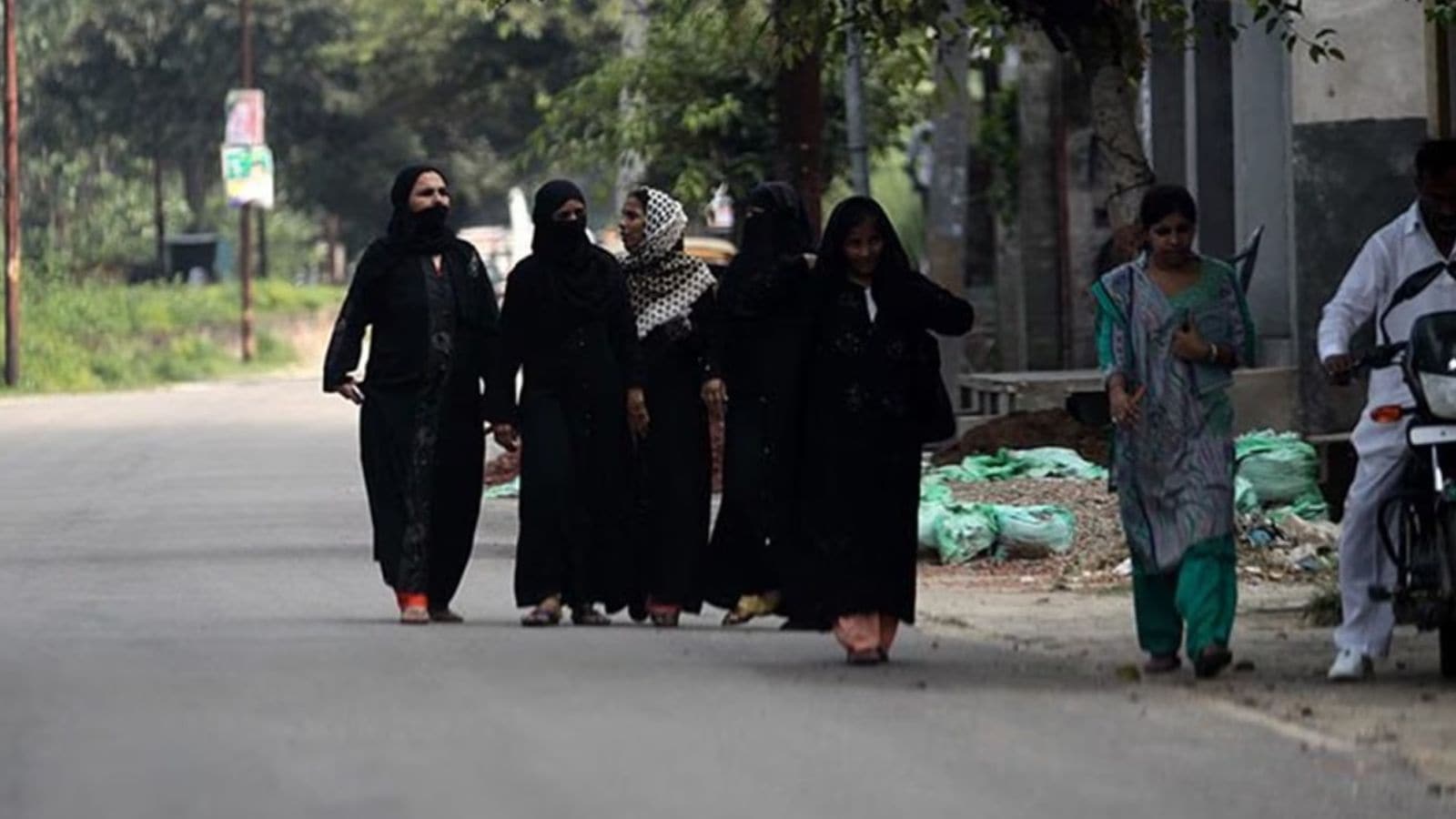

The call for a reservation for Muslim and OBC women by the Samajwadi Party (SP), which ranks as the third-largest party in the Lok Sabha following the Congress and BJP, sparked a heated debate in Parliament on Thursday. The BJP promptly countered the request, asserting that the Constitution does not permit quotas based on religious affiliation.
Leaders from the SP acknowledged their understanding of this constitutional barrier, but maintained that their proposal was intended to convey to the Muslim community that the SP is advocating for their interests amidst BJP governance. With Uttar Pradesh set to hold elections in early 2027, this stance may be pivotal for the party.
During discussions on three proposed Bills aimed at expediting the implementation of women’s reservation in the Parliament and state assemblies, opposition parties collectively opposed the measures. SP MP Dharmendra Yadav, representing Azamgarh—a constituency known for its significant Muslim and Yadav population—called for reservations specifically for Muslim and OBC women. Akhilesh Yadav, SP’s president and MP from Kannauj, questioned whether Muslim women were excluded from the notion of “aadhi aabadi” (half the population). In response, Union Home Minister Amit Shah suggested that the SP should allocate all its election tickets to Muslim women.
The statements made by the Yadav cousins, Akhilesh and Dharmendra, were met with strong disapproval from the ruling benches, where Shah and Parliamentary Affairs Minister Kiren Rijiju emphasized that any reservation based on religion contradicts constitutional principles. Rijiju remarked, “We should focus on women across the nation, not solely on Muslim women.”
The Constitution explicitly forbids reservations based only on religious grounds, as outlined in Articles 15 and 16, which prevent discrimination based on religion.
SP Rajya Sabha MP Javed Ali Khan pointed out that the party has consistently advocated for reservations benefiting women from minority and OBC communities. He stated, “When the women’s reservation bill was passed in 2023, our leaders highlighted the need for reservations for Muslim and OBC women… This has been our demand since the era of Netaji (Mulayam Singh Yadav).” When asked if this stance might create tensions with other communities, Khan affirmed that advocating for OBC reservations could indeed provoke discontent from non-OBC groups, but he stressed that the SP remains committed to supporting OBC, Dalit, and minority interests without being antagonistic towards any community.
SP spokesperson Rajendra Chaudhary clarified that while religiously-based reservations are not feasible, the party aims to represent the needs of backward women across all faiths. “We are not insisting on reservations exclusively for Muslim women but rather for all backward women, ensuring that Muslim women are not overlooked,” he stated.
Another spokesperson, Fakhrul Hasan, pointed out the inconsistency of the BJP’s position, noting that when the government enacted laws regarding Triple Talaq, it specifically addressed the Muslim community. “Yet when the SP advocates for reservations for Muslim women, BJP leaders raise objections,” he remarked.
SP MLA Nadira Sultan from Patiyali in Kasganj argued for dedicated reservations for Muslim women, emphasizing the need for equitable representation despite her constituency comprising diverse communities. “Women often face setbacks regardless of their efforts. The final decision will rest with the party leadership,” she added.
An examination of recent electoral data indicates that the SP has historically favored nominating Muslim men over women for election tickets. In the 2022 Uttar Pradesh Assembly elections, the party fielded 56 Muslim candidates, of which only four (7%) were women. Out of the 31 Muslim candidates elected, only three were women: Mariya Ali from Matera, Saiyada Khatoon from Domariyaganj, and Sultan from Patiyali.
In the 2024 Lok Sabha elections, while allied with the Congress, the SP nominated only four Muslim candidates, including one woman (Iqra Hasan from Kairana), and all were successful. The party strategically limited Muslim candidate representation, opting for non-Yadav and non-Muslim candidates to appeal to broader OBC and upper-caste electorates, which proved effective as the SP secured 37 seats in Uttar Pradesh.
A senior leader within the SP remarked that the party garnered substantial support from Muslims during the 2022 Assembly elections, with only a minority siding with Congress and BSP. “However, opponents circulated narratives suggesting Akhilesh does not robustly advocate for Muslims and remained passive while the BJP targeted leaders like Azam Khan. He often avoids the term ‘Muslim’ in favor of ‘alpsankhyak’ and introduced the acronym PDA (pichhda, dalit, alpsankhyak),” the leader elaborated.
The Constitution, particularly Article 15, prohibits discrimination against any citizen based on religion or caste, among other factors. Following the Supreme Court’s ruling in the State of Kerala vs N M Thomas (1975), reservation is viewed not merely as an exception to the equality and non-discrimination provisions in Articles 15(1) and 16(1), but rather as an extension of equality itself.
According to Faizan Mustafa, former vice-chancellor of NALSAR University of Law, the critical term in Articles 15 and 16 is “only,” indicating that if a religious, racial, or caste group constitutes a “weaker section” under Article 46 or is classified as a backward class, it may qualify for special provisions to promote its advancement.
Some Muslim castes have received reservations not due to their religious identity, but because they were recognized as belonging to backward classes, and such reservations were established without diminishing the quotas for SCs, STs, and OBCs by creating sub-quotas within the OBC category.
In recent years, the SP has encountered challenges with several senior Muslim leaders. In April 2022, Sambhal MP Shafiqur Rehman Barq sparked controversy by expressing dissatisfaction with the party’s operations, claiming it was not adequately serving the Muslim community. Additionally, Rampur MLA Azam Khan’s media representative criticized the SP for its silence in the face of government actions against Muslims, including property attachments and legal actions under the Yogi Adityanath administration.