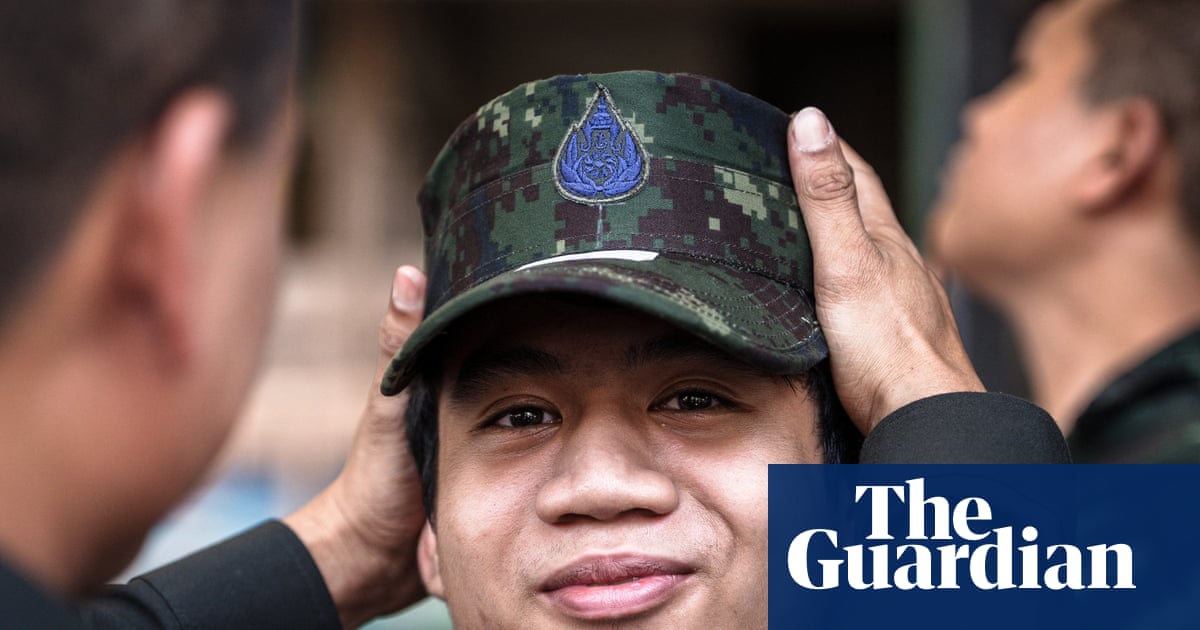

The Thai military has adopted a more casual and modern approach in its recruitment efforts, as evidenced by a recent online advertisement that playfully invites potential enlistees with the line, “Bored of your wife? This April, come and enlist in the military.” This shift from the military’s traditional messaging coincides with the annual enlistment period.
While the impact of this campaign remains uncertain, statistics from the Royal Thai Army reveal that close to 50,000 men have volunteered to join this year, reflecting a 22% increase from 2025. This trend continues a pattern observed over the last five years in Thailand, starkly contrasting with nations like Japan, which face challenges in recruiting military personnel.
Analysts are still trying to pinpoint the reasons behind this rise in volunteer enlistments. One possible explanation is a surge in nationalism following recent border tensions with Cambodia. Additionally, the struggling economy may be influencing young people’s decisions, as job prospects have become increasingly limited.
The military asserts that this uptick indicates a growing confidence in its institution. In preparation for the annual draft, the military has embraced social media as a tool for engagement, encouraging young men to become part of the “family” that protects Thailand’s borders, while incorporating humor about romantic relationships.
One social media post humorously stated, “Commitment to training fosters discipline; devotion to her yields only sisterly love.”
However, many young men may be opting to volunteer out of practicality. Those aged 18 to 29 who do not enlist are placed in a lottery at their local recruitment center. Drawing a black card grants them exemption from military service, while a red card signifies a compulsory enlistment lasting one to two years, contingent on their educational background. In contrast, volunteers enjoy a shorter service time, with university graduates serving just six months.
Krisana Phoolong, a 23-year-old recent graduate, shared that he chose to volunteer this year to avoid the uncertainty of conscription. “As a volunteer, I can select my camp and timing, and find a location close to home,” he noted, preferring the six-month commitment as a volunteer over the potential for a longer service through the lottery.
He also mentioned that the current economic climate is prompting many young people to consider enlistment. “Many companies aren’t actively hiring right now,” he explained.
Conscripts earn a monthly salary of approximately 11,000 baht (around US$340), along with food and housing provisions. Viral videos showcasing the annual lottery event often highlight the relief experienced by those who draw a black card.
A widely shared TikTok video earlier this month featured a man denied enlistment due to a BMI of 35—exceeding the qualifying limit—after indulging in bubble tea excessively, reportedly consuming two cups daily for three months.
The opposition party, the People’s Party, which garners significant support from younger voters, has campaigned for the abolition of mandatory military service in the lead-up to the January elections.
However, Pavin Chachavalpongpun, an associate professor at Kyoto University’s Center for Southeast Asian Studies, believes that reforming the conscription system is unlikely at this time. “Given the current government and the rise in military popularity following the conflict with Cambodia, discussions about conscription may be sidelined for now,” he stated. “How can one address conscription issues during a border dispute with a neighboring country?”
The recent border tensions, which flared up last July and December, have further solidified the military’s influential role in both politics and foreign relations, according to Pavin.
Despite this, he expresses doubt that the conflict has significantly altered the opinions of young individuals, particularly those who protested in 2020 for reforms and a cessation of military involvement in politics.
Krisana, who is set to commence his training next month, advocates for entirely voluntary military service. “I recognize that for those who are drafted and receive a red card, balancing family responsibilities or employment can be quite challenging,” he remarked. He suggested that a more effective system might include incentives, such as welfare benefits, to motivate individuals to enlist.