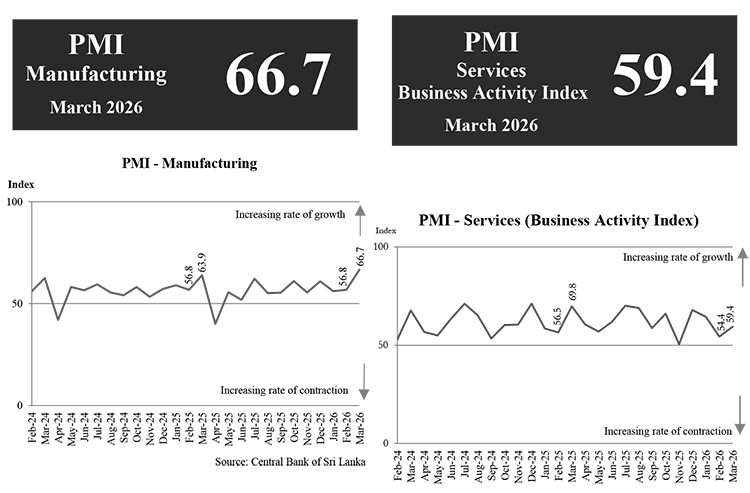

In March 2026, the Purchasing Managers’ Indices (PMIs) reflect growth in both the Manufacturing and Services sectors in Sri Lanka.
The Manufacturing Purchasing Managers’ Index (PMI) rose to 66.7, bolstered by increased activity driven by seasonal demand. Nonetheless, many businesses reported challenges related to production, primarily due to shortages of raw materials and fuel, escalating costs, and logistical hurdles.
Both the New Orders and Production sub-indices showed positive growth, particularly in the food and beverages and textile sectors. The Stock of Purchases sub-index also increased, aligning with the rising production needs. Additionally, some companies engaged in precautionary stocking to mitigate potential disruptions from the ongoing conflict in the Middle East. The Employment Index saw growth, though at a slower rate in March. Meanwhile, the Suppliers’ Delivery Times continued to extend, largely due to heightened demand and shipping disruptions.
Looking ahead, expectations for manufacturing activities in the coming quarter remained optimistic, albeit tempered by uncertainties stemming from the ongoing geopolitical situation in the Middle East.
In the Services sector, the Purchasing Managers’ Index recorded a value of 59.4 in March 2026, signaling an increase in service-related activities compared to the prior month.
This growth in business activities was widespread across various sectors, with the financial services industry being a key contributor thanks to a rise in lending activity. Additionally, the wholesale and retail trade sectors experienced growth due to festive demand, while professional and personal services also saw significant expansion.
The formation of new businesses continued in March 2026, particularly within the financial services sector, which was further supported by substantial growth in insurance and pension funding activities.
Employment levels rose as companies hired more staff to satisfy increasing consumer demand ahead of the festive season. Although backlogs of work declined, the rate of decrease slowed during the month.
Anticipations for business activity in the next quarter remain strong, bolstered by seasonal demand and emerging opportunities, even in light of the current geopolitical uncertainties. However, some businesses noted potential risks to their outlook, particularly due to the ongoing conflict in the Middle East and broader global economic concerns.