
European Union representatives have arrived in Budapest for crucial discussions aimed at recalibrating the bloc’s tense relationship with Hungary, just weeks before the new government assumes office. This visit comes as Hungary’s outgoing Prime Minister, Viktor Orbán, acknowledged that a “political era has ended” and indicated his intention to retain leadership of his party in his first remarks following the recent election.
In an interview with the pro-government publication Patrióta, Orbán characterized the election held on Sunday as an “emotional rollercoaster,” noting that the opposition Tisza party achieved a decisive victory, effectively concluding his 16-year tenure in leadership.
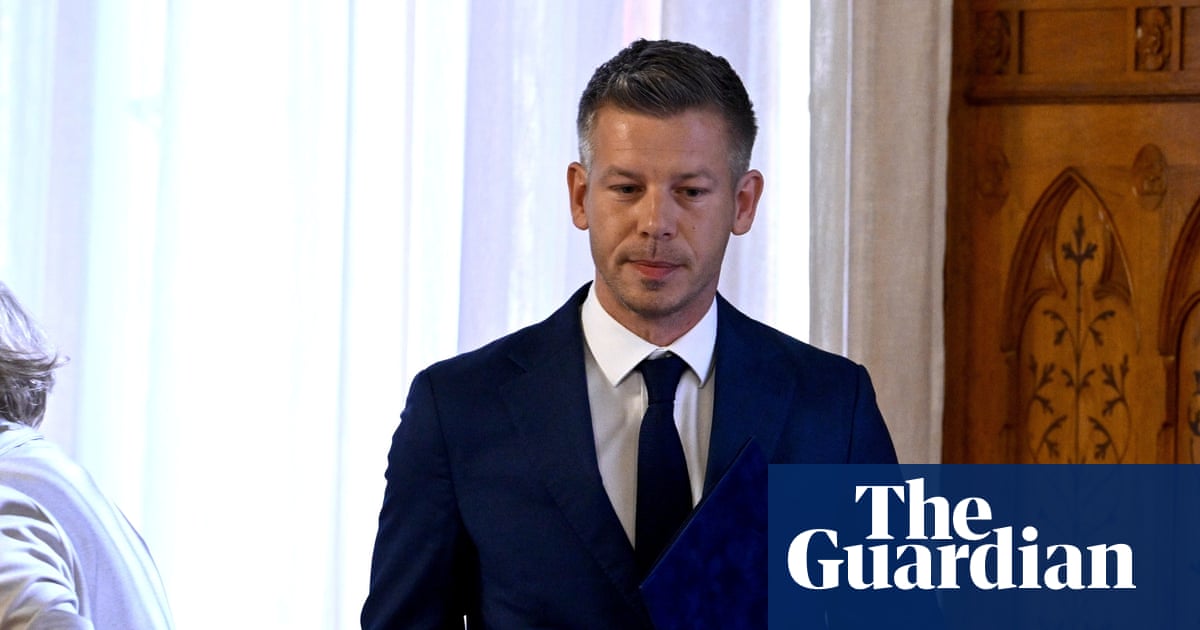
Under the leadership of Péter Magyar, Tisza secured a supermajority, empowering the party to amend the constitution and potentially reverse significant components of Orbán’s approach to “illiberal democracy.”
This significant electoral defeat has raised questions about Orbán’s future, as his long-standing political journey has been characterized by efforts to diminish institutional checks that limited his government’s authority. This includes amending election laws to favor his party, placing loyalists in control of approximately 80% of Hungary’s media landscape, and restructuring the judicial system.
In remarks made late Thursday, Orbán acknowledged the need for a “complete renewal” within his right-wing populist Fidesz party. When asked about the reasons behind the electoral loss, he accepted full responsibility, stating, “As I am the president of the party, I must take 100% of this responsibility upon myself.”
Orbán added that Fidesz would convene to elect new leadership in June, asserting, “It will not be me who decides what I should do. If they say that I need to take the team out into the field, then I will take them to the next match.”
His statements coincided with the arrival of the EU delegation, which is perceived as a pivotal opportunity for both parties. The EU visit aims to facilitate a fresh start after Orbán’s tumultuous governance and to persuade Hungary to remove its veto on a €90 billion loan intended for Ukraine. Simultaneously, Magyar is eager to access around €17 billion in EU funds that have been frozen.
The urgency of these talks is underscored by a looming deadline. EU Commission spokesperson Paula Pinho emphasized the need for rapid progress, stating, “The clock is ticking for a number of topics.” She noted the importance of addressing these issues promptly, especially before Magyar takes office in early May.
The frozen funds comprise nearly €17 billion from the EU budget, with €10 billion set to expire by the end of August. Access to these funds is contingent upon Hungary meeting specific criteria, including measures against corruption, upholding asylum rights, and ensuring academic freedom. Additionally, there may be over €16 billion available in low-interest defense loans.
Orbán’s administration announced that the former prime minister would not attend his last EU summit next week, thus avoiding a possible confrontation regarding his continued veto of the €90 billion loan for Ukraine.
During the discussions on Friday, Magyar and Tisza are expected to navigate the complexities of fulfilling campaign promises while addressing the EU’s expectations and the institutional constraints resulting from Fidesz’s long-standing dominance. Political Capital think tank director Péter Krekó remarked, “Tisza has to cut this Gordian knot somehow, which will not necessarily be very easy.”
Since taking power in 2010, Orbán and his party have systematically embedded loyalists throughout Hungary’s state, media, and judiciary, leaving uncertainty over how they will respond to potential changes under a Tisza-led government.
Nonetheless, there is considerable motivation among both the EU and Tisza to seek common ground. Krekó noted, “The EU funds will be desperately needed for Tisza to fulfill at least some of their promises,” while the EU is cognizant that failing to support the new government could lead to a return to an “obstructive and destructive” relationship reminiscent of Orbán’s era. “I think the political will is definitely there to ensure the new government succeeds so that Orbán does not reclaim power,” he added.
In the aftermath of Sunday’s election, Magyar has actively reinforced his commitment to “regime change,” making clear his intention to distance himself from Hungary’s recent history. He has called for the resignation of the nation’s highest courts, the audit office, competition and media authorities, as well as the chief prosecutor and the president, labeling them as “puppets” of the previous administration.
In a Wednesday interview with state media, he promised to halt their news coverage, accusing them of disseminating fear, falsehoods, and propaganda akin to that of North Korea and Nazi Germany.
The following day, he announced via social media that he would not occupy Orbán’s office located in the historic Castle Quarter, preferring instead to establish his office in a ministry building close to Hungary’s parliament.
Magyar also reiterated a campaign promise to enforce term limits for prime ministers, a measure that could prevent Orbán’s return to power, while vowing to pursue individuals who have “plundered, looted, betrayed, indebted and ruined” the nation.
On Thursday, Orbán expressed feelings of “pain and emptiness” as the election results became apparent, admitting, “Even I thought we were going to win. There were so many of us everywhere.”
However, he underscored that Fidesz still maintains a significant base of support, having garnered nearly 2.4 million votes in a nation of 9.5 million residents. “Let’s not act as if the entire country rejected our government,” Orbán stated.