
Malaysian Prime Minister Anwar Ibrahim showcased his adeptness at delivering pointed remarks while maintaining a seemingly innocuous facade during a press conference in Kuala Lumpur on Thursday. When addressing the Pope’s call for global peace alongside Australian Prime Minister Anthony Albanese, Anwar subtly explored the controversial mental state of former U.S. President Donald Trump without crossing any lines.
“Albanese is a Catholic, and I am a Muslim, yet we share a common bond — a deep respect for Pope Leo and the Vatican,” Anwar stated. He continued, emphasizing the importance of the Pope’s message, “As a Muslim and a representative of Malaysia, I wholeheartedly endorse the Pope’s position.” He urged “sane individuals around the world” to back the call for peace and justice, alluding to recent events in Gaza and broader Middle Eastern tensions stemming from U.S.-Israeli actions.
His repeated use of the term “sane individuals” carries weight, particularly considering Anwar’s tumultuous political past, having endured imprisonment twice due to the machinations of a former ally. He is known for his sharp political wit, having previously joked with Trump about their respective challenges.
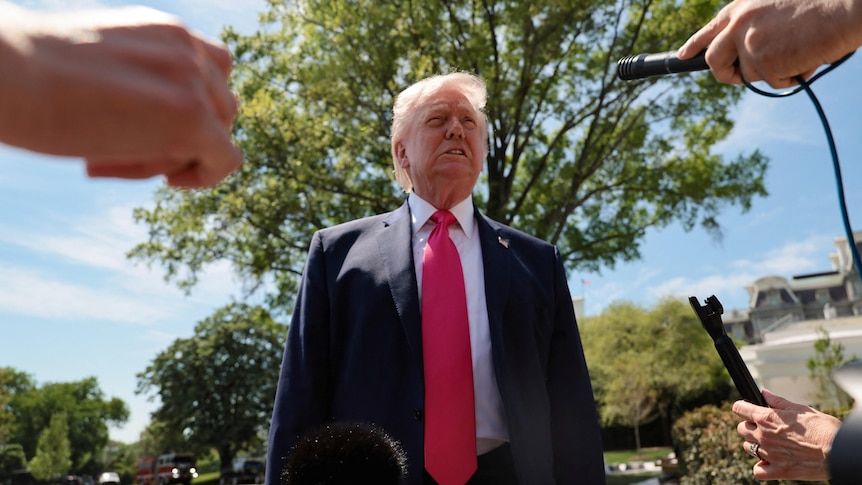
The discourse surrounding Trump’s mental acuity is gradually shifting from mere late-night comedy fodder to a serious topic of concern. Peter Baker, the chief White House correspondent for The New York Times, recently penned an article scrutinizing the mental fitness of the U.S. president during a time of international conflict. Baker highlighted troubling statements from Trump, including a threatening remark about Iran and criticisms aimed at the Pope, which have led to perceptions of a leader losing control.
Despite an evident reluctance within the media to confront the issue of Trump’s mental state, particularly on the global political stage, there are growing worries regarding the implications of his unpredictable behavior on international stability.
Prime Minister Albanese has been actively engaging with Southeast Asian nations this past week, seeking to secure energy agreements and additional fuel supplies in light of the fallout from Trump’s support of Israel’s military actions against Iran. This regional tour underscores the global anxiety surrounding the implications of Trump’s shifting policies and statements.
Australia is increasingly concerned about the potential global economic crisis stemming from these geopolitical tensions, a crisis exacerbated by Trump’s erratic social media communications and policy decisions.
During an interview on Thursday, I inquired whether it might be time for world leaders to take a firmer stance against Trump’s erratic conduct, given its global repercussions. Albanese responded cautiously, stating, “We have a significant relationship with the United States. I approach all leaders with respect and seek constructive engagement with President Trump and his administration, prioritizing Australia’s national interests.”
When pressed on whether Trump’s behavior warranted criticism, Albanese maintained his diplomatic stance, emphasizing the importance of the relationship between the two nations, rooted in shared democratic values and mutual security interests.
Despite the Australian government’s reluctance to publicly criticize Trump, the former president has made disparaging comments about Australia, expressing dissatisfaction with its perceived lack of support. Such remarks would have historically been damaging to an Australian government but seem to have less impact today, partly because Australia has not been explicitly called to action.
More pressing than the government’s approach to Trump’s comments is the question of whether Australia is adequately safeguarding itself from the repercussions of his decisions. The Albanese administration has been actively seeking to bolster fuel supplies, but concerns remain about diversifying defense strategies in response to the shifting global landscape.
This week, Defence Minister Richard Marles unveiled a new defense strategy, which acknowledged the challenges facing the rules-based international order. The AUKUS agreement remains a cornerstone of Australia’s defense policy, despite emerging complexities in global relations.