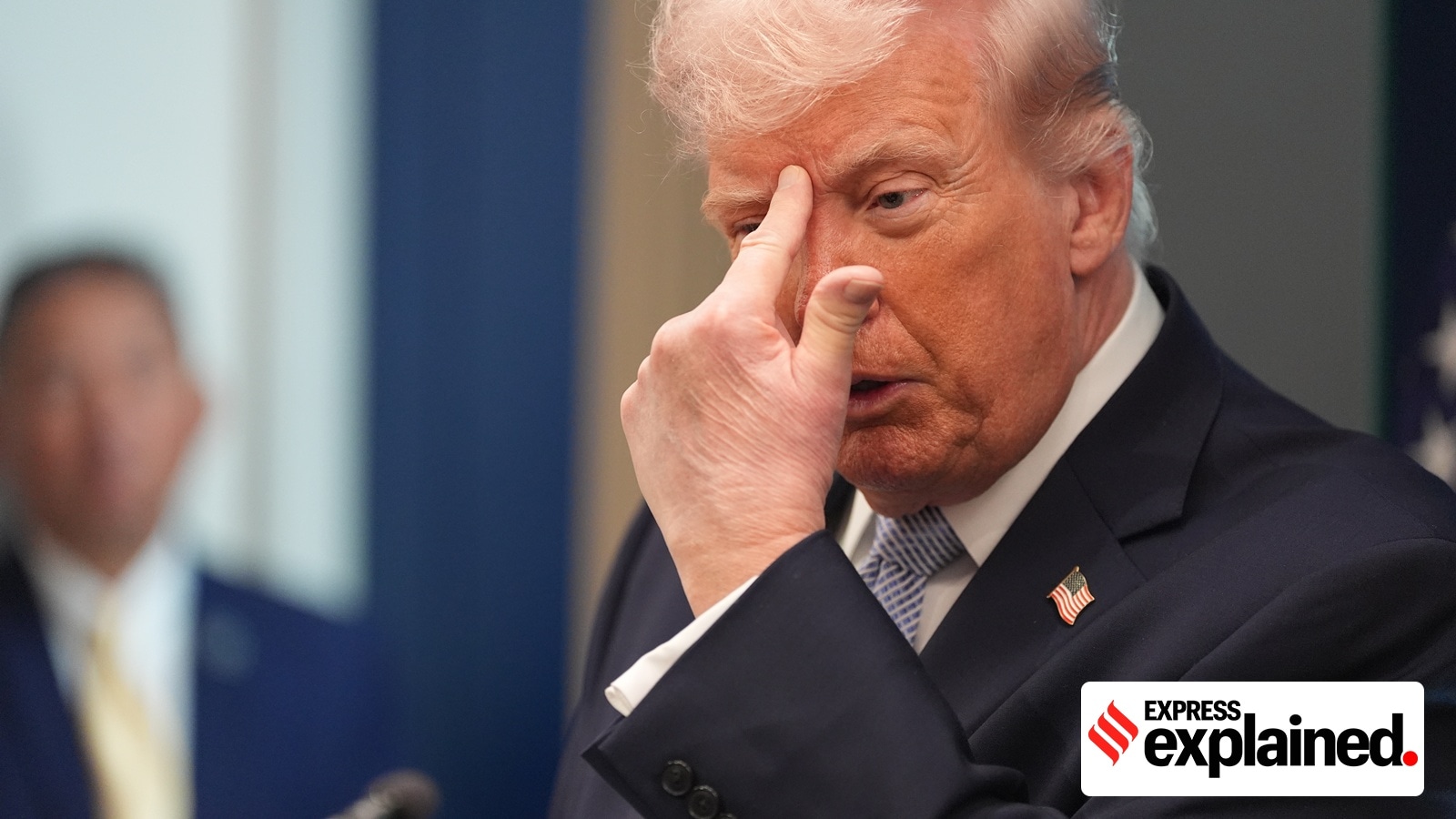

On Tuesday, US President Donald Trump declared a two-week ceasefire in the conflict with Iran, retracting his earlier threats to “end a whole civilization,” even as Iran maintained its defiance.
Concerns linger regarding the durability of the ceasefire, particularly as Israel continued its operations in southern Lebanon and Iran targeted oil facilities in Gulf nations. Trump’s fluctuating remarks and inconsistent actions throughout his presidency have led some to believe he is employing the “madman theory” in his leadership.
This theory, which gained traction during the Cold War, posits that by demonstrating a readiness to take extreme actions, leaders can alter their adversaries’ calculations by instilling fear of escalating conflict. Originally meant to explain erratic behavior, it has since been used strategically to intimidate opponents into making concessions.
Roseanne McManus, a political science and international affairs professor at Pennsylvania State University, discusses how Trump’s behavior since returning to the presidency appears to align with this theory and its implications for the United States’ position in the international arena.
The concept of “madness” is not precisely defined, but research indicates that two forms can enhance a leader’s threats: unpredictability, suggesting that a leader could take any action, and extremism, indicating a disregard for the consequences of warfare, including loss of life.
Trump’s actions and statements during the current conflict support the view that he embodies both forms of “madness.” His shifting narratives regarding the objectives of the war and his oscillation between aggressive threats and conciliatory language contribute to an impression of unpredictability.
Moreover, Trump’s readiness to violate norms and face both domestic and international backlash for extreme threats, such as threatening to annihilate a civilization, reflects a notable insensitivity to the repercussions of his rhetoric.
In what ways does Trump’s strategy differ from those employed by previous US presidents, like Richard Nixon and George W. Bush, or even global leaders such as Russian President Vladimir Putin and North Korean leader Kim Jong Un?
It appears that Trump has crafted a more distinct “madman” persona than many of his counterparts. Historical records indicate that Nixon aimed to project an image of madness, but his inconsistent behavior diminished its effectiveness; the Soviets did not regard him as genuinely unstable and found him to be a preferable negotiating partner.
George W. Bush was sometimes labeled a madman by critics, but he did not actively cultivate a reputation for unpredictability or extremism. He was seen as a hawk, albeit not one characterized by irrationality or extreme risk-taking.
Putin’s image as a madman emerged following his invasion of Ukraine, as he attempted to convey to the West a disregard for the consequences of nuclear conflict. However, this image has somewhat diminished since he refrained from employing nuclear weapons amid the ongoing war.
Kim Jong Un arguably possesses the most pronounced reputation for madness among these leaders. His extreme threats and surprising actions, including executing family members, have contributed to perceptions of him as both unpredictable and extreme. This makes him a closer analog to Trump.
Historically, the “madman theory” was effective partly due to limited information availability. In today’s context, where every action and statement is meticulously analyzed, what are the restrictions of this strategy?
One significant limitation of the madman theory is the challenge in establishing a consistent reputation for madness, as it requires ongoing projection of such an image. Even Nixon faced difficulties in this regard, a situation exacerbated by the abundance of information sources available today.
Furthermore, while perceived madness may enhance the credibility of threats, it can simultaneously erode trust in commitments to peaceful resolutions. This lack of trust may lead adversaries to resist demands, believing that conflict is unavoidable, which could explain Iran’s hesitance in negotiations with the US.
What repercussions has Trump’s approach had on the perception of current and future US foreign policy, both domestically and internationally?
The madman theory serves as a bargaining strategy in crises and may offer certain advantages in such situations, though the aforementioned drawbacks remain critical considerations.
In non-crisis scenarios, however, a leader perceived as irrational may lead to the United States being viewed as a less dependable partner for collaboration. This perception undermines the nation’s image of responsibility and competence, likely diminishing its standing in the global hierarchy.
Abhinav Chakraborty is a journalist with a strong focus on politics, international relations, and in-depth features. He has a background in human resources, with experience in People Operations.