
FINANCIAL CHRONICLE – Sri Lanka is undergoing a significant demographic transition characterized by a declining workforce and an impending crisis in elderly care, as indicated by preliminary findings from the 15th Census of Population and Housing.
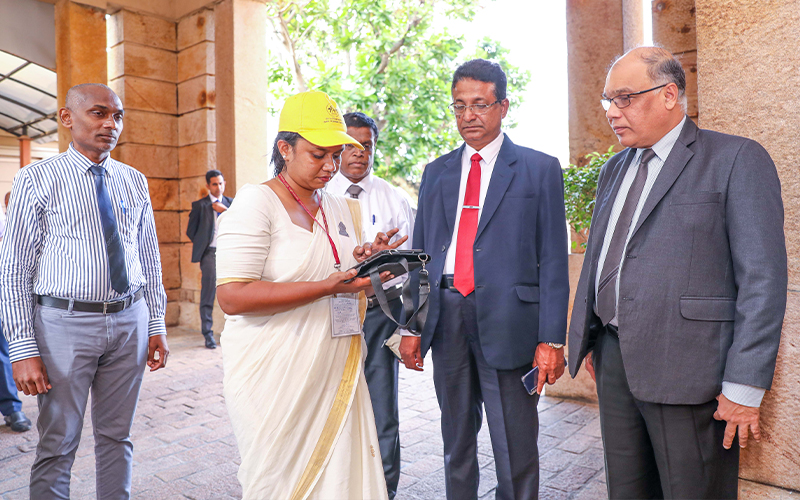
The census, executed by the Department of Census and Statistics (DCS) with the assistance of 35,000 enumerators utilizing modern tablets and smartphones, has established the national population at 21,763,170.
“The census serves as a foundational framework for development initiatives over the next decade,” stated Shyamalie Karunaratne, the Director General of the DCS. “The results offer comprehensive insights into migration, educational attainment, and economic conditions.”
The data reveals that Sri Lanka has achieved a notable literacy rate of 97.4 percent, with a reduction in the educational gender gap, resulting in nearly equal enrollment rates for males and females in both schools and universities.
Furthermore, digital literacy has increased to 67.6 percent, and the ownership of laptops has surged nearly fourfold to 19.7 percent. This shift indicates a movement away from traditional landlines and desktop computers towards a more mobile and digitally savvy population.
Nevertheless, these advancements are overshadowed by a decline in fertility rates. The Total Fertility Rate (TFR) has decreased to 1.3, significantly below the replacement level of 2.1 necessary to maintain population stability.
This trend is contributing to an increase in the median age, which has risen to 35, marking a five-year increase since 2012. The statistics suggest that, for the first time in the nation’s history, the elderly population will soon surpass that of children.
A pressing concern for policymakers is the labor market, where an alarming 52.7 percent of the working-age population is classified as economically inactive. This situation is primarily driven by a substantial gender gap, with more than half of inactive women confined to domestic caregiving roles, preventing their participation in the formal economy.
The census also points to a widening “widowhood gap,” revealing that nearly 44.2 percent of women aged 65 and above are widowed, in contrast to only 10.5 percent of men. With the rise of single-person households, officials have cautioned that the country’s social safety nets are not adequately prepared for the anticipated pressure on elderly care.
Sri Lanka Census 2024: Key Economic & Demographic Indicators
- Demographic Crisis (Highest Priority)
Sri Lanka is rapidly transitioning from a youthful society to an aging one, posing threats to the future workforce and the viability of social safety measures. - Fertility Decline
Total Fertility Rate (TFR): 1.3 (reflecting the average number of children per woman across the entire population, regardless of marital status).
Total Marital Fertility Rate (TMFR): 2.7 (focusing on women currently in a marital union, indicating the average number of children per married woman).
Marriage Trends: The average age of marriage has risen to 29.2 for men and 25.6 for women. - Rapid Population Aging
Median Age: 35 years (indicating the midpoint of the population).
Elderly Share (60+): Comprising 18.0% of the total population.
Aging Index: 87 (indicating 87 elderly individuals for every 100 children), projected to exceed 100 soon, marking a historical first. - Shifting Dependency
Child Dependency Ratio: 33.7 (decreasing, suggesting fewer future workers).
Old-Age Dependency Ratio: 29.4 (increasing, intensifying pressure on the current workforce). - Labor Force & Economic Participation
Despite a skilled labor pool, a considerable segment of the productive-age population is not engaged in the formal economy.
Participation Rate: Only 47.3 percent of the working-age population is active.
The Gender Gap: More than 50% of women remain at home due to domestic responsibilities.
Unemployment Rate: Nationally at 6 percent, with significant regional disparities (10.1% in Batticaloa vs. 3.9% in Moneragala).
Migration: Over 672,000 Sri Lankans reside abroad, with 86 percent migrating for employment, primarily to West Asia. - Vulnerability & Social Structure
The disintegration of the traditional family structure places specific groups, particularly elderly women, at elevated risk.
The Widowhood Gap: 44.2 percent of women over 65 are widowed, compared to only 10.5 percent of men.
Living Alone: 10.5 percent of households are single-person, totaling 640,704 households; among these, 370,229 are aged 60 and above, with a majority being female (71.3 percent). - Education & Digital Literacy
Sri Lanka continues to excel in human capital metrics, with the educational gender gap nearly closed.
National Literacy Rate: 97.4 percent.
Gender Parity: The literacy gap is effectively eliminated (97.9 percent male vs. 97.0 percent female).
Digital Divide: While 67.6 percent are digitally literate, computer literacy stands at 34.7 percent. - Modernization & Living Standards
A notable technological and energy transition is occurring within Sri Lankan households.
Communication: Laptop ownership has risen to 19.7 percent, while traditional landlines and desktops are becoming obsolete.
Energy: LPG use for cooking is now at 42.4 percent, although 55.4 percent of the population still relies on firewood.
Electricity Access: Near-universal access at 98.0 percent. - Population Distribution
Total Population: 21,781,800.
Population Density: 350 individuals per square kilometer.
Density Center: The Western Province remains the focal point, housing 28.1 percent of the total population.
Largest District: Gampaha (2.44 million).
Colombo/Apr14/2026