
By a business correspondent
The Australian Securities Exchange (ASX) indices showed a positive trend, with a notable increase of 1.4%, reaching 9,072 points. This follows a slight decrease of 0.4% to 8,960 points recorded on Monday. The Australian dollar also gained value, rising by 0.5% to 70.94 US cents.
In the United States, major stock indices experienced upward movement, with the S&P 500 climbing by 1%, the Dow Jones Industrial Average up by 0.6%, and the Nasdaq increasing by 1.2%. Conversely, European markets faced declines, as the DAX fell by 0.3%, the FTSE dropped by 0.2%, and the Eurostoxx index decreased by 0.2%. In Asia, the Nikkei index declined by 0.7%, the Hang Seng dropped by 0.9%, while the Shanghai Composite saw a slight increase of 0.1%.
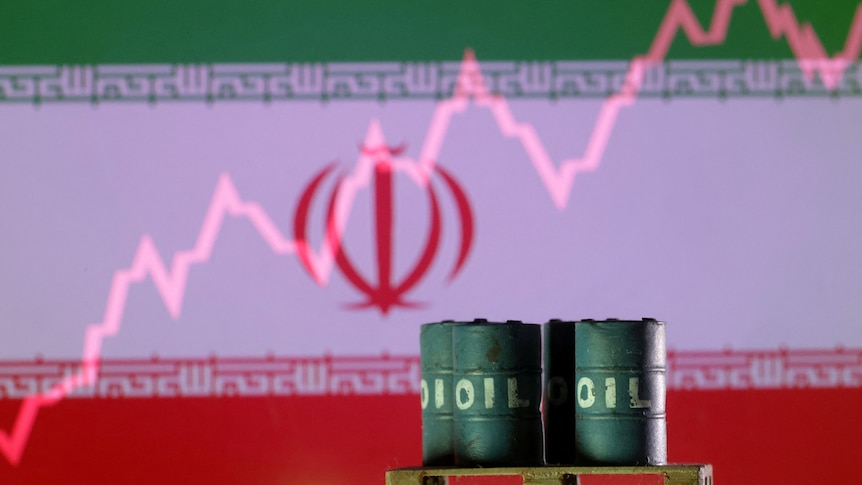
In the commodities market, gold prices dipped by 0.2% to $4,739 per ounce, while Brent crude futures surged by 2.9% to $98 per barrel, and WTI futures rose by 1.5% to $97.98 per barrel. Additionally, thermal coal prices fell by 0.1% to $106.15 per tonne, while prices for lithium increased by 1.2% to $12,845 per tonne. These prices reflect the market conditions as of approximately 7:00 AM AEST.
A recent report has highlighted the long-term prospects for Australia’s liquefied natural gas (LNG) exports, emphasizing that these are likely to be constrained by lower demand. The report, titled “The Last LNG Train Home: Australia’s LNG Outlook in a Demand-Constrained World,” was produced by a climate research and consulting organization. It indicates that climate commitments made by around 130 nations since late 2024 have impacted forecasts for future fossil fuel demand.
According to the report, as demand for LNG from importing countries is expected to “plateau or decline,” the global LNG market will face an oversupply as new export capacities from nations such as the US and Qatar become operational by 2030. Furthermore, many of Australia’s existing long-term LNG contracts are set to expire between the mid-2030s and 2040, which could lead to a significant shift in Australia’s gas market landscape.
The report suggests that the current long-term LNG contracts may set a limit on what Australian exporters can sustainably sell on the international stage. This could have significant repercussions for Australia’s economy, as a decrease in LNG export revenues, combined with similar pressures on other fossil fuel exports like coal, could result in a substantial change in Australia’s trade profile by the mid-2030s.
It was also noted that the volume of Australian LNG exported under long-term contracts is predicted to diminish until 2040 as these contracts expire. This may lead to more Australian gas exporters relying on spot prices or short-term contracts in the future, increasing their exposure to global price fluctuations.
In currency news, the Australian dollar strengthened overnight, approaching 71 US cents, buoyed by speculation surrounding a potential agreement between the US and Iran. The Australian dollar also appreciated against the euro and British pound. Attention is now focused on an upcoming speech by Reserve Bank of Australia (RBA) Deputy Governor Andrew Hauser, scheduled for 8:15 AM AEST. Analysts suggest that his remarks could significantly influence market expectations regarding interest rate changes, especially after his previous comments on a podcast led to a re-evaluation of rate hike predictions ahead of the RBA’s March meeting.
In related news, our chief business correspondent provided insights this morning on the ongoing discussions about revitalizing Australia’s oil industry. Despite increasing enthusiasm for such initiatives, there are critical facts that have been overlooked, notably the diminishing oil reserves in the country. As the situation surrounding oil prices escalates due to geopolitical tensions, the calls to restore the oil sector may become more prevalent.
In summary, the US Navy has initiated a blockade of Iranian ports, which has already caused disruptions, including the diversion of two ships in the Strait of Hormuz. On Wall Street, major indices recovered from earlier losses, with the S&P 500 closing up by 1%. Oil prices have retreated below $100 per barrel after a recent surge. Futures suggest that the ASX will likely open higher today, recovering from yesterday’s modest decline. Keep an eye on Hauser’s forthcoming comments, as they may impact market dynamics.
For ongoing financial updates and expert analyses, stay tuned to our live blog. Please note that this content is not intended as financial advice.