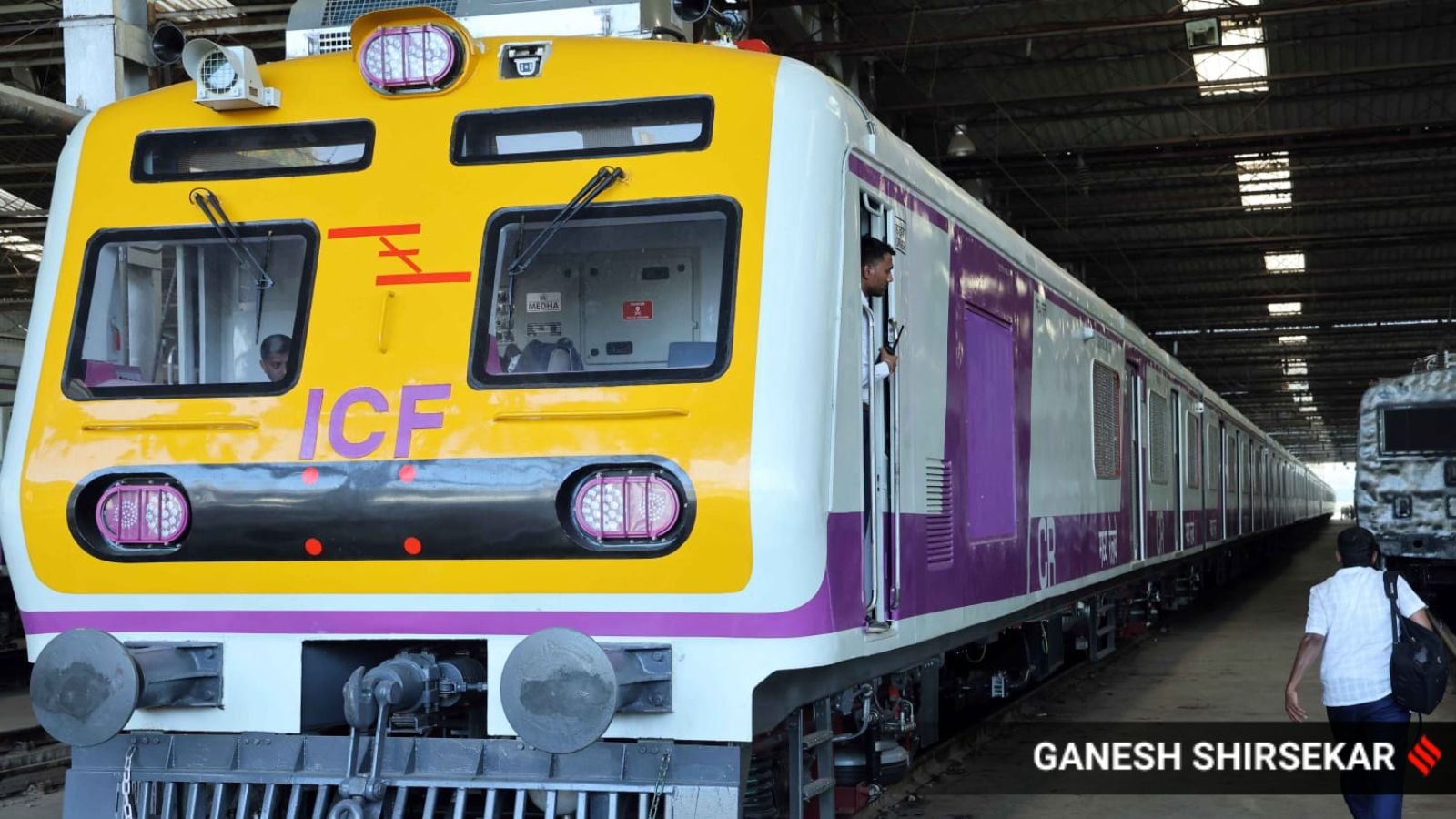

On Monday, Central Railway introduced India’s inaugural non-air-conditioned suburban train featuring automatic doors at the Kurla Carshed, representing a notable advancement in safety for Mumbai’s suburban rail system.
This initiative comes in response to the tragic incident in June 2025 near Mumbra, where five passengers lost their lives after being ejected from overcrowded trains. Following the accident, the Railway Board mandated that all new non-AC suburban trains be equipped with automatic door-closing mechanisms, aiming to launch prototype coaches by November 2025 and integrate them into service by the year’s end—a timeline that has since lapsed.
The newly launched 12-car train, produced by the Integral Coach Factory, has not yet commenced passenger operations and will undergo essential certification testing conducted by the Research Designs and Standards Organisation (RDSO).
According to officials, these trials will evaluate various aspects such as door functionality, obstruction detection, ride comfort, and performance under simulated loads. “At this stage, we cannot specify the trial duration. RDSO will carry out a series of tests, including stability and obstruction assessments,” stated Swapnil Nila, Chief Public Relations Officer of Central Railway.
The automatic door system is engineered to open in approximately three seconds and close within four seconds, with a 30-second stop time corresponding to suburban station halts. This system also features obstruction detection to avert accidents. Officials emphasized that the primary goal is to reduce footboard riding, which is a significant cause of fatalities on Mumbai’s suburban network.
The 12-car train consists of 19 compartments, which include four first-class coaches, two ladies-first-class coaches, two accessible coaches for persons with disabilities, five ladies’ second-class coaches, and eight general second-class coaches, along with two luggage compartments—one general and one designated for women.
In addition to automatic doors, the train includes various safety enhancements such as fire detection systems and modified alarm protocols. Officials indicated that measures have also been implemented to minimize the misuse of emergency features, such as chain-pulling. “Fire detection and other safety systems have been integrated into this rake,” said Nila.
The design of the rake has been significantly improved for passenger comfort and ventilation. Window dimensions have been enlarged to almost 1,900 mm from approximately 900 mm in current coaches, providing up to two-thirds of the window area as openable for improved airflow. Roof-mounted ventilation systems have also been upgraded to accommodate up to 10,000 cubic meters per hour, compared to around 6,000 in traditional rakes. Furthermore, seating arrangements have been revised to offer more legroom and additional seating surfaces between benches, incorporating features from air-conditioned suburban coaches and newer-generation EMUs.
Officials noted that the integration of this rake into regular suburban service will be contingent upon the successful completion of RDSO trials and the receipt of necessary approvals.
Naresh S is a Trainee Correspondent with The Indian Express in Mumbai. A graduate of Xavier’s Institute of Communication (XIC), he has a keen interest in civic matters and policy-related issues. He currently focuses on the transportation sector, covering suburban railways, BEST bus services, and aviation, with a strong emphasis on in-depth analysis and research-driven reporting.
Core Coverage Areas: Naresh reports on urban mobility and public systems in Mumbai, concentrating on transport infrastructure, commuter safety, and policy implementation. His reporting is grounded in research and data, aiming to elucidate the functioning and challenges of large public systems for daily commuters.
Transport (Primary Beat): His principal focus is on transport, encompassing Mumbai’s suburban railways and BEST bus services. His coverage in this area includes thorough reporting on incidents like the Mumbra train accident and its safety ramifications, as well as follow-up stories regarding persistent issues such as the delayed rollout of automatic doors on local trains. He also monitors infrastructure projects, operational disruptions, and policy decisions impacting daily commuters, often presenting his findings in an explanatory format.
Aviation (Secondary Beat): Naresh also reports on aviation and airport infrastructure, including updates on the Navi Mumbai International Airport project. His aviation coverage has included the disruptions faced by IndiGo flights in December 2025, focusing on the experiences of passengers, regulatory responses, and systemic challenges within civil aviation operations.
Stay informed with the latest updates – Click here to follow us on Instagram.