
A significant milestone is set to occur in the Australian Army later this year, as the government has officially announced the appointment of a woman to the role of Chief of Army for the first time. This historic decision has elicited mixed reactions online, prompting some critics to express discontent with the Labor government’s choice.
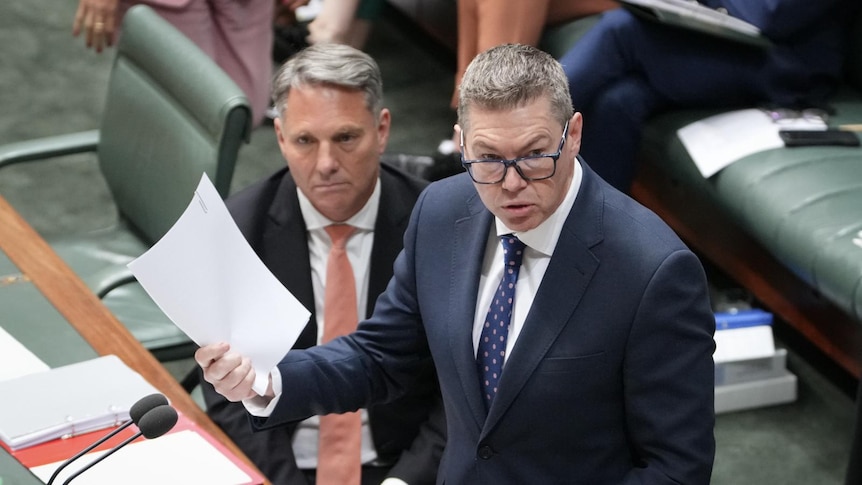
When questioned about the derogatory remarks circulating online regarding the new chief, Defence Industry Minister expressed strong condemnation. He emphasized that Major General Coyle is the most qualified candidate for the position and will break new ground as the first female leader in the military’s history. “Her selection was not influenced by her gender; those familiar with General Coyle recognize her professionalism and capabilities,” he stated during an interview on ABC’s Radio National Breakfast. He urged critics to reflect on their attitudes.
In related matters, the Defence Industry Minister addressed the ongoing discussions regarding diplomatic actions concerning the Strait of Hormuz. He noted that while traditionally a military officer would be dispatched, a diplomatic representative might also be considered. “A coalition of nations is eager to resolve the conflict diplomatically and reopen this essential waterway,” he stated. He acknowledged that ensuring safe passage for vessels is crucial, but emphasized that achieving peace must take precedence, requiring cooperation between Iran and the United States to maintain a ceasefire and resume negotiations.
When asked about Australia’s potential involvement in a future mission to secure the Strait, the Minister refrained from speculating. He reiterated that Australia would only contribute to efforts to reopen the Strait of Hormuz if a lasting ceasefire is established. Following the recent initiation of a US naval blockade on Iranian ports, the Minister expressed the government’s commitment to ensuring the strait remains open and global fuel supply chains stabilize. Australia will participate in an upcoming summit hosted by the UK and France to address maritime security in the region.
In a separate development, confusion arose regarding the Opposition Leader’s position on social media vetting for visa applicants. The Coalition had initially proposed that such checks should be a routine part of the vetting process, but this notion was later clarified by Taylor, who indicated that screenings would be conducted based on risk assessments. He acknowledged that while agencies have the authority to investigate social media for security concerns, a formal, enforceable values test is necessary for a comprehensive approach.
As part of a new migration policy set to be announced, the Coalition plans to establish a cross-agency taskforce involving ASIO, the AFP, and the Border Force to oversee the vetting of visa applicants. Taylor is expected to outline these proposals at a speech later today, emphasizing public frustration with politically correct immigration policies.
On another front, Australian unions are taking urgent action in the Fair Work Commission to advocate for increased vehicle allowances for workers facing rising fuel costs. The Australian Council of Trade Unions (ACTU) has highlighted that current allowances are outdated and insufficient to cover the increased expenses workers are incurring at the pump. The ACTU is seeking an adjustment to the vehicle allowance schedule, urging a change ahead of the standard annual review on July 1.
ACTU Secretary McManus pointed out that workers in sectors like aged care and nursing are particularly affected, stating, “Many of these individuals are effectively subsidizing their work due to inadequate allowances, which is unacceptable.”
In a related announcement, the Coalition’s migration policy will introduce measures for social media screening of visa applicants, akin to practices in the United States. As part of this initiative, the Opposition Leader will present the initial framework for the migration crackdown during a speech at the Menzies Research Centre.
On the defense front, speculation continues regarding budget reallocations to prioritize drone technology, including models like the Ghost Bat and Ghost Shark. The Defence Minister has indicated that specific projects may be deprioritized to facilitate this shift in focus but has promised to provide details later in the week. He affirmed Australia’s ongoing commitment to increasing defense investment and highlighted the importance of developing counter-drone technologies as part of a comprehensive strategy.