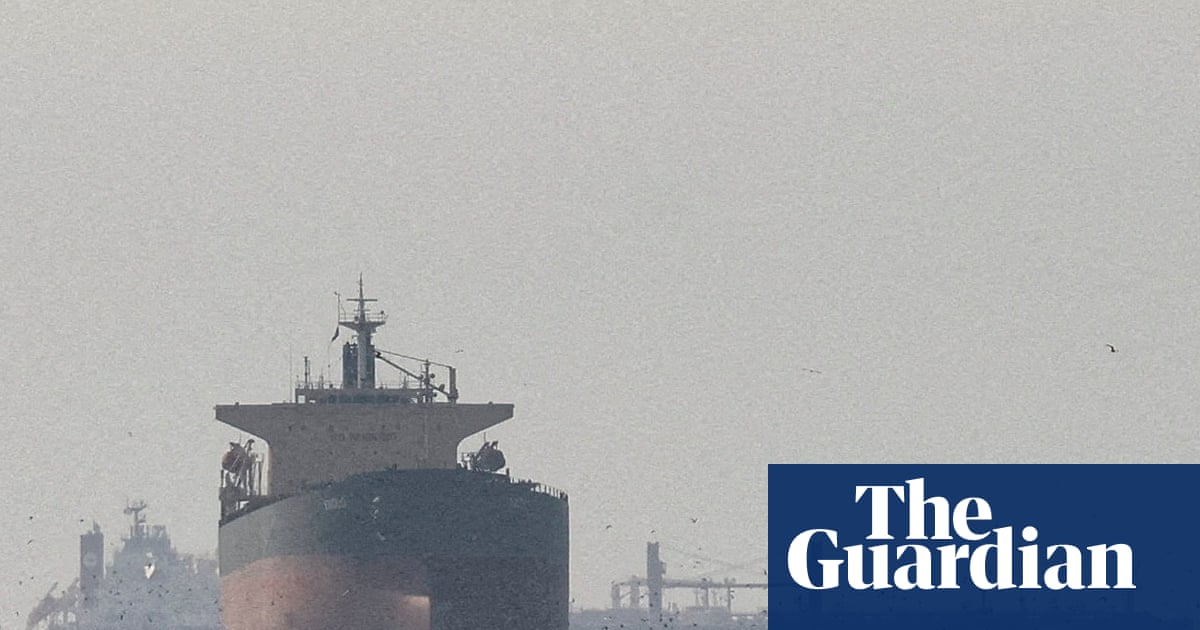

The United States initiated a blockade on vessels using Iranian ports in the Gulf starting Monday evening, escalating the ongoing conflict between the US-Israeli alliance and Iran into a challenge of economic resilience. This blockade, which the US Central Command (Centcom) had indicated would commence at 5:30 PM Iranian time (3 PM UK time), prohibits ships from entering or leaving Iranian ports while allowing vessels utilizing non-Iranian ports to operate without restrictions.
Former President Donald Trump asserted that 34 ships traversed the Strait of Hormuz, the crucial access point to the Gulf, on Sunday, although no evidence supported this statement. During a press briefing at the White House, Trump remarked that “the other side” had reached out and expressed a strong desire to negotiate. Throughout the conflict, which initiated with a US-Israeli attack on February 28, Trump has frequently claimed that Iran was eager for a deal, yet these assertions remain unproven.
In response to Trump’s recent actions, Iran cautioned that average Americans would face repercussions in the form of increased fuel prices and threatened retaliation should the US resume airstrikes. Trump countered by stating that any Iranian vessels approaching US forces in the area would be “immediately eliminated.”
On the day of the blockade’s implementation, it appeared that US naval forces were preparing to enforce the blockade east of the Strait of Hormuz, in the Gulf of Oman, where Iranian missiles and drones would have limited reach. It was still uncertain how Centcom planned to intercept any oil tankers attempting to breach the blockade. A missile strike could result in an environmental catastrophe, raising the possibility that US forces might attempt to board and seize control of non-compliant vessels.
The UK Maritime Trade Operations issued a notice urging mariners to “maintain heightened situational awareness” as further updates were anticipated regarding navigation under the new regulations in the region.
Trump warned that any Iranian “fast attack ships” that approached US vessels enforcing the blockade would be dealt with decisively, using the same lethal methods employed previously against smaller boats in the Caribbean and eastern Pacific, which he claimed had been involved in drug trafficking without providing evidence.
The blockade was ordered following prolonged US-Iranian negotiations in Islamabad that concluded after 21 hours without reaching an agreement. The strategy is intended to severely impact Iran’s oil-dependent economy and compel Tehran to comply with US demands, including reopening the Strait of Hormuz to ships from Gulf allies and imposing a total ban on uranium enrichment.
Miad Maleki, a former US Treasury official now affiliated with the Foundation for the Defense of Democracies, noted on X that the blockade could cost Iran an estimated $276 million per day in lost exports and disrupt $159 million per day in imports, leading to a total economic impact of $13 billion monthly.
The Iranian government has asserted that it would maintain control over the Strait of Hormuz and dictate which vessels could pass through. They also claimed the US blockade would cause oil prices to surge, which have already risen above $100 a barrel following the breakdown of diplomatic discussions in Islamabad.
Mohammad Bagher Ghalibaf, the speaker of Iran’s parliament and head of the Iranian delegation in Islamabad, taunted Americans on X, suggesting they “enjoy the current pump figures” and predicted that they would soon miss the days of $4-$5 gasoline prices. The current average price at US pumps is $4.13 per gallon, a noticeable increase from $2.98 before the onset of the conflict on February 28.
Trump acknowledged on Sunday that fuel prices might remain at their current levels or increase further as the nation approaches congressional elections, indicating that they could rise “a little bit higher.”
The Iranian embassy in Thailand mocked Trump by sharing a satirical election poster featuring “Trump: $20.28 a gallon” with the question, “Are you ready folks?”
On Monday, Iran also weighed in on Trump’s ongoing dispute with Pope Leo XIV regarding the conflict. The president had reacted strongly to the pope’s criticisms of the administration’s use of religious rhetoric to justify its military actions in Iran, labeling him as “weak on crime” and “terrible for foreign policy.” Trump shared an AI-generated image depicting himself as a Christ-like figure, which faced widespread condemnation for being blasphemous. He later clarified that the portrayal was meant to depict him as “a doctor.”
Iranian President Masoud Pezeshkian responded on Monday, condemning what he referred to as the “desecration of Jesus.” He expressed his disapproval on behalf of the Iranian people, stating that such insults were unacceptable to anyone who values freedom.
The pope, addressing reporters, stated that he had “no intention to debate” Trump regarding Iran and emphasized his commitment to advocating for peace, dialogue, and collaborative relationships among nations to seek just solutions to conflicts.
The US-Israeli strikes against Iran have halted due to a two-week ceasefire brokered by Pakistan that began on Wednesday. Trump asserted that US forces remain “locked and loaded,” prepared to “finish up the little that is left of Iran.”
Iran, for its part, has indicated readiness to resume hostilities. Military spokesperson Ebrahim Zolfaghari warned on Monday that if Iranian ports were threatened, “no port in the Persian Gulf and the Sea of Oman will be safe.”
Despite Trump’s claims of international support for enforcing the US blockade, no other nations have stepped forward to assist. The UK Prime Minister’s office has not yet commented on the situation.