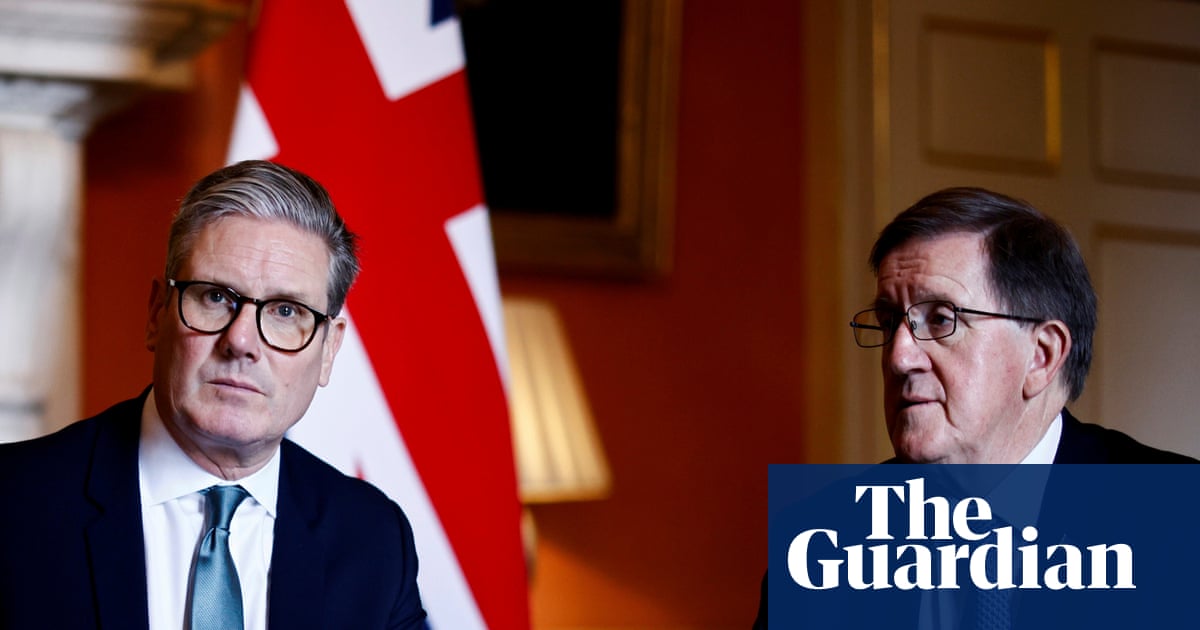

The UK government is facing sharp criticism for what a government adviser describes as a “corrosive complacency towards defence,” placing the nation’s security at risk. This commentary comes from George Robertson, a former NATO Secretary General and contributor to the government’s strategic defence review, who asserts that Keir Starmer’s military policies lack the necessary financial commitment, as reported by the Financial Times.
In an upcoming lecture in Salisbury, Robertson will emphasize the urgency of the situation, suggesting that the ongoing conflict in Iran should serve as a significant wake-up call. He plans to convey a stark message: “We are underprepared. We are underinsured. We are under attack. We are not safe… Britain’s national security and safety is in peril.”
Robertson, who led NATO from 1999 to 2003, will also criticize “non-military experts in the Treasury” for their detrimental impact on defence funding. He remarked in an interview with the Financial Times, “We cannot defend Britain with an ever-expanding welfare budget.”
The government’s initiatives to finance the strategic defence review, including a proposed ten-year investment plan that was due last autumn, have faced delays, amidst warnings of a £28 billion funding shortfall for the military over the next four years. Sources indicate that the Ministry of Defence, the Treasury, and Downing Street have yet to find common ground on a way forward.
Robertson suggests that reallocating funds from other government departments might be essential to enhance defence budgets. He pointed out that Chancellor Rachel Reeves allocated only 40 words to defence in her budget address last year and made no mention of it in her recent spring statement.
He commented, “There is a corrosive complacency today in Britain’s political leadership. Lip service is paid to the risks, the threats, the bright red signals of danger—but even a promised national conversation about defence remains uninitiated.”
In February, Luke Pollard, the minister for defence readiness and industry, explained to the Guardian that reforming defence was a more complex task than many outside the sector might understand. He noted that it would require a “fundamental change in the structure of our armed forces,” particularly emphasizing the need for greater autonomy and replenishing military supplies sent to Ukraine in recent years. “It is not a simple matter of just replacing tank A with tank B,” he stated.
To illustrate the UK’s defence complacency, Robertson will reference the inability to deploy more than one Royal Navy warship to the Mediterranean during the initial two weeks of the Iran conflict. He will highlight that the country is facing not only shortages of military equipment but also “crises in logistics, engineering, cyber capabilities, ammunition, training, and medical resources.”
Recently, Defence Secretary John Healey revealed a covert Russian submarine operation that targets critical undersea infrastructure near UK waters. In response to the criticisms, a government spokesperson stated, “We are delivering on the strategic defence review to meet the threats we face. This is supported by the largest sustained increase in defence spending since the Cold War, with over £270 billion allocated throughout this parliament.” The spokesperson also noted that the government is in the process of finalizing the defence investment plan, which will be published promptly.