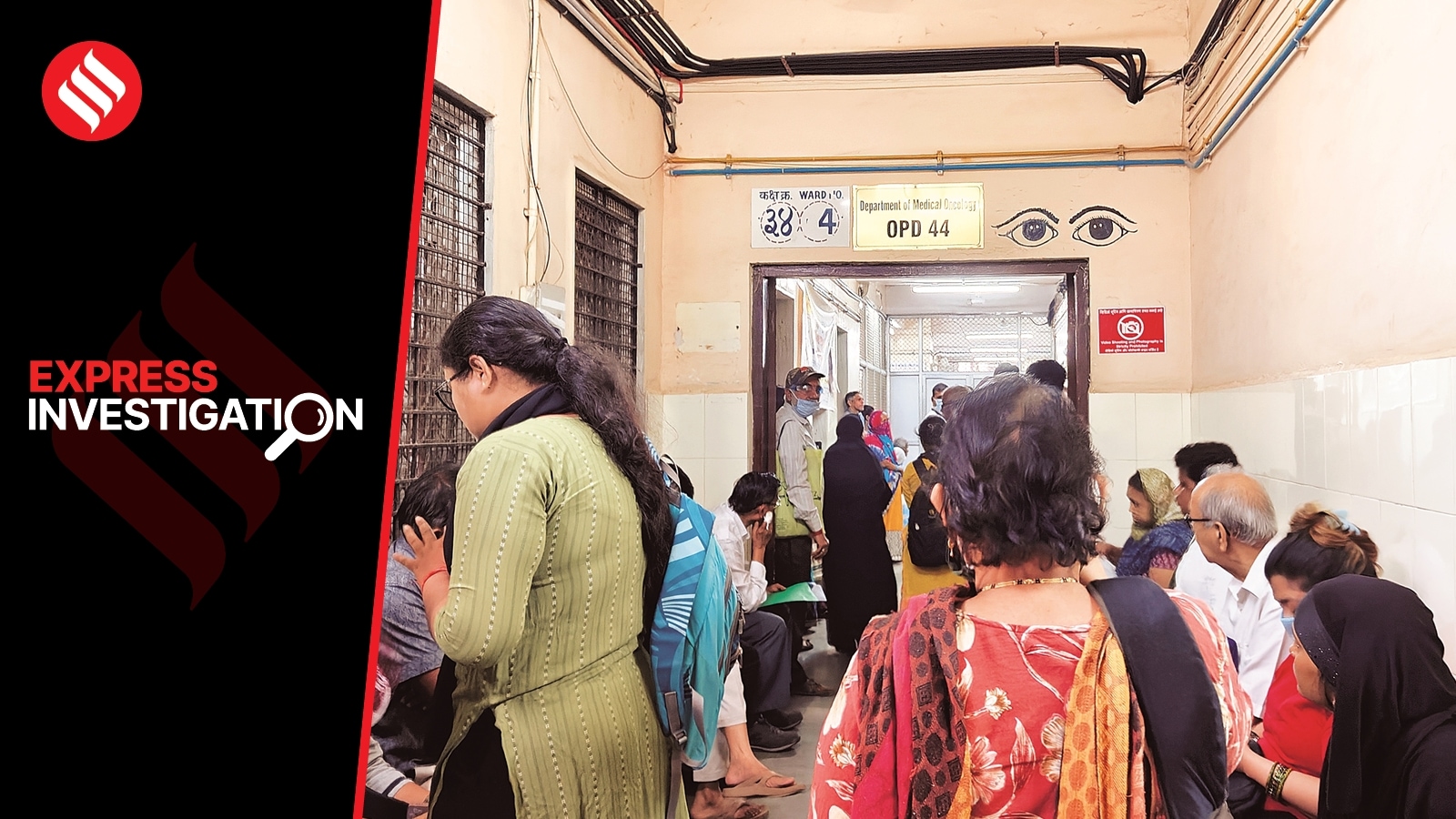

According to MSD, the global branch of Merck & Co., the onus of managing used medicinal packaging lies with individual healthcare institutions, which must adhere to local laws and established protocols. This statement was made in response to inquiries from The Indian Express regarding an investigation into the rising counterfeit market for its cancer treatment, Keytruda.
MSD clarified that after a product is dispatched through the authorized supply chain to a distributor, the company loses oversight of the handling of vials and packaging post-use. The disposal of such items is subject to local regulations and the specific procedures of healthcare facilities.
When questioned about the measures taken following the seizure of Keytruda batches by Delhi Police from individuals associated with oncology departments in local hospitals, MSD stated, “The Delhi Police approached MSD to analyze the seized samples of purported Keytruda. We conducted evaluations at our Forensic Services Laboratory and shared the findings with the police. Generally, the company consistently offers support and collaborates with law enforcement and regulatory agencies, providing technical or product-related assistance when required during investigations.”
In response to another inquiry regarding the implementation of a system to guarantee that each drug unit from a batch is used only once and disposed of appropriately, MSD reiterated, “Once a product reaches its intended user through the legitimate supply chain, the company does not track how vials or packaging are managed afterward. Currently, there is no tracking mechanism in place to ensure that each vial from a specific batch is only utilized once and disposed of in a prescribed manner following clinical use. The disposal process is governed by local regulations and the procedures of healthcare facilities.”
Regarding the specific actions taken concerning the batches retrieved from the suspects, MSD remarked, “We performed analyses at our Forensic Services Laboratory and provided the results to the Delhi Police. The responsibility for investigation and enforcement lies with the appropriate authorities. Our involvement in cases of suspected counterfeit products is limited to supporting and cooperating with these authorities when they request assistance, including providing technical information to authenticate the product.”
Kaunain Sheriff serves as the City Editor for Delhi at The Indian Express, where he focuses on accountability journalism, data-driven reporting, and the tangible effects of news on communities. As the National Health Editor, he oversees comprehensive reporting on critical health topics.
He authored “Johnson & Johnson Files: The Indian Secrets of a Global Giant,” an extensive investigation into the accountability of one of the globe’s leading pharmaceutical companies.
His expertise includes investigative reporting on public health, regulatory matters, drug safety, and the criminal justice system, exploring the intersections of governance, law, and accountability, particularly how regulatory shortcomings and policy choices impact citizens’ rights and safety.
Kaunain has also engaged in significant data journalism projects, analyzing large datasets related to government initiatives and criminal trials to reveal systemic issues.
As a contributor to major international journalistic efforts, he participated in “The Implant Files,” collaborating with the International Consortium of Investigative Journalists (ICIJ) to uncover malpractice in the medical device sector, and a Chinese big-data investigation that revealed real-time monitoring of significant Indian figures and institutions by a foreign data firm.
His dedication to “Journalism of Courage” has earned him several prestigious awards, including the Ramnath Goenka Award for Excellence in Journalism, the SOPA Award from the Society of Publishers in Asia, and the Red Ink Award from the Mumbai Press Club. He is also a triple recipient of the Indian Express Excellence Awards for investigations into notable issues such as NSA abuse in Uttar Pradesh, the Vyapam scam, and the anti-Sikh riots.
Kaunain studied Mechanical Engineering at Visvesvaraya Technological University (VTU) in Bangalore before moving to Delhi to follow his passion for journalism. His engineering background enhances his analytical capabilities, allowing him to navigate complex technical, legal, and data-heavy systems with accuracy.
For more information, you can connect with him on LinkedIn or follow him on X (formerly Twitter).