
There is a significant probability that the climate phenomenon known as “El Niño” will manifest this summer, and it may be particularly intense. Experts warn that a “super El Niño” could exacerbate extreme weather conditions and raise global temperatures to unprecedented levels in the coming year if it materializes.
Meteorologists are closely monitoring climate trends in the Pacific Ocean to improve predictions for the upcoming year. A potent El Niño could position 2027 as a contender for record-breaking global heat, potentially leading to a range of severe consequences, including intensified rainstorms and droughts in various regions.
While it is not guaranteed, climate scientist Tom Di Liberto, who is also the media director at Climate Central, expressed during a briefing on Thursday that the elements necessary for the development of El Niño are present. He cautioned that predictions made in spring may not fully account for unforeseen changes that could arise over the summer, but emphasized that “the risk is high enough to warrant concern.”
Understanding the connection between oceanic and atmospheric conditions is crucial for forecasters. They closely examine ocean temperatures and related factors to anticipate future weather patterns globally.
El Niño is characterized by elevated ocean surface temperatures in the central and eastern tropical Pacific. It is one of three states monitored by scientists: La Niña occurs when sea surface temperatures are below average, while neutral conditions signify that neither El Niño nor La Niña is present, with surface temperatures remaining close to average.
These three states form the “El Niño-Southern Oscillation” (ENSO), which typically develops during spring in the Northern Hemisphere and shifts every three to seven years, according to the U.S. National Weather Service. The temperature variations during El Niño and La Niña can range from 1°C to 3°C, significantly influencing precipitation, drought, heat, and various climate-related disasters, depending on their direction.
In years marked by El Niño, the typical winds that push warm waters westward weaken or change direction, allowing the surface waters in that part of the Pacific to heat up. Conditions are defined as El Niño when temperatures exceed 0.5°C above the norm, which can dramatically alter weather patterns and often lead to record-high global temperatures.
Climate scientists emphasize that each El Niño event is distinct, with considerable variability in intensity and effects. However, ENSO forecasts are vital for enabling global populations to prepare for impending extreme weather shifts—an essential resource in an increasingly warming environment.
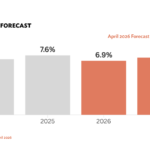
According to the latest projections from the U.S. Climate Prediction Center released on April 6, conditions are transitioning from La Niña to a neutral state, with models indicating a 62% likelihood that El Niño will materialize this summer and persist at least until the year’s end.
While numerous factors influence weather, El Niño can create significant atmospheric disruptions. It changes jet stream patterns and alters precipitation distribution, resulting in more severe storms in some areas while causing droughts in others. Additionally, it has the capability to elevate temperatures even further, at least temporarily.
A notable super El Niño event in 2015 resulted in severe drought conditions in Ethiopia, water supply shortages in Puerto Rico, and record-breaking hurricane activity in the central North Pacific, as reported by U.S. federal scientists.
This cycle tends to trigger drought and heat in regions such as Australia, southern and central Africa, India, and parts of South America, including the Amazon rainforest. Conversely, heavy rains may occur in the southern United States, certain areas of the Middle East, and south-central Asia.
While regions in the U.S. may welcome the possibility of heavy rainfall as a solution to water shortages caused by this year’s poor snowpack, Di Liberto warned that these dry spells have largely been driven by temperature increases, making it less likely that these areas will experience relief from rising temperatures.
“It is crucial to recognize that much of the drought has been driven by temperature rather than precipitation,” he remarked.
Experts caution that severely affected dry regions may not recover after just one wet season. This is particularly true in the southwestern United States, where many reservoirs are at historic lows.
“The expectation of a significant climatic shift does not guarantee that drought conditions will be entirely alleviated,” stated Dr. Joel Lisonbee, a senior associate scientist at the Cooperative Institute for Research at the University of Colorado Boulder. “It would require exceptionally wet conditions, which could also lead to flooding and the associated destruction and potential loss of life.”
A “super” El Niño refers to a particularly intense event, typically marked by sea surface temperature increases of at least 2°C. Such occurrences have been rare, having only happened a few times since 1950, with temperatures exceeding 2.5°C on only one occasion.
The higher the temperatures rise, the greater the likelihood that the effects of El Niño will be intensified. NOAA scientists have estimated a 25% chance of this occurring by fall or winter, with the caveat that spring forecasts can often be unreliable. Transitions in conditions during spring make predictions more challenging, but there are already significant indicators suggesting a strong or super El Niño may be developing.
Dr. Paul Roundy, a professor of Atmospheric and Environmental Sciences at the University of Albany, noted this week that there is “real potential for the strongest El Niño event in 140 years.” Dr. Andy Hazelton, an associate scientist at the University of Miami, echoed this sentiment, indicating that all models are pointing toward a significant event.