
Energy experts are expressing mixed opinions regarding the federal government’s recent move to reduce the excise duty on fuel by 50% for a period of three months. The government has justified this action as a crucial measure to alleviate the financial burden on Australians facing rising costs of living.
Saul Kavonic from MST Financial cautioned that the primary concern should not be the price of fuel, but rather the potential depletion of Australia’s fuel supply. He emphasized the need to manage this risk effectively.
Some analysts in the energy sector are skeptical about the government’s temporary tax reductions on fuel, suggesting that lower prices may hinder Australia’s necessity to conserve oil and could slow down the transition towards electrification.
The Albanese administration implemented the excise reduction in response to escalating fuel prices triggered by the ongoing conflict in the Middle East. Along with the federal cut of 26.3 cents per liter, state governments have also contributed an additional reduction of 5.7 cents.
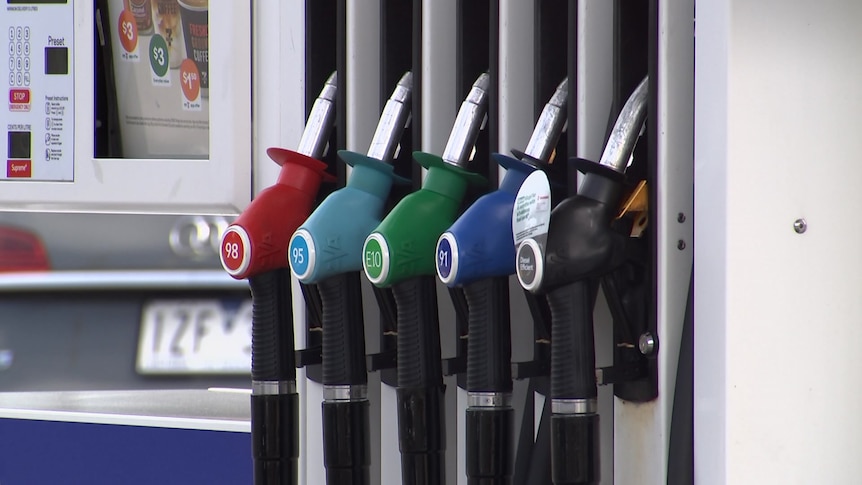
Despite the initial dip in prices following the excise cuts, diesel prices have surged again, nearing pre-cut levels at over $3.20 per liter nationwide, as reported by ABC’s analysis.
There is ongoing debate regarding whether the excise reduction should have been more substantial for diesel than for petrol. Diesel fuels critical machinery across various sectors, including agriculture, transportation, and mining. Some economists argue that the demand for diesel is relatively inelastic, indicating that industries cannot easily reduce consumption in response to price hikes.
In addition to powering essential industries, diesel vehicles account for nearly 30% of all motor vehicles on Australian roads, encompassing four-wheel drives, vans, and utility vehicles. In contrast, the price of unleaded petrol has significantly decreased since the excise cuts, currently averaging around $2.20 per liter, with petrol vehicles making up approximately 65% of the total vehicle fleet.
Lurion De Mello from Macquarie University’s energy markets center expressed that if he were to advise the government, he would suggest a greater reduction in the diesel excise compared to petrol, stating that “petrol is not the pain point; diesel is the pain point.” He added that these issues are concerning not only for Australia but also for the global economy.
Samantha Hepburn, an energy governance specialist at Deakin University, echoed concerns about the rising costs of diesel and the potential for long-term supply issues. She noted that any disruption in diesel availability or sustained high prices would directly impact production capacities, increase operational costs, and ultimately elevate food prices. Farmers are currently facing uncertainty regarding diesel allocations, affecting their crop decisions.
Dr. Hepburn argued that the current fuel excise policies may be overly politically motivated and not adequately focused on economic realities and broader supply chain implications. However, she also expressed uncertainty about whether further reductions in the excise would lead to lower diesel prices, suggesting that companies might simply absorb any tax cuts.
According to University of Melbourne economist Andy Wu, the benefits of a tax cut could be shared between consumers and fuel retailers, depending on the elasticity of demand and supply. If supply is more inelastic compared to demand, retailers might benefit more from the tax reduction than consumers.
Federal Energy Minister Chris Bowen defended the excise cut, stating that it serves as an important tool for providing cost-of-living relief to Australians. The government aims to mitigate the immediate inflationary impact that fuel prices have, which is closely monitored by the Reserve Bank when setting interest rates.
Alison Reeve from the Grattan Institute commented that while the government’s move is intended to address public dissatisfaction with fuel prices, it results in a loss of revenue and could have inflationary consequences. She cautioned that prioritizing additional tax cuts for diesel would be challenging and might inadvertently benefit the mining sector.
Given the potential for further increases in oil prices, coupled with ongoing geopolitical tensions, Ms. Reeve expressed concern that prolonged excise cuts could undermine efforts towards electrification and emissions reduction in Australia. She stated that if the tax reduction is extended too long, it may diminish incentives for consumers to opt for electric or more fuel-efficient vehicles.
In contrast, Saul Kavonic from MST Financial believes the excise should not have been reduced at all, as he warns that the real supply crisis in the oil market has yet to arrive, with refinery shortages anticipated in the coming months. He stressed that the pressing issue is not high prices but rather the potential unavailability of fuel altogether, a situation that would be far more detrimental. He advocates for strategies to improve fuel supply to Australia while simultaneously reducing demand, arguing that the excise cuts, although popular in the short term, counteract these necessary measures.